
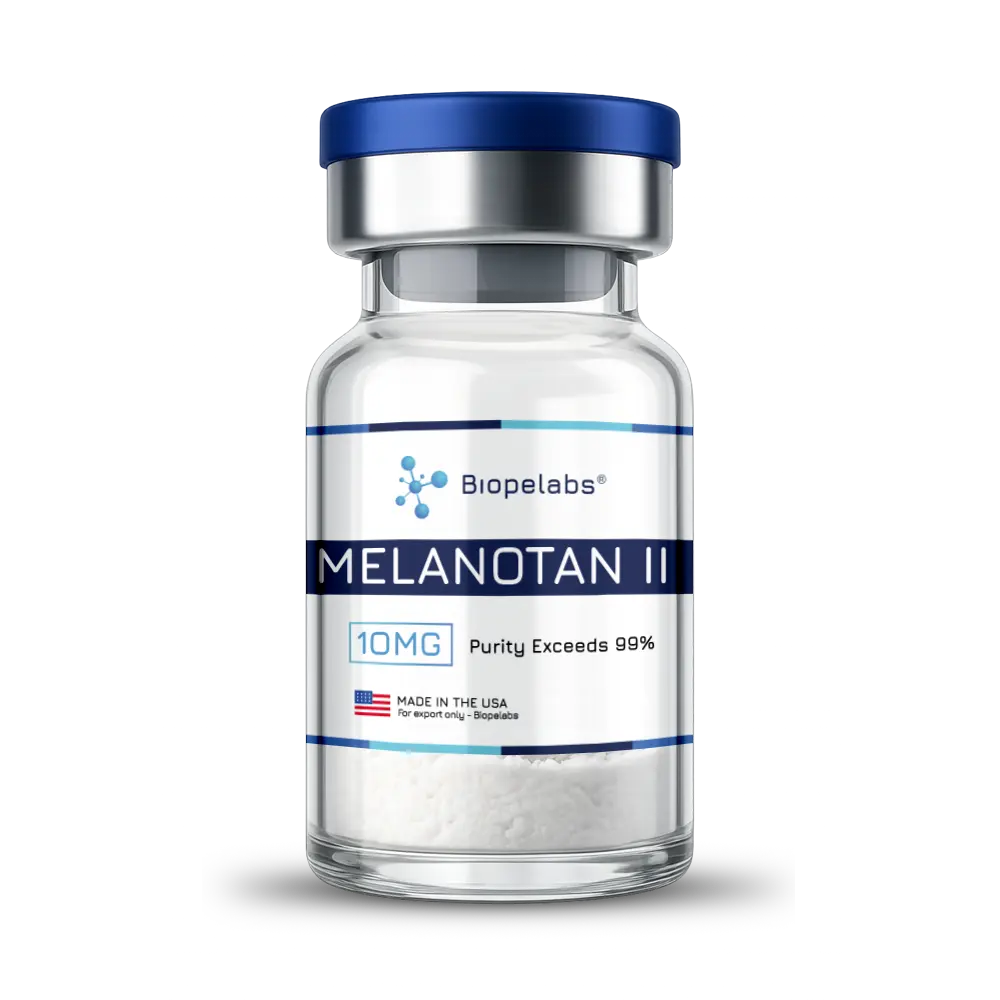
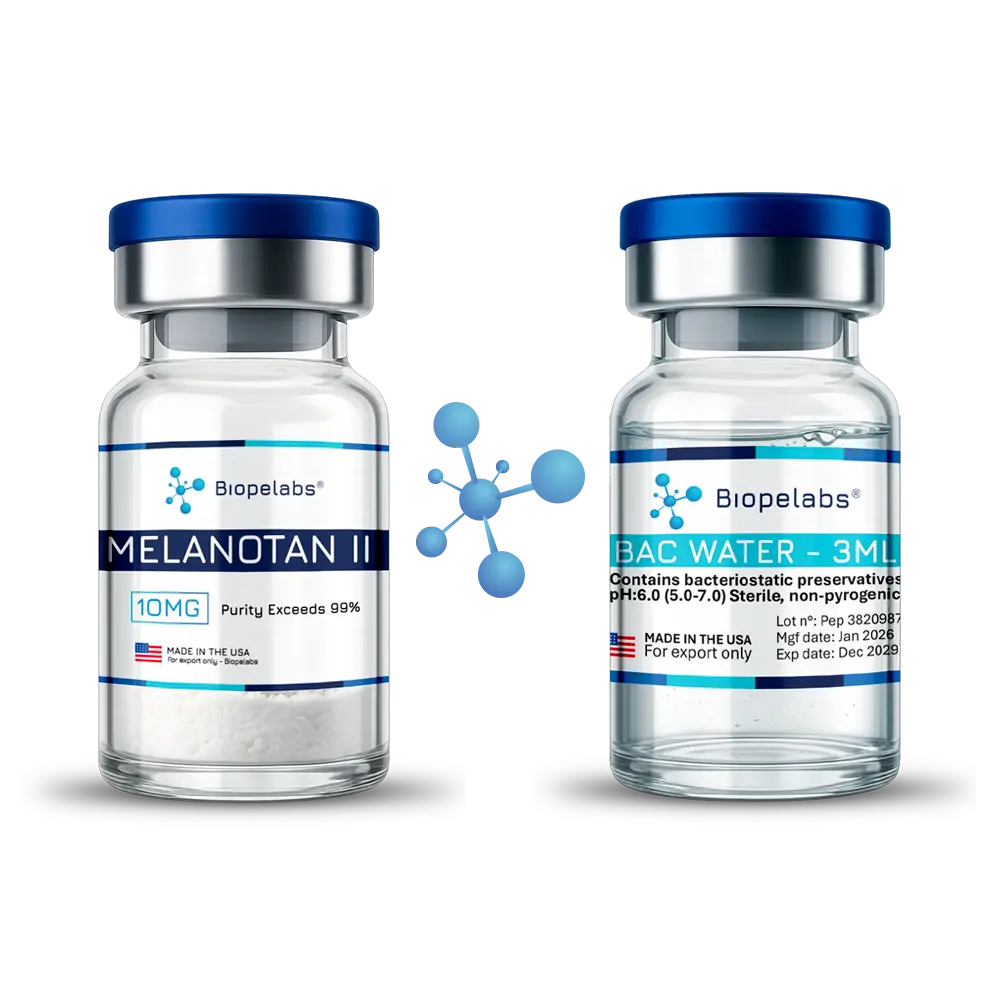
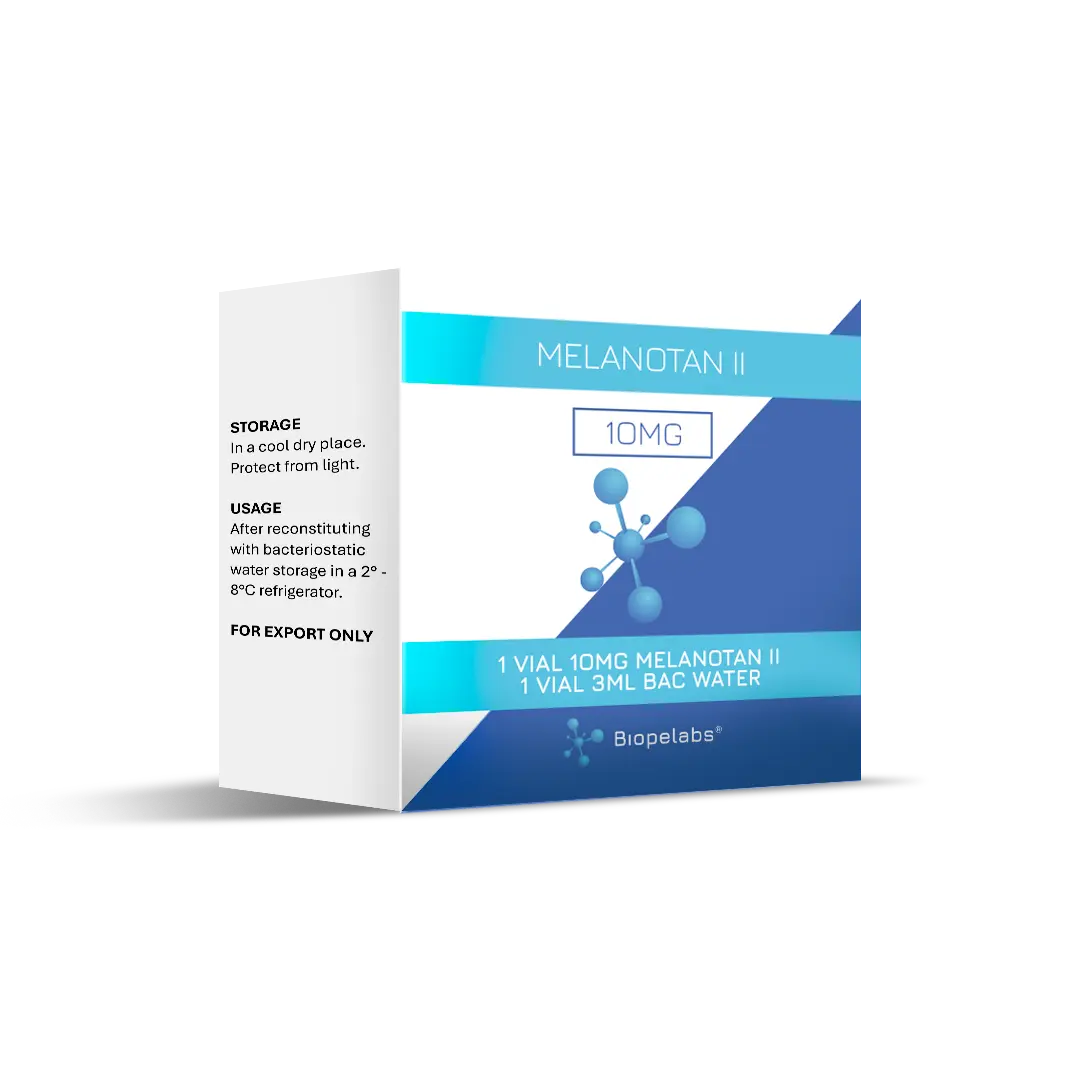


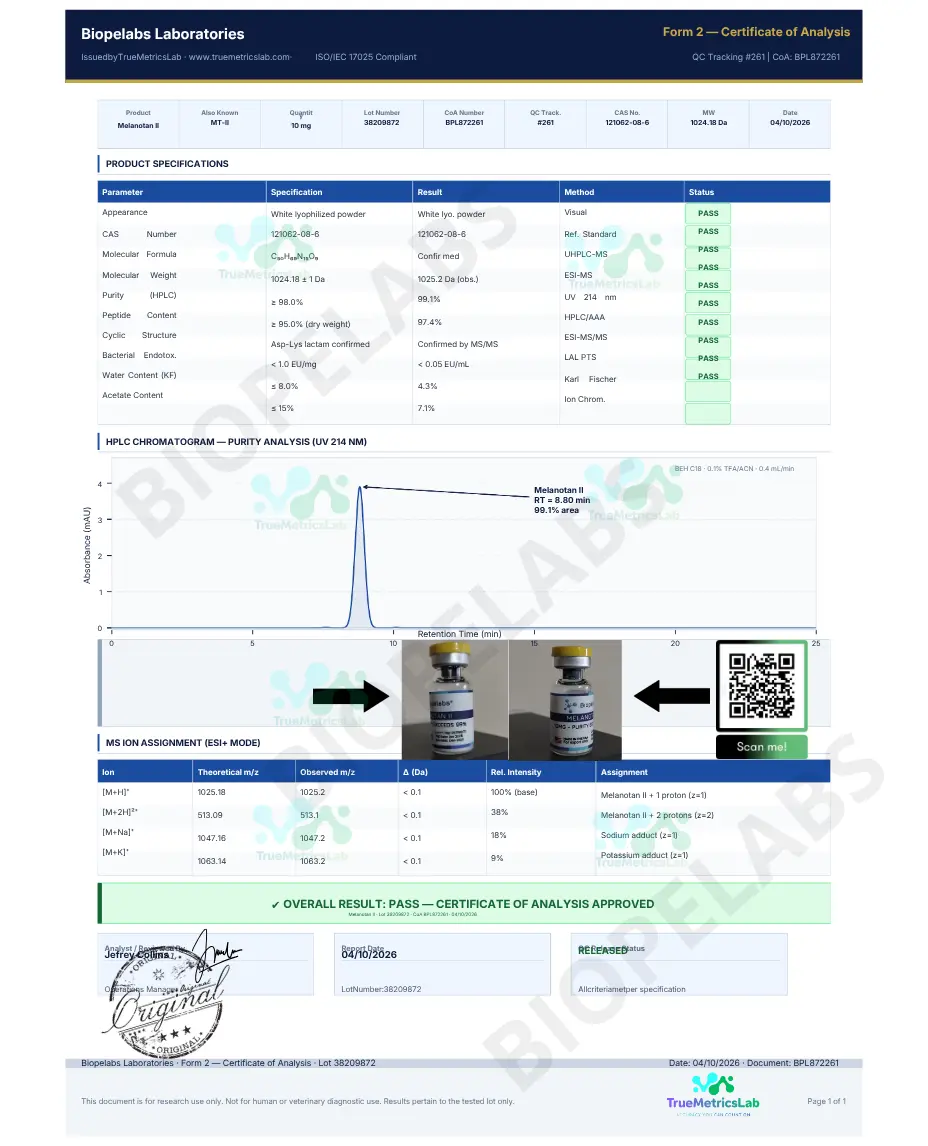
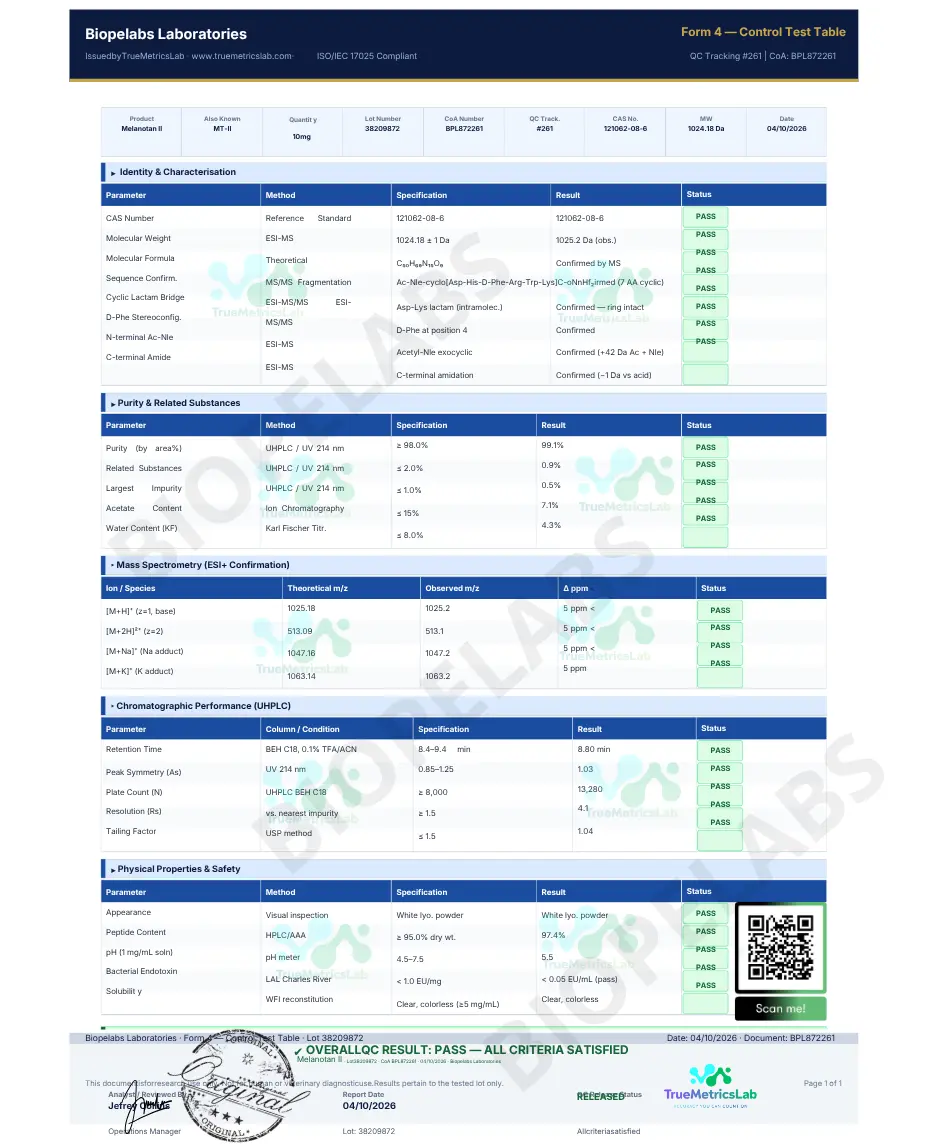
Melanotan II is a synthetic cyclic heptapeptide structurally derived from α-MSH, containing modifications that increase its metabolic stability and resistance to enzymatic degradation. Its sequence is Ac-Nle-cyclo[Asp-His-D-Phe-Arg-Trp-Lys]-NH₂, where Nle corresponds to norleucine and D-Phe represents D-configuration phenylalanine, contributing to higher affinity and biological potency.
Cyclization occurs through an intramolecular lactam bond between aspartic acid and lysine residues, conferring greater conformational rigidity. The compound acts as an agonist of G protein-coupled melanocortin receptors, promoting increased melanin production through MC1R activation in melanocytes. It also exhibits activity on central receptors, especially MC4R, associated with appetite regulation and neuroendocrine function.
Due to its synthetic nature and pharmacological potency, Melanotan II is not approved as a medication in many jurisdictions, and its use is predominantly restricted to experimental or research contexts.
Important Information
| Properties | Value |
| Molecular Formula | C₅₀H₆₉N₁₅O₉ |
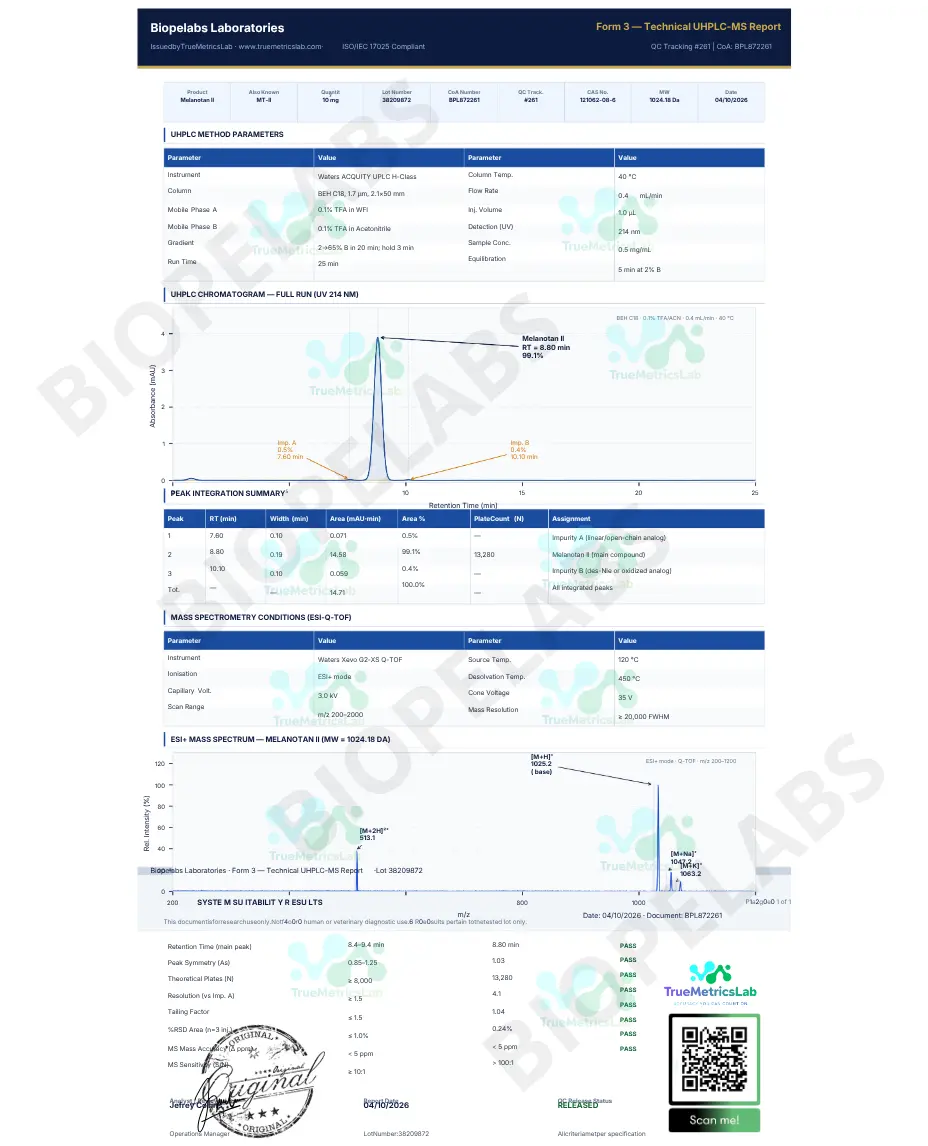
| Molecular Weight | 1024.18 g/mol |
| Synonyms | MT-II, Melanotan 2, Ac-Nle-cyclo[Asp-His-D-Phe-Arg-Trp-Lys]-NH₂, Cyclo(Asp-His-D-Phe-Arg-Trp-Lys) with N-acetyl-norleucine, Cyclic α-MSH analog |
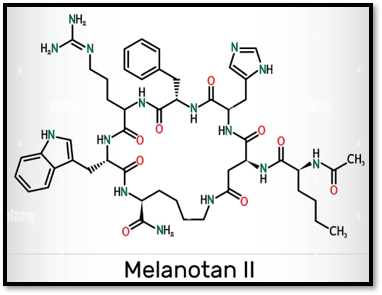
Source: alamy
Lyophilized Peptides
The peptides undergo a lyophilization process, a technique that enhances stability and shelf life while preserving purity and molecular structure throughout storage. It is important to note that no fillers are used during this procedure.
Intended Use
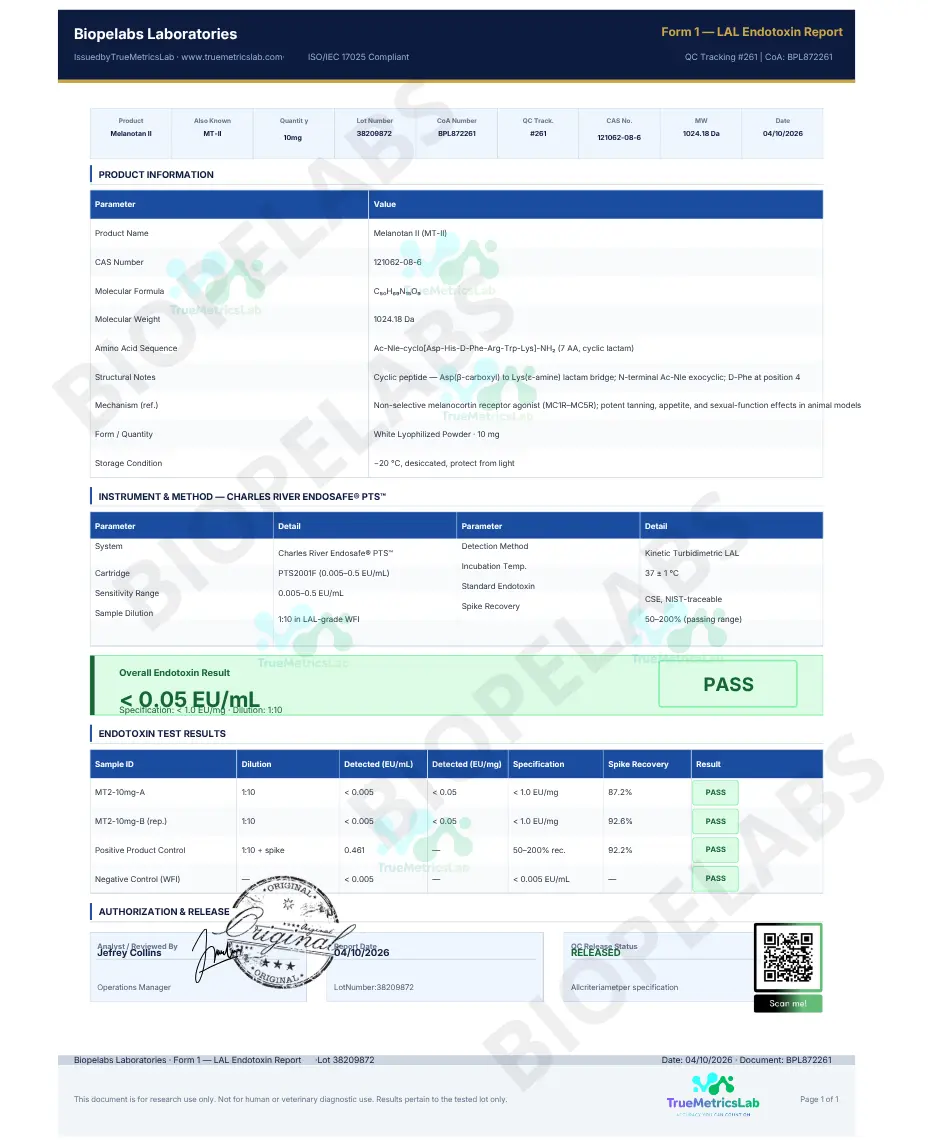
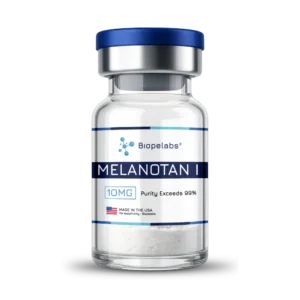
Biopelabs states: this material is provided exclusively as a chemical input for research purposes. Its use is restricted to in vitro assays and experimental activities in laboratory settings. The information presented is strictly for informational and educational purposes. Handling must be carried out only by properly qualified professionals. This product is not classified as a drug, food, or cosmetic and must not be used, marketed, or described as such.
Melanotan II is a synthetic peptide widely studied in research contexts due to its action on the melanocortin system. Scientific investigations have identified several relevant biological effects, described below.
Melanotan II acts as a non-selective agonist of melanocortin receptors (MC1R, MC3R, MC4R, and MC5R), stimulating melanin production by melanocytic cells. This mechanism results in increased skin pigmentation, making it a compound of interest in studies related to melanogenesis biology and cutaneous photoprotection (CellPeptides, 2025; Herbenbio, 2025).
Research indicates that Melanotan II crosses the blood-brain barrier and activates melanocortin receptors in the central nervous system, especially MC4R. This activation is associated with behavioral changes, including increased sexual arousal and modulation of libido, making the peptide relevant for neuroendocrine and sexual behavior studies. In early clinical studies, 80% of men treated with Melanotan II developed "clinically apparent" spontaneous erections lasting an average of 38 minutes (CellPeptides, 2025).
In addition to effects on pigmentation and sexual behavior, Melanotan II is used in studies investigating appetite regulation, energy balance, and hypothalamic signaling. Its action on multiple melanocortin receptors provides important data for understanding complex biological pathways involved in metabolism and energy homeostasis. Animal studies have shown that Melanotan II reduces food intake and improves insulin sensitivity, with healthier blood glucose levels (CellPeptides, 2025).
Due to its broad pharmacological profile, Melanotan II is considered a valuable experimental tool in research involving melanocortin receptors. It is used to explore cellular signaling mechanisms, receptor-ligand interactions, and physiological responses associated with these systems.
Some studies suggest that melanocortin agonists, including Melanotan II, may act as anti-inflammatory agents. This could position the peptide for research into arthritis and other chronic inflammatory conditions (CellPeptides, 2025).
Emerging research areas for Melanotan II include its potential role in mood and mental health, given that MC4R receptors play roles in stress, anxiety, and depression expression. Additionally, its possible applications in addiction recovery medicine remain to be explored (CellPeptides, 2025).
Scientific research on Melanotan II has contributed significantly to advancing knowledge about the melanocortin system. The peptide creates a deep, long-lasting, sunless tan; reduces appetite; improves insulin sensitivity; and enhances sexual function. Its broad receptor activity makes it a fascinating research tool with potential applications ranging from photoprotection and metabolic disorders to sexual dysfunction and inflammatory conditions. However, its use remains restricted to experimental and research contexts, and any investigation must follow rigorous scientific and ethical protocols. Long-term safety data are lacking, and unregulated use poses significant risks, including hyperpigmentation, nevus formation, and potential melanoma risk due to uncontrolled melanin production (Herbenbio, 2025).
CellPeptides. (2025, December 2). *Melanotan-2 explained: Main benefits, dosages & use cases*. https://cellpeptides.com/pt/melanotan-2-explained-main-benefits-dosages-use-cases/
Herbenbio. (2025, March 11). What is Melanotan II? https://pt.herbenbio.com/info/what-is-melanotan-ii-17273300039492608.html
Only logged in customers who have purchased this product may leave a review.
| Weight | 40 g |
|---|---|
| Dimensions | 7 × 3,6 × 8 cm |

Reviews
There are no reviews yet.