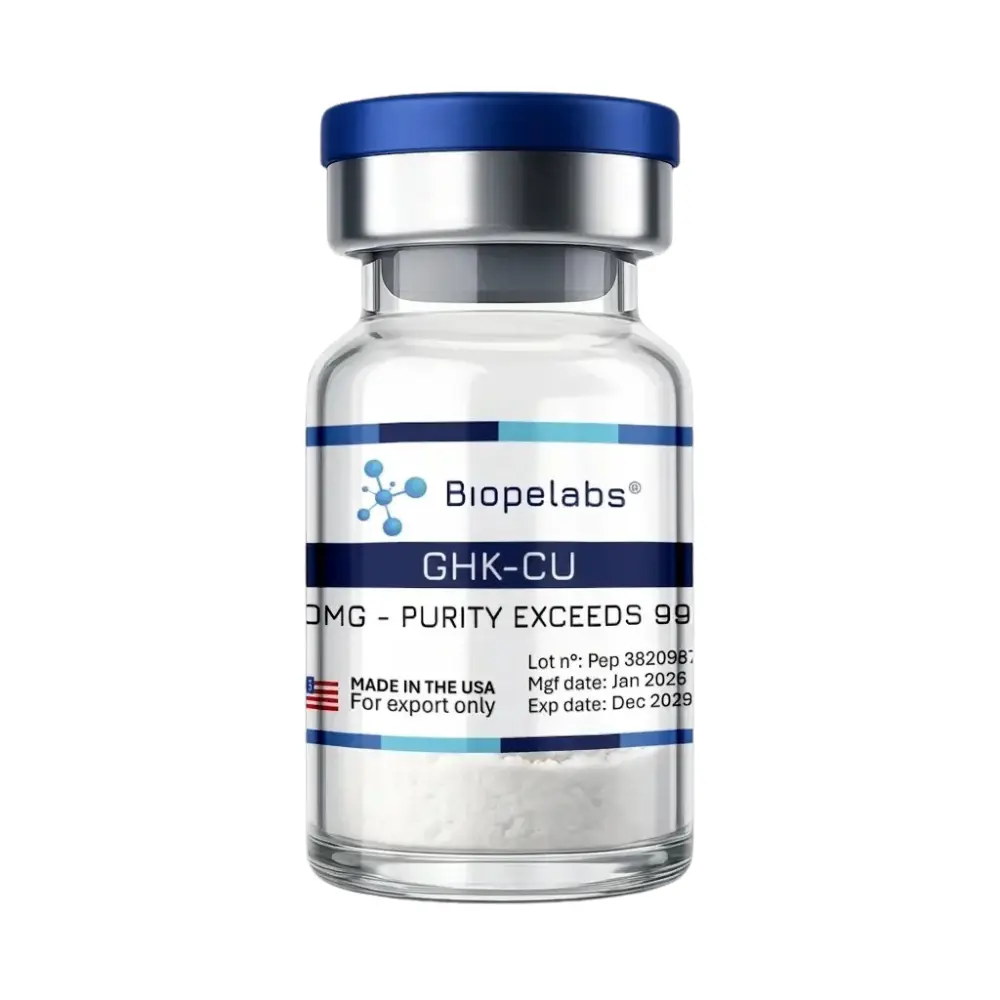
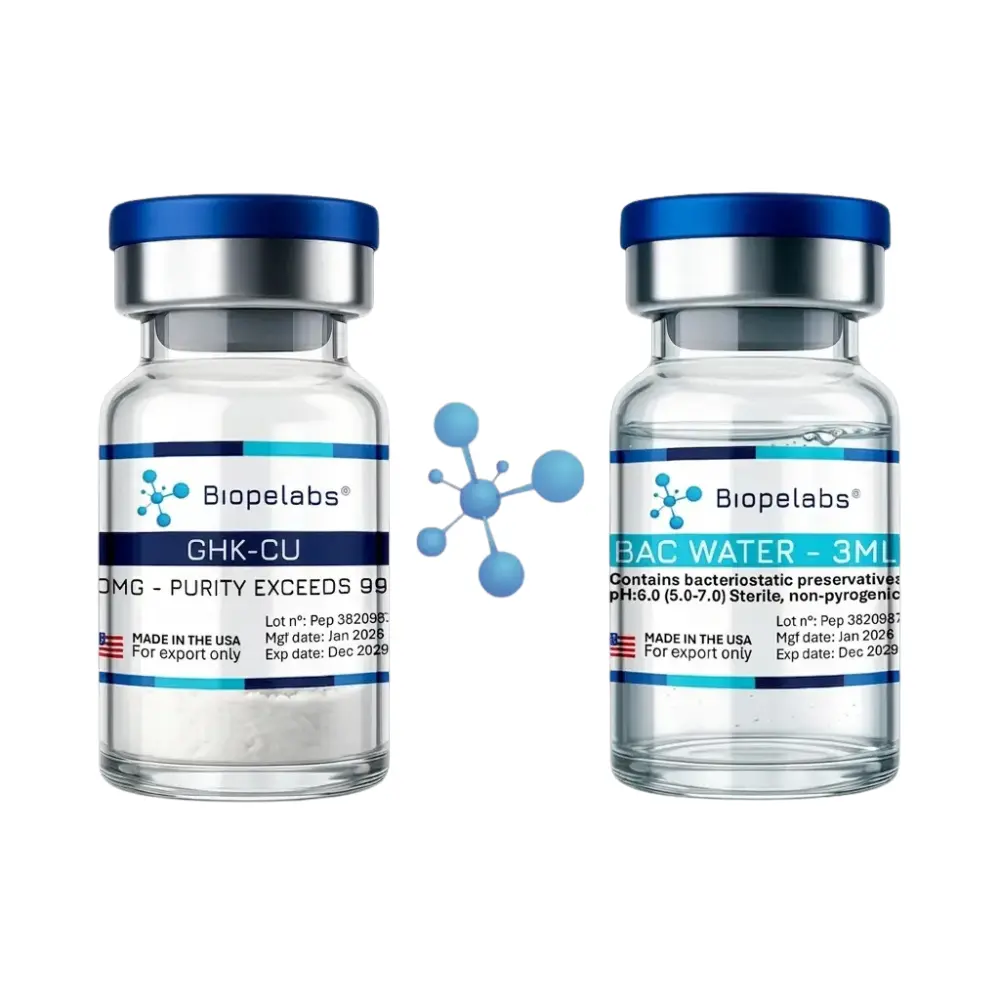
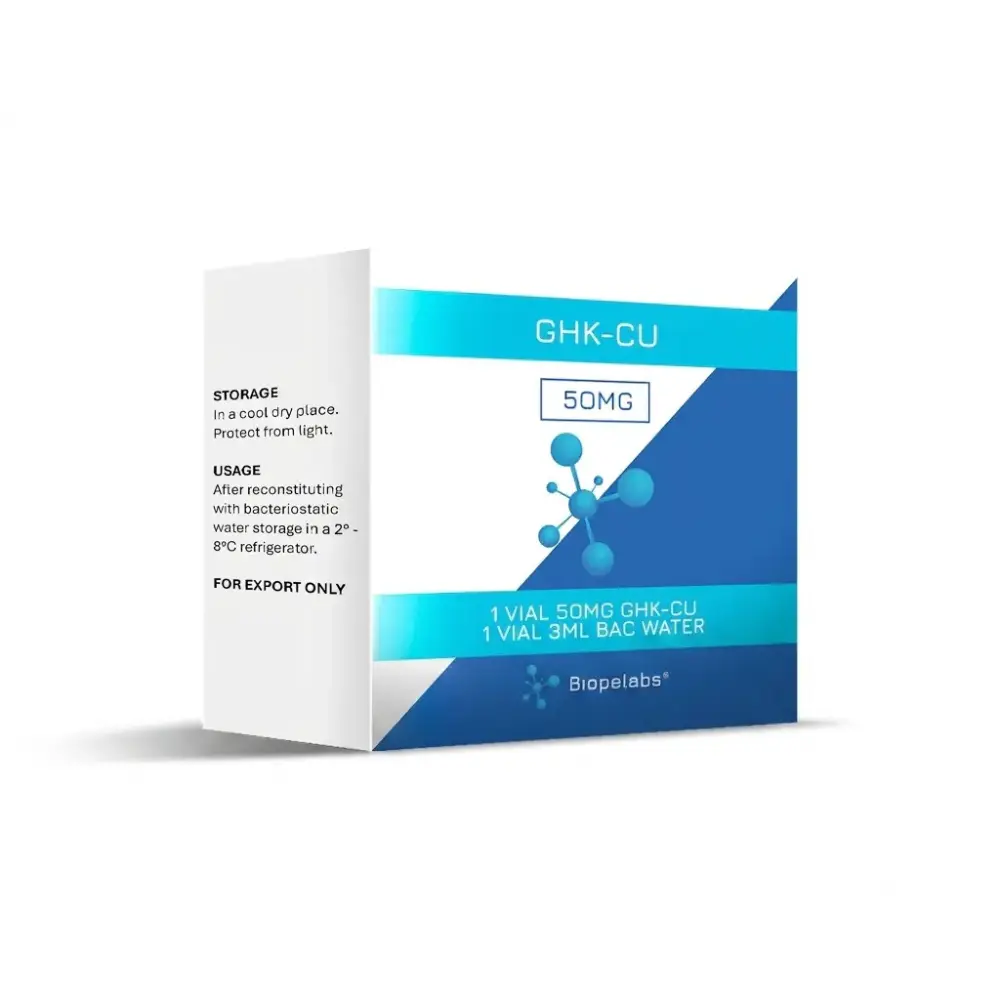


GHK-Cu (glycine-histidine-lysine copper peptide) is a natural tripeptide complex discovered by Dr. Loren Pickart in the 1970s. This copper-binding peptide plays roles in wound healing, tissue regeneration, and anti-inflammatory processes.
GHK-Cu stimulates collagen and elastin production while offering antioxidant protection. It promotes angiogenesis (formation of new blood vessels) and helps regulate remodeling in damaged tissues. Due to these properties, GHK-Cu is widely used in anti-aging skincare formulations and is being studied for potential applications in wound healing, hair growth, and tissue regeneration.
Important Information
| Properties | Value |
| Molecular Formula | C₁₄H₂₄N₆O₄ |
| Molecular Weight | 340.38 g/mol |
| Synonyms | Glycyl-L-histidyl-L-lysine, 49557-75-7, Gly-his-lys, Prezatide, L-Lysine, glycyl-L-histidine |
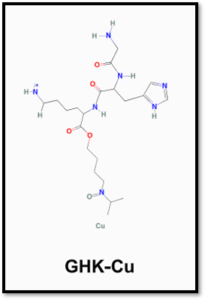
Source: Científico
Lyophilized Peptides
The peptides undergo a lyophilization process, a technique that enhances stability and shelf life while preserving purity and molecular structure throughout storage. It is important to note that no fillers are used during this procedure.
Intended Use
Biopelabs states: this material is provided exclusively as a chemical input for research purposes. Its use is restricted to in vitro assays and experimental activities in laboratory settings. The information presented is strictly for informational and educational purposes. Handling must be carried out only by properly qualified professionals. This product is not classified as a drug, food, or cosmetic and must not be used, marketed, or described as such.
GHK-Cu is a bioactive complex formed by the binding of the tripeptide GHK (Glycine–Histidine–Lysine) to a copper ion (Cu²⁺). This complex occurs naturally in human plasma, saliva, and urine, presenting higher concentrations in youth and declining progressively with aging.
Over recent decades, GHK-Cu has been extensively investigated due to its broad spectrum of biological activities, especially in tissue repair processes, cell regeneration, inflammatory modulation, and gene expression regulation.
Experimental studies attribute several relevant functions to GHK-Cu, including:
These characteristics support its experimental use in research focused on dermatology, wound healing, regeneration, and biological aging.
GHK-Cu is extensively studied in skin models due to its positive impact on the structural integrity of the skin. Research demonstrates that the complex:
These effects are associated, in part, with elastase inhibition, reducing elastin degradation, and direct stimulation of collagen synthesis.
In wound healing models, GHK-Cu accelerates wound closure by promoting angiogenesis, cell proliferation, and production of growth factors such as VEGF and FGF-2. In vivo studies demonstrate a significant reduction in healing time and increased formation of functional connective tissue.
GHK-Cu has also been investigated in experimental models of inflammatory and fibrotic lung diseases.
In induced pulmonary fibrosis models, the complex demonstrated:
Furthermore, studies indicate that GHK-Cu can interfere with pathways associated with epithelial-mesenchymal transition (EMT), through regulation of Nrf2, NF-κB, and TGF-β/Smad signaling, contributing to the preservation of lung architecture.
In COPD and acute lung injury models, GHK-Cu reduced oxidative stress, attenuated inflammation, and restored endogenous antioxidant mechanisms, demonstrating a protective effect on lung tissue.
A relevant aspect of GHK-Cu research involves its ability to interact with metal ions, reducing toxicity associated with copper and zinc accumulation in the central nervous system.
Experimental studies indicate that GHK-Cu:
In animal models, experimental administration of GHK-Cu resulted in improved cognitive performance, reduced amyloid plaques, and positive modulation of brain inflammation, suggesting interest for research in Alzheimer's disease and age-associated cognitive decline.
Additionally, the complex influences gene expression networks related to neuronal survival, synaptic plasticity, and maintenance of brain homeostasis.
Experimental formulations based on GHK-Cu nanoparticles have demonstrated relevant antibacterial activity against microorganisms such as Escherichia coli and Staphylococcus aureus.
The self-organized structure of these nanoparticles improves the stability of the complex in biological environments and enhances its antimicrobial action, making it an object of interest in research on wound healing with infection control.
GHK-Cu presents significant capacity to regulate gene expression, including genes associated with inflammation, tissue remodeling, and cell proliferation.
In vitro studies demonstrate that the complex can:
These effects have been observed in different cell lines, including breast, prostate, and colon cancer, positioning GHK-Cu as a tool of interest for research in cancer biology and functional epigenetics.
GHK-Cu is one of the most widely studied peptide complexes in regenerative biology, standing out for its multifactorial action and favorable biological profile in experimental models.
Its use should remain restricted to research environments, respecting ethical and regulatory guidelines. Future investigations are essential to deepen the understanding of its molecular mechanisms, optimize delivery systems, and evaluate its translational potential in different physiological and pathological contexts.
Pickart, L. (2008). The human tri-peptide GHK and tissue remodeling. Journal of Biomaterials Science, Polymer Edition, 19, 969–988. https://doi.org/10.1163/156856208784909435
Pickart, L., Vasquez-Soltero, J., & Margolina, A. (2015). GHK peptide as a natural modulator of multiple cellular pathways in skin regeneration. BioMed Research International, 2015. https://doi.org/10.1155/2015/648108
Dymek, M., Olechowska, K., Hąc-Wydro, K., & Sikora, E. (2023). Liposomes as carriers of the GHK-tripeptide for aesthetic application. Pharmaceutics, 15. https://doi.org/10.3390/pharmaceutics15102485
Wang, X., Liu, B., Xu, Q., Sun, H., Shi, M., Wang, D., Guo, M., Yu, J., Zhao, C., & Feng, B. (2017). GHK-Cu liposomes accelerate scald wound healing in mice by promoting cell proliferation and angiogenesis. Wound Repair and Regeneration, 25. https://doi.org/10.1111/wrr.12520
Maquart, F., Bellon, G., Chaqour, B., Wegrowski, J., Patt, L., Trachy, R., Monboisse, J., Chastang, F., Birembaut, P., & Gillery, P. (1993). In vivo stimulation of connective tissue accumulation by the tripeptide-copper complex glycyl-L-histidyl-L-lysine-Cu²⁺ in experimental wounds in rats. The Journal of Clinical Investigation, 92(5), 2368–2376. https://doi.org/10.1172/JCI116842
Hou, G., & Zhou, X. (2018). Antioxidant and anti-inflammatory effect of GHK-Cu in bleomycin-induced pulmonary fibrosis. ILD/DPLD of Known Origin. https://doi.org/10.1183/13993003.congress-2018.PA2957
Zhang, Q., Yan, L., Lu, J., & Zhou, X. (2022). Glycyl-L-histidyl-L-lysine-Cu²⁺ attenuates cigarette smoke-induced pulmonary emphysema and inflammation by reducing the oxidative stress pathway. Frontiers in Molecular Biosciences, 9. https://doi.org/10.3389/fmolb.2022.925700
Park, J., Lee, H., Kim, S., & Yang, S. (2016). The GHK-tripeptide complex improves lipopolysaccharide-induced acute lung injury in mice. Oncotarget, 7, 58405–58417. https://doi.org/10.18632/oncotarget.11168
Min, J., Sarlus, H., & Harris, R. (2024). Glycyl-L-histidyl-L-lysine prevents copper and zinc-induced protein aggregation and central nervous system cell death in vitro. Metallomics: Integrated Science of Biometals, 16. https://doi.org/10.1093/mtomcs/mfae019
Tucker, M., Liao, G., Park, J., Rosenfeld, M., Wezeman, J., Mangalindan, R., Ratner, D., Darvas, M., & Ladiges, W. (2023). Behavioral and neuropathological features of Alzheimer's disease are attenuated in 5xFAD mice treated with intranasal GHK peptide. bioRxiv. https://doi.org/10.1101/2023.11.20.567908
Pickart, L., Vasquez-Soltero, J., & Margolina, A. (2017). The effect of the human GHK peptide on gene expression relevant to nervous system function and cognitive decline. Brain Sciences, 7. https://doi.org/10.3390/brainsci7020020
Sun, L., Li, A., Hu, Y., Li, Y., Shang, L., & Zhang, L. (2019). Self-assembled fluorescent and antibacterial GHK-Cu nanoparticles for wound healing applications. Particle & Particle Systems Characterization, 36. https://doi.org/10.1002/ppsc.201800420
Pickart, L., & Margolina, A. (2021). Modulation of gene expression in human breast cancer MCF7 and prostate cancer PC3 cells by the human copper-binding peptide GHK-Cu. OBM Genetics, 05, 1-1. https://doi.org/10.21926/OBM.GENET.2102128
The content was reviewed by Ky H. Le, MD. Dr. Ky H. Le is a family medicine physician in Aiea, Hawaii. He received his medical degree from St. George's University School of Medicine and has been practicing for more than 20 years. He has expertise in treating obesity, diabetes, hypertension, and high blood pressure, among other conditions – see all areas of expertise. Dr. Ky H. Le accepts Medicare, Aetna, Humana, Blue Cross, United Healthcare.
Ref.: https://health.usnews.com/doctors/ky-le-371599#expertise
Only logged in customers who have purchased this product may leave a review.
| Weight | 40 g |
|---|---|
| Dimensions | 7 × 3,6 × 8 cm |

Reviews
There are no reviews yet.