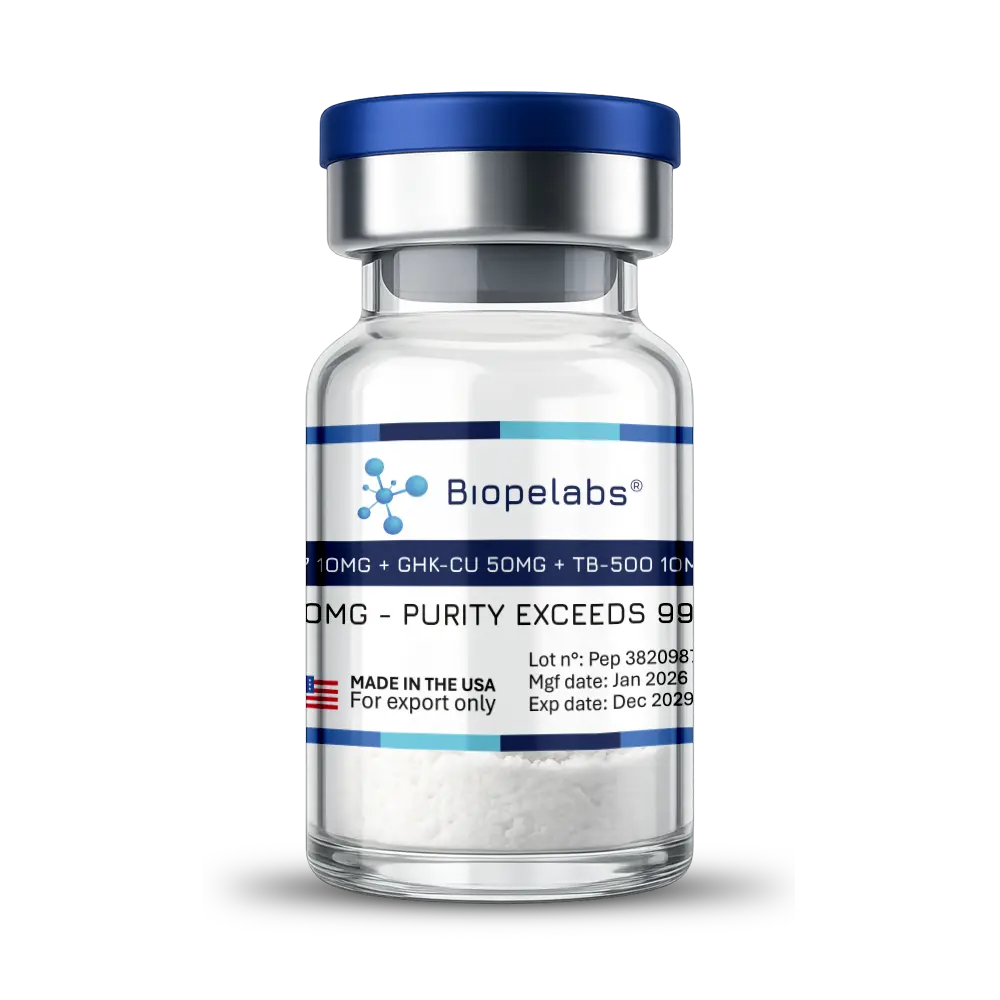
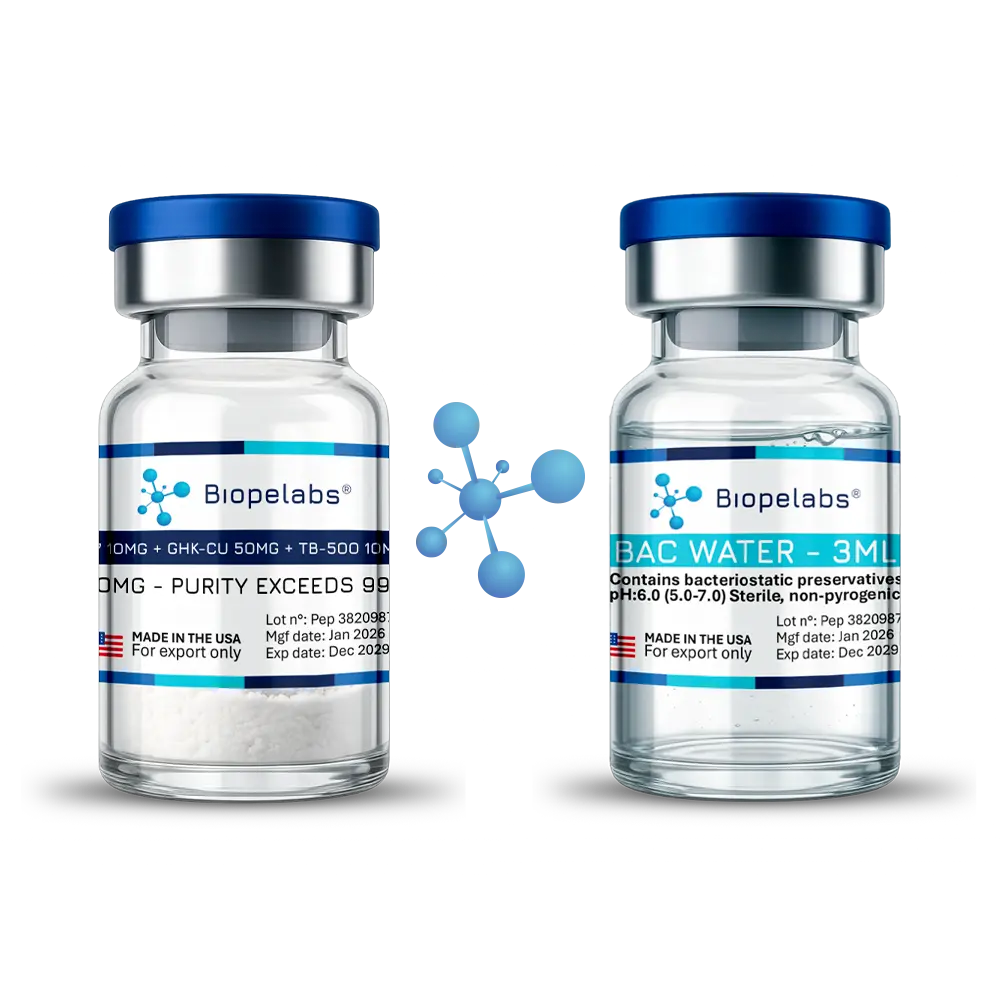
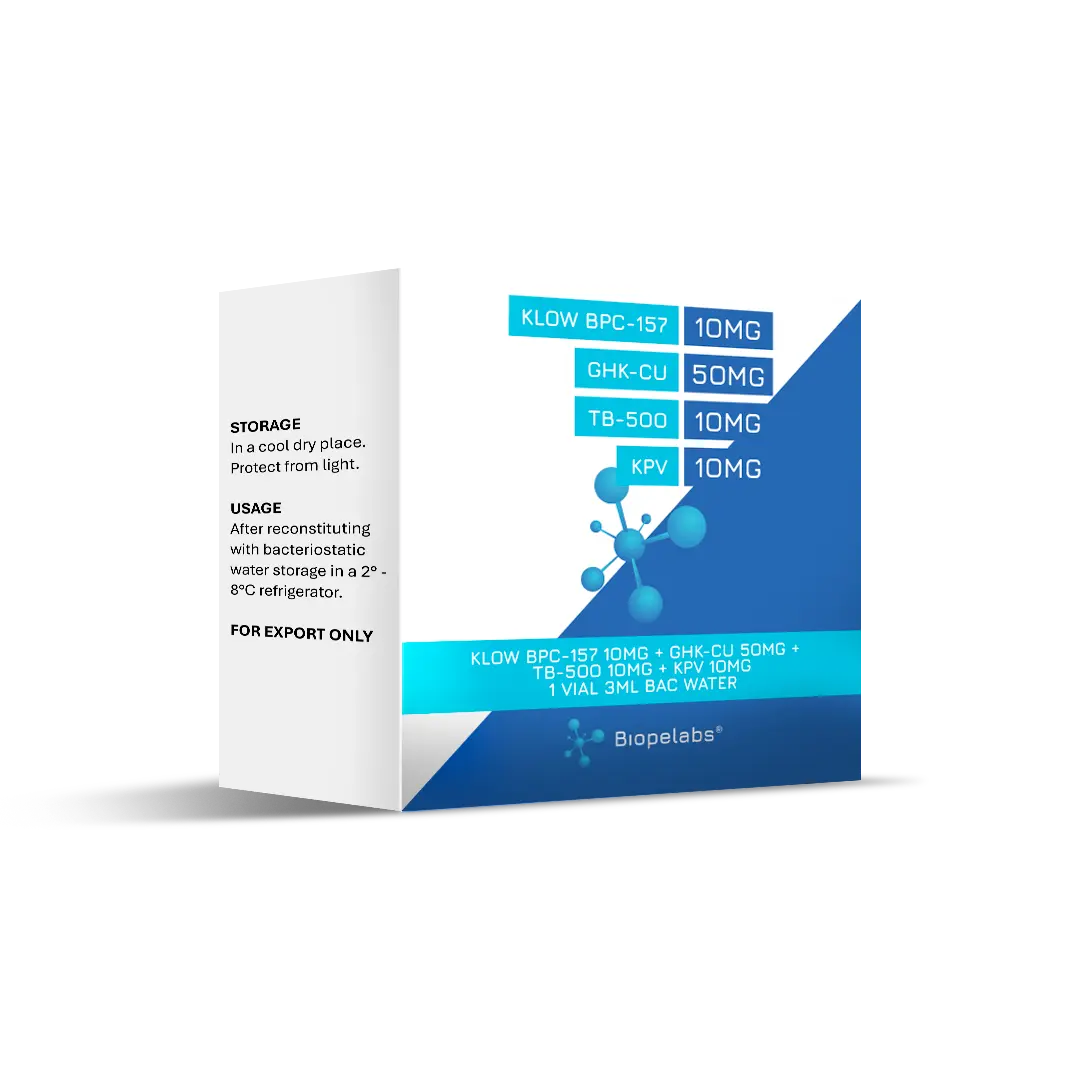


BPC-157 is a synthetic pentadecapeptide derived from a sequence isolated from human gastric juice, studied for its possible cytoprotective, angiogenic, and modulatory actions on pathways related to nitric oxide (NO) and vascular endothelial growth factor (VEGF). In experimental models, it has been associated with accelerated soft tissue repair and connective tissue reorganization.
GHK-Cu (glycyl-L-histidyl-L-lysine complexed with copper) is an endogenous tripeptide widely investigated in experimental dermatology. The presence of the copper ion (Cu²⁺) is associated with fibroblast activation, stimulation of type I and III collagen synthesis, elastin, and glycosaminoglycans, as well as the modulation of matrix metalloproteinases (MMPs) involved in extracellular matrix remodeling.
TB-500 corresponds to the functional synthetic fragment of thymosin beta-4, related to the regulation of actin dynamics, cell migration, and neovascularization processes. Experimental studies indicate possible involvement in cutaneous wound healing and reduction of fibrotic processes.
KPV (Lysine–Proline–Valine) is a tripeptide derived from the C-terminal portion of the hormone α-MSH (alpha-melanocyte-stimulating hormone). In experimental models, it has been investigated for its potential anti-inflammatory effect independent of melanotropic activity, acting on the modulation of pro-inflammatory cytokines and reducing NF-κB activation in in vitro studies.
The combination of the four peptides is proposed on an investigational basis as a multimodal approach aimed at structural, angiogenic, and immunomodulatory support of the skin, remaining restricted to the context of scientific research.
Important Information
| Properties | Value |
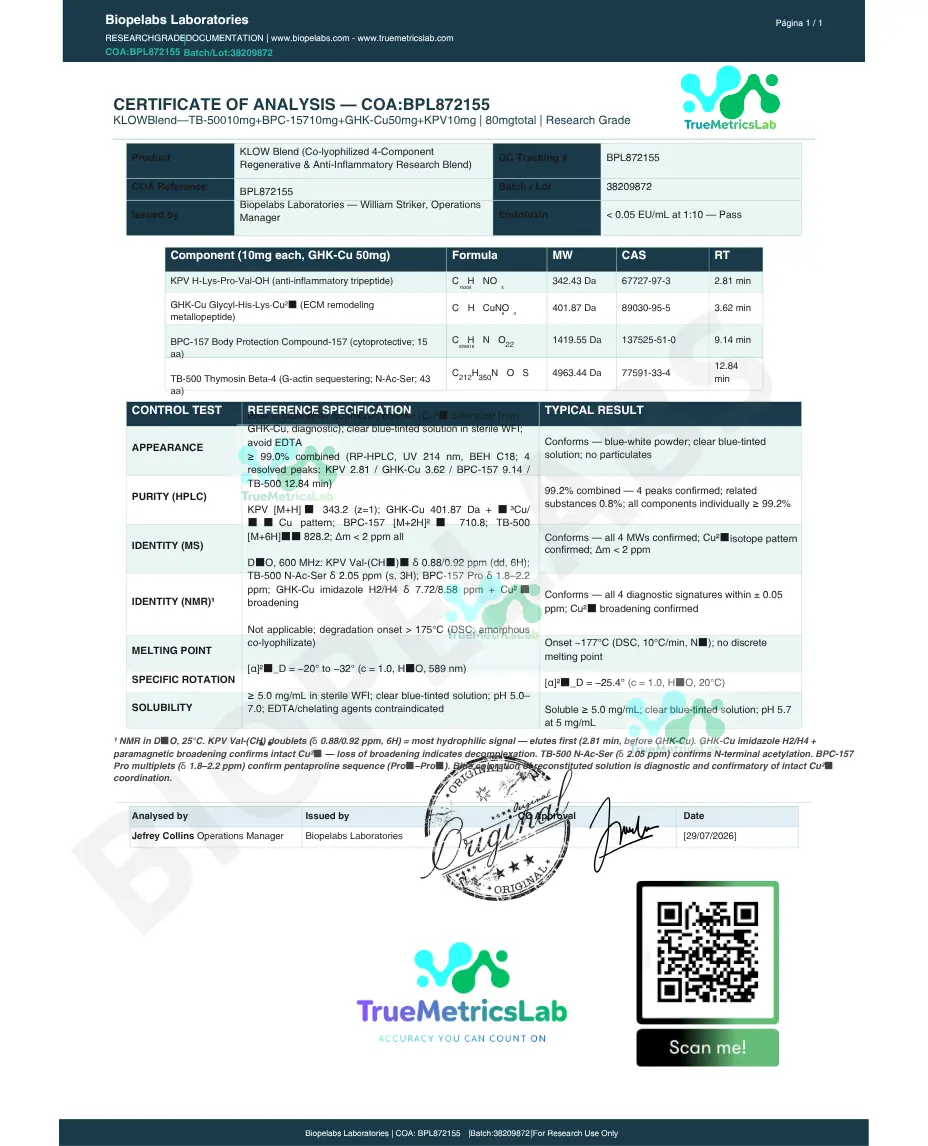
| Molecular Formula | BPC-157: C₆₂H₉₈N₁₆O₂₂ GHK-Cu: C₁₄H₂₄N₆O₄·Cu TB-500 (active fragment of Thymosin Beta-4): C₂₁₂H₃₅₀N₅₆O₇₈S KPV: C₁₆H₂₈N₄O₄ |
| Molecular Weight | BPC-157: approximately 1419.6 g/mol GHK-Cu: approximately 340.0 g/mol TB-500: approximately 4963.5 g/mol KPV: approximately 368.5 g/mol |
| Synonyms | BPC-157 is also referred to as Pentadecapeptide BPC, Body Protection Compound-157, PL-14736. GHK-Cu is known as Copper Tripeptide-1, Glycyl-L-histidyl-L-lysine copper, Copper Peptide GHK. TB-500 is referred to as synthetic Thymosin Beta-4, Thymosin Beta-4 active fragment, synthetic Tβ4. KPV is referred to as Lysine-Proline-Valine, α-MSH (11-13), C-terminal fragment of alpha-MSH. |
Observed Scientific Findings
Preclinical studies with BPC-157 have demonstrated accelerated soft tissue healing, increased angiogenesis, and modulation of inflammatory mediators in animal models.
Research involving GHK-Cu indicates stimulation of fibroblast proliferation, increased collagen and elastin synthesis, as well as a possible antioxidant effect and regulation of gene expression associated with tissue regeneration.
Experimental studies with Thymosin Beta-4 and its synthetic fragments suggest increased cell migration, promotion of neovascularization, and improved cutaneous repair.
Investigations with KPV indicate reduced production of pro-inflammatory cytokines, modulation of the NF-κB pathway, and a possible soothing effect in experimental models of cutaneous and intestinal inflammation.
Despite the promising results observed in in vitro studies and animal models, there is not yet sufficient robust clinical evidence to validate consolidated therapeutic efficacy in humans. The formulation remains strictly investigational, intended exclusively for scientific research.
Lyophilized Peptides
The peptides undergo a lyophilization process, a technique that contributes to greater stability and durability, while maintaining purity and molecular structure during storage. It should be noted that no bulking agents are used during this process.
Intended Use
Biopelabs warns: this material is provided exclusively as a chemical input for research. Its use is restricted to in vitro assays and experimental activities in laboratory settings. The information presented is strictly for informational and educational purposes. Handling must be performed only by properly qualified professionals. The product is not classified as a medication, food, or cosmetic, and should not be used, marketed, or described as such.
KLOW blend, an evolution of the previous regenerative blend, with the strategic addition of the peptide KPV, expanding the spectrum of action to immunomodulation and severe inflammation control.
Scientific Research on KLOW BPC-157 10mg + GHK-Cu 50mg + TB-500 10mg + KPV 10mg
The KLOW blend is a complex formulation that combines tissue regeneration, matrix remodeling, and potent systemic anti-inflammatory action. The inclusion of KPV (Lysine-Proline-Valine), a tripeptide derived from alpha-melanocyte-stimulating hormone (α-MSH), confers unique immunomodulatory properties to the blend, without the pigmentary effects of the precursor hormone. This blend is primarily investigated in cases of chronic inflammation, autoimmune diseases, and accelerated repair of tissues with exacerbated inflammatory components.
Mechanism of Action and Inhibition
The KLOW blend operates through a "quadrilateral" of cellular signaling:
Metabolic Impacts Already Scientifically Investigated
Investigation in Oncological Models
Oncological investigation of the KLOW blend is cautious:
Specific Action of the KLOW Blend
The specific action of this blend is Systemic Regeneration with Inflammatory Suppression (SIRS-Recovery). KLOW is superior to other blends when the goal is tissue repair in an environment of "cytokine storm" or autoimmune inflammation. It not only signals the body to rebuild tissue (BPC/TB/GHK) but also sends a strong biochemical signal to shut down the inflammation that prevents this reconstruction (KPV).
Pharmacokinetic Considerations in Research
Other Important Research-Related Considerations
A vital relationship is the Brain-Gut-Skin Axis. KPV and BPC-157 have neuroprotective and gastric mucosa-protective effects. Research indicates that this blend may be particularly useful in the study of dermatological conditions that have a psychosomatic or intestinal inflammatory background (such as psoriasis and severe atopic dermatitis).
Final Considerations
The KLOW blend represents the frontier of regenerative biotechnology combined with immunology. By adding KPV, the protocol ceases to be merely "reconstructive" and becomes "modulatory," allowing healing to occur in tissue environments previously hostile due to chronic inflammation.
References
Only logged in customers who have purchased this product may leave a review.
| Weight | 40 g |
|---|---|
| Dimensions | 7 × 3,6 × 8 cm |

Reviews
There are no reviews yet.