
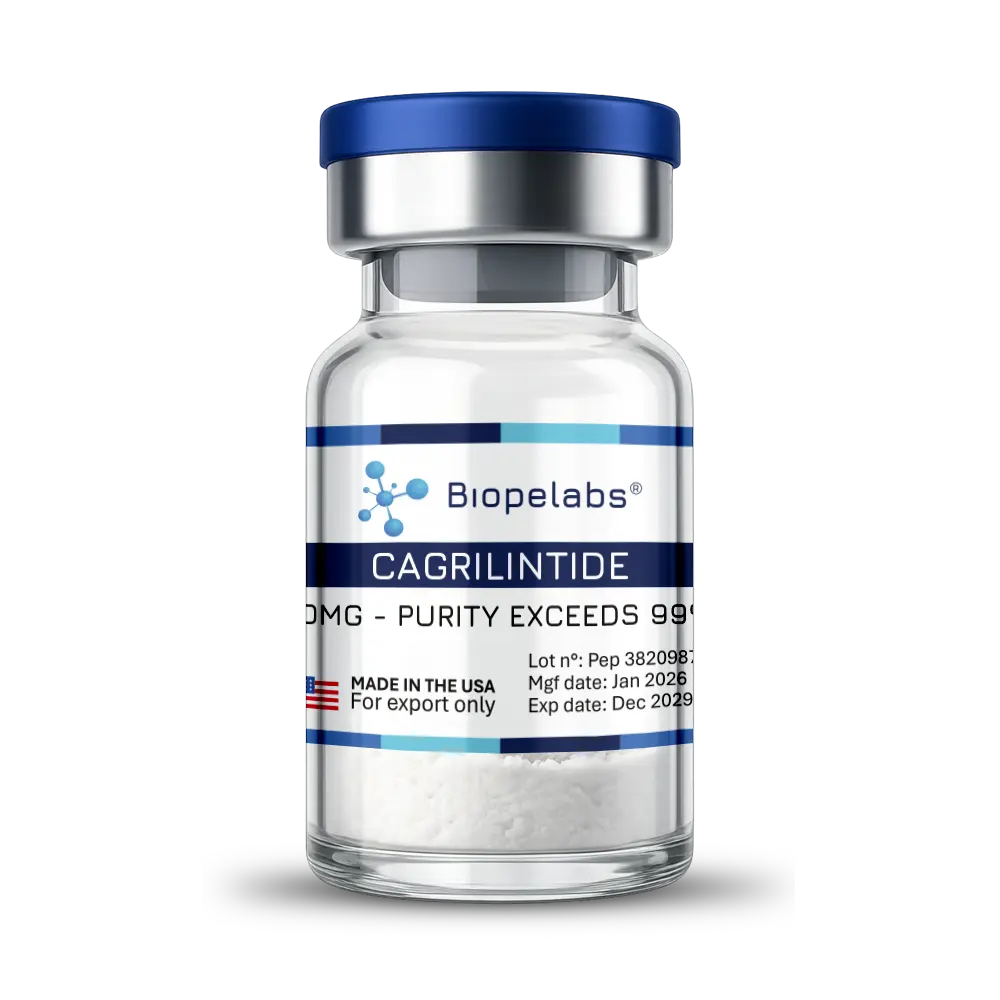
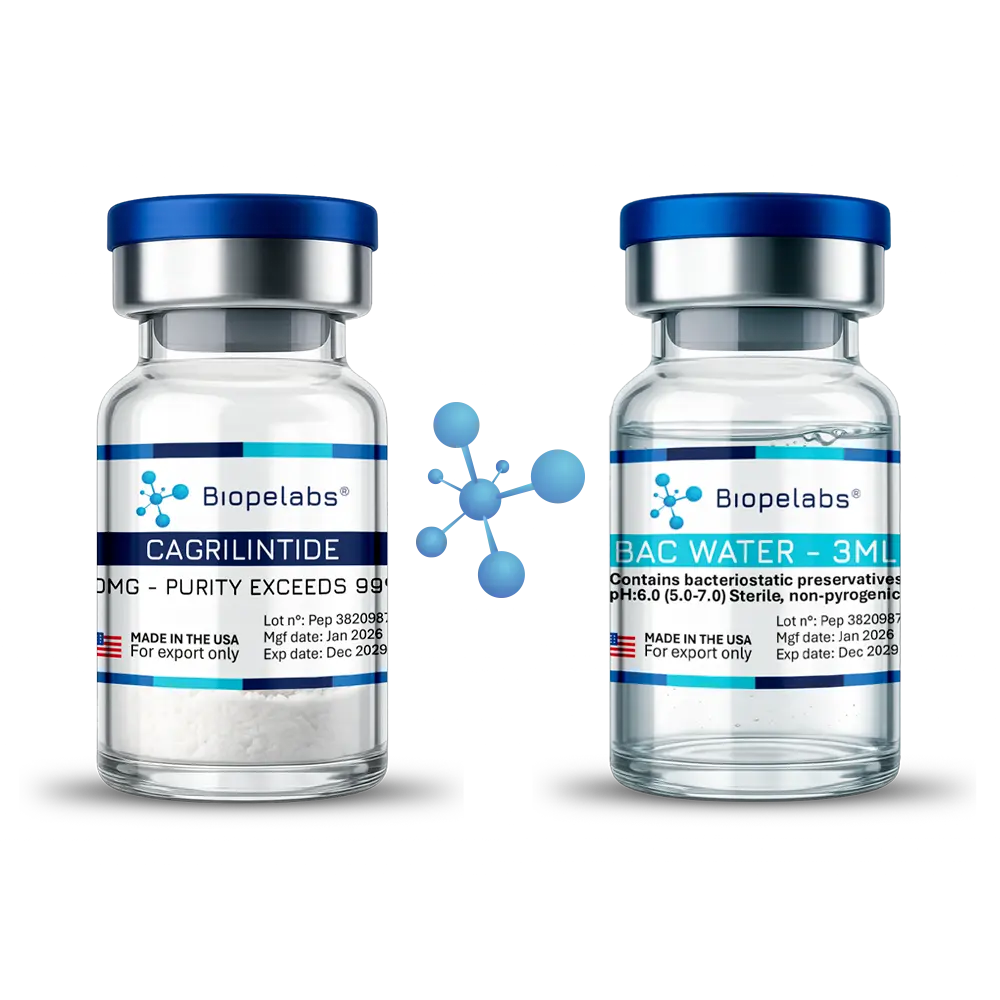
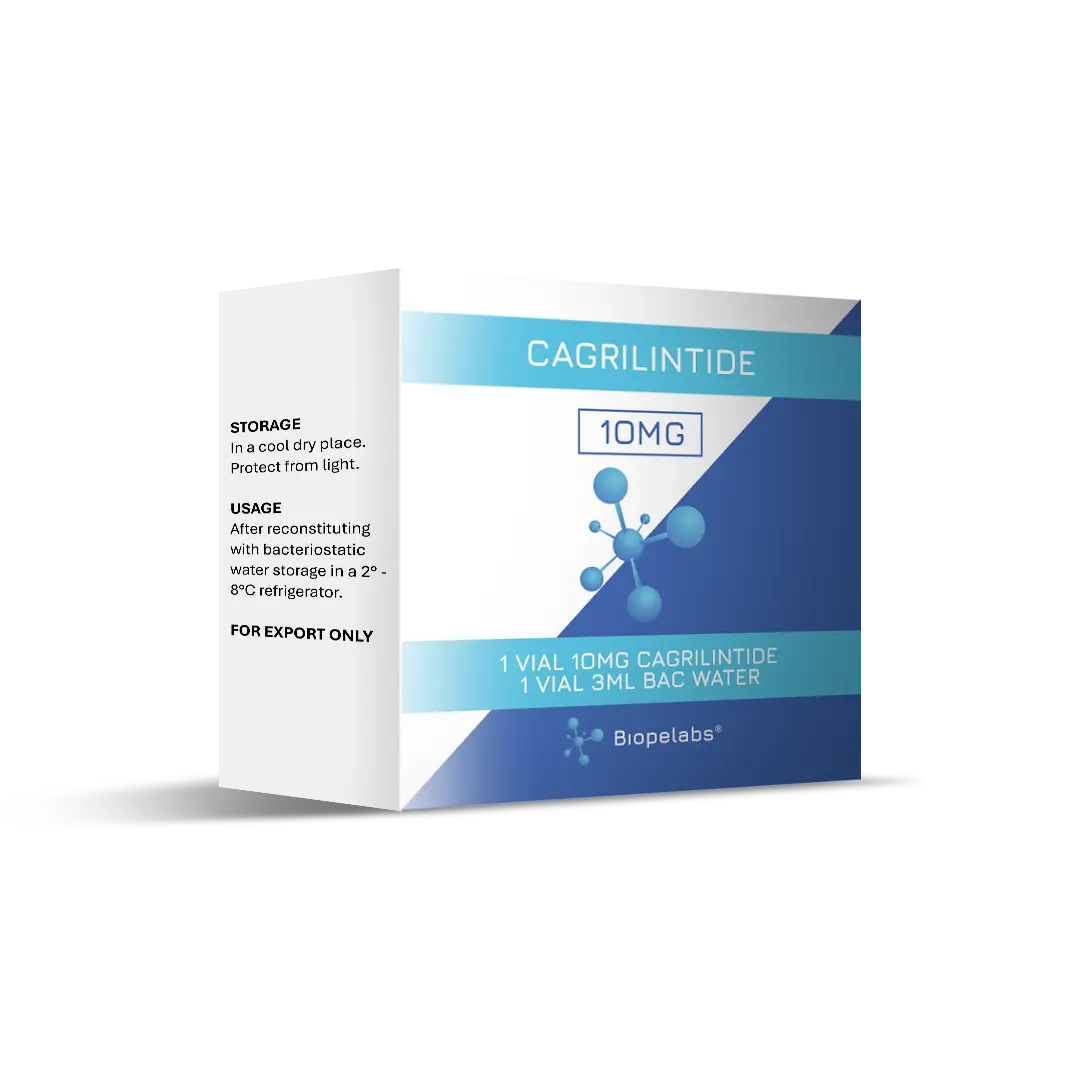


Cagrilintide is an innovative long-acting amylin analog, featuring N-terminal lipidation that extends its half-life through albumin binding. This synthetic peptide mimics and enhances the effects of natural amylin, acting simultaneously on multiple metabolic and appetite-regulation pathways in both homeostatic and hedonic systems.
Important Information
| Properties | Value |
| Molecular Formula | C194H312N54O59S2 |
| Molecular Weight | 4,409 g/mol |
| Synonyms | 1415456-99-3, Cagrilintide [INN], AO43BIF1U8, LDERDVMBIYGIOI-IZVMHKDJSA-N |
Main Structure of the Cagrilintide Peptide
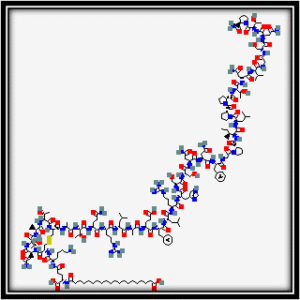
Source: PubChem
Lyophilized Peptides
The peptides undergo a lyophilization process, a technique that enhances stability and shelf life while preserving purity and molecular structure during storage. It is important to note that no fillers are used during this procedure.
Intended Use
Biopelabs advises: this material is provided exclusively as a chemical input for research purposes. Its use is restricted to in vitro assays and experimental activities in laboratory environments. The information presented is strictly for informational and educational purposes. Handling must be carried out only by properly qualified professionals. This product is not classified as a medication, food, or cosmetic and must not be used, marketed, or described as such.
Scientific Research on Cagrilintide (Cagrilintide)
Cagrilintide is a long-acting synthetic analog of human amylin, developed for investigation and therapeutic application in metabolic disorders, particularly obesity and appetite regulation. Structurally, it is a modified peptide with strategic amino acid substitutions and lipid acylation to prolong plasma half-life and enhance metabolic stability.
Endogenous amylin is a peptide hormone co-secreted with insulin by pancreatic β-cells and plays a significant role in postprandial glycemic control and central regulation of satiety. Cagrilintide was designed to maintain affinity for amylin receptors and potentially interact with calcitonin gene-related peptide (CGRP) receptors, exhibiting a prolonged pharmacodynamic profile.
Mechanism of Action and Inhibition
Cagrilintide acts as an agonist of amylin receptors, which belong to the family of G protein-coupled receptors (GPCRs), formed by the association of the calcitonin receptor (CTR) with receptor activity-modifying proteins (RAMPs).
Activation of these receptors results in:
• Delayed gastric emptying
• Reduced food intake via central action in the hypothalamus and area postrema
• Suppression of postprandial glucagon secretion
• Modulation of satiety signaling
At the intracellular level, receptor activation promotes an increase in cyclic AMP (cAMP) and subsequent activation of protein kinase A (PKA)-dependent pathways.
There is no consolidated evidence of direct inhibitory effects on specific metabolic enzymes; its action is predominantly receptor agonism within peptidergic systems.
Metabolic Impacts Investigated
Clinical and preclinical studies have demonstrated that Cagrilintide:
• Significantly reduces caloric intake
• Promotes sustained weight loss
• Improves glycemic control parameters
• Reduces glycated hemoglobin levels in insulin resistance contexts
• May positively influence cardiometabolic risk markers
Combination therapy with GLP-1 receptor agonists (such as semaglutide) has been extensively investigated, demonstrating a synergistic effect on body weight reduction, suggesting complementary action between amylin and GLP-1 pathways in central energy regulation.
Investigation in Oncological Models
To date, there is no robust evidence of direct investigation of Cagrilintide in oncological models with primary antitumor objectives.
However, considering that:
• Obesity is a risk factor for multiple types of cancer
• Metabolic modulation influences proliferative pathways
• Amylin-related signaling may indirectly interact with metabolic and inflammatory axes
There is theoretical interest in evaluating weight-modulating agents as potential indirect modulators of oncological risk. However, specific experimental evidence for Cagrilintide in oncology remains limited.
Pharmacokinetic Considerations in Research
Cagrilintide was developed with structural modifications that promote:
• Reversible binding to plasma albumin
• Extended half-life compatible with once-weekly subcutaneous administration
• Slow absorption after subcutaneous injection
• Reduced proteolytic degradation
Its pharmacokinetic profile demonstrates:
• Delayed plasma peak
• Sustained systemic exposure
• Moderate interindividual variability
The formulation was designed to allow low-frequency dosing regimens, improving adherence in clinical studies.
Other Relevant Research Applications
The interaction between amylin and GLP-1 signaling remains an active area of research in metabolic endocrinology.
Final Considerations
Cagrilintide represents a long-acting amylin analog with a pharmacological profile focused on the modulation of satiety and energy metabolism. Its relevance in research is primarily centered on the investigation of obesity, glycemic regulation, and combination therapies with incretin agonists.
Although oncological data remain limited, its role in modulating body weight and the systemic metabolic environment maintains indirect scientific interest. The development of long-acting amylin analogs reinforces the importance of neuroendocrine regulation in metabolic control.
References
Hay, D. L., Chen, S., Lutz, T. A., Parkes, D. G., & Roth, J. D. (2015). Amylin: Pharmacology, physiology, and clinical potential. Pharmacological Reviews, 67(3), 564–600. https://doi.org/10.1124/pr.114.009092
Lutz, T. A. (2010). The role of amylin in the control of energy homeostasis. American Journal of Physiology - Regulatory, Integrative and Comparative Physiology, 298(6), R1475–R1484. https://doi.org/10.1152/ajpregu.00703.2009
Frias, J. P., et al. (2021). Effect of coadministration of cagrilintide with semaglutide on body weight in adults with overweight or obesity. The Lancet, 397(10286), 1736–1748. https://doi.org/10.1016/S0140-6736(21)00845-8
Lau, J., Bloch, P., Schäffer, L., Pettersson, I., Spetzler, J., Kofoed, J., et al. (2015). Discovery of the once-weekly glucagon-like peptide-1 (GLP-1) analogue semaglutide. Journal of Medicinal Chemistry, 58(18), 7370–7380. https://doi.org/10.1021/acs.jmedchem.5b00726
Scientific Reviewer
This content was reviewed by Dr. Ky H. Le, MD. Dr. Ky H. Le is a family medicine physician in Aiea, Hawaii. He earned his medical degree from St. George’s University School of Medicine and has been practicing for over 20 years. He has expertise in treating obesity, diabetes, hypertension, and high blood pressure, among other conditions. Dr. Ky H. Le accepts Medicare, Aetna, Humana, Blue Cross, and United Healthcare.
Ref.: https://health.usnews.com/doctors/ky-le-371599#expertise
Only logged in customers who have purchased this product may leave a review.
| Weight | 40 g |
|---|---|
| Dimensions | 7 × 3,6 × 8 cm |

Reviews
There are no reviews yet.