


Erythropoietin is a glycoprotein composed of 165 amino acids in its mature form, with approximately 30–40% of its molecular mass consisting of carbohydrate chains (glycosylation). It possesses three N-glycosylation sites and one O-glycosylation site, modifications that are fundamental for its plasma stability, biological half-life, and functional activity.
It is synthesized predominantly by peritubular interstitial cells of the kidney in response to tissue hypoxia. The molecular mechanism involves activation of hypoxia-inducible factor (HIF), which stimulates EPO gene transcription. After secretion, erythropoietin binds to the specific EPOR receptor on the surface of erythroid progenitors in the bone marrow, promoting receptor dimerization and activation of the JAK2/STAT5 pathway, resulting in increased cell survival, proliferation, and erythroid differentiation.
Recombinant human forms (rHuEPO) are produced by recombinant DNA technology in mammalian cells, maintaining a structural profile similar to the endogenous hormone, although they may exhibit variations in glycosylation patterns.
Important Information
| Properties | Value |
| Molecular Formula | Does not have a single fixed molecular formula (165-amino acid glycoprotein with variable glycosylation) |
| Molecular Weight | Approximately 30,400 g/mol (protein form); approximately 34,000–40,000 g/mol considering full glycosylation |
| Synonyms | Human Erythropoietin, Erythropoietin, hEPO, rHuEPO (recombinant human erythropoietin), Epoetin, Epoetin alfa, Epoetin beta |
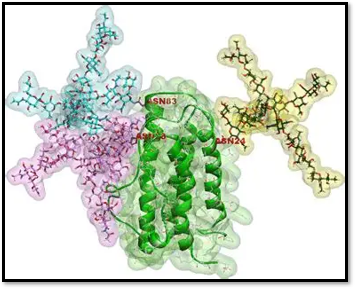
Source: Científico
Lyophilized Peptides
The peptides undergo a lyophilization process, a technique that enhances stability and shelf life while preserving purity and molecular structure throughout storage. It is important to note that no fillers are used during this procedure.
Intended Use
Biopelabs states: this material is provided exclusively as a chemical input for research purposes. Its use is restricted to in vitro assays and experimental activities in laboratory settings. The information presented is strictly for informational and educational purposes. Handling must be carried out only by properly qualified professionals. This product is not classified as a drug, food, or cosmetic and must not be used, marketed, or described as such.
Erythropoietin (EPO) as a protein entity, disregarding specific dosage parameters to focus on the essence of the molecule.
Erythropoietin (EPO) is an essential glycoprotein hormone and hematopoietic cytokine, composed of a polypeptide chain of 165 amino acids. It has a molecular mass ranging between 30,000 and 34,000 Daltons, of which approximately 40% corresponds to carbohydrate residues (glycosylation), fundamental for its stability and biological activity in vivo. It is produced predominantly by renal peritubular interstitial cells in adults and, to a lesser extent, by hepatocytes.
The mechanism of action of EPO begins with its binding to the erythropoietin receptor (EPOR), a type I cytokine receptor present on the surface of erythroid progenitors in the bone marrow.
EPO acts as the central regulator of oxygen and iron homeostasis:
The investigation of EPO in oncology is a field of high technical complexity due to EPOR expression in non-hematological cells:
The primary specific action of EPO is Obligatory Differentiation and Survival of the Red Cell Lineage. Without the presence of EPO, erythroid progenitors (CFU-E) undergo massive apoptosis. Therefore, EPO functions as the cellular "decision" factor that determines the renewal rate and concentration of circulating erythrocytes, regulating blood viscosity in real time.
A critical research relationship is the HIF-EPO Axis. The EPO gene is controlled by the transcription factor HIF-2, which is stabilized only under low O₂ pressure conditions. This relationship is the primary focus of studies on altitude adaptation, chronic anemias, and ischemic diseases.
Erythropoietin is more than a hematopoietic hormone; it is a cell survival signaling molecule. While its function in the bone marrow is well understood, the current frontiers of research focus on its extra-hematopoietic receptors, seeking to explore its neuroprotective and cardioprotective properties, while simultaneously calibrating its influence on the oncological microenvironment.
Only logged in customers who have purchased this product may leave a review.
| Weight | 40 g |
|---|---|
| Dimensions | 7 × 3,6 × 8 cm |

Reviews
There are no reviews yet.