
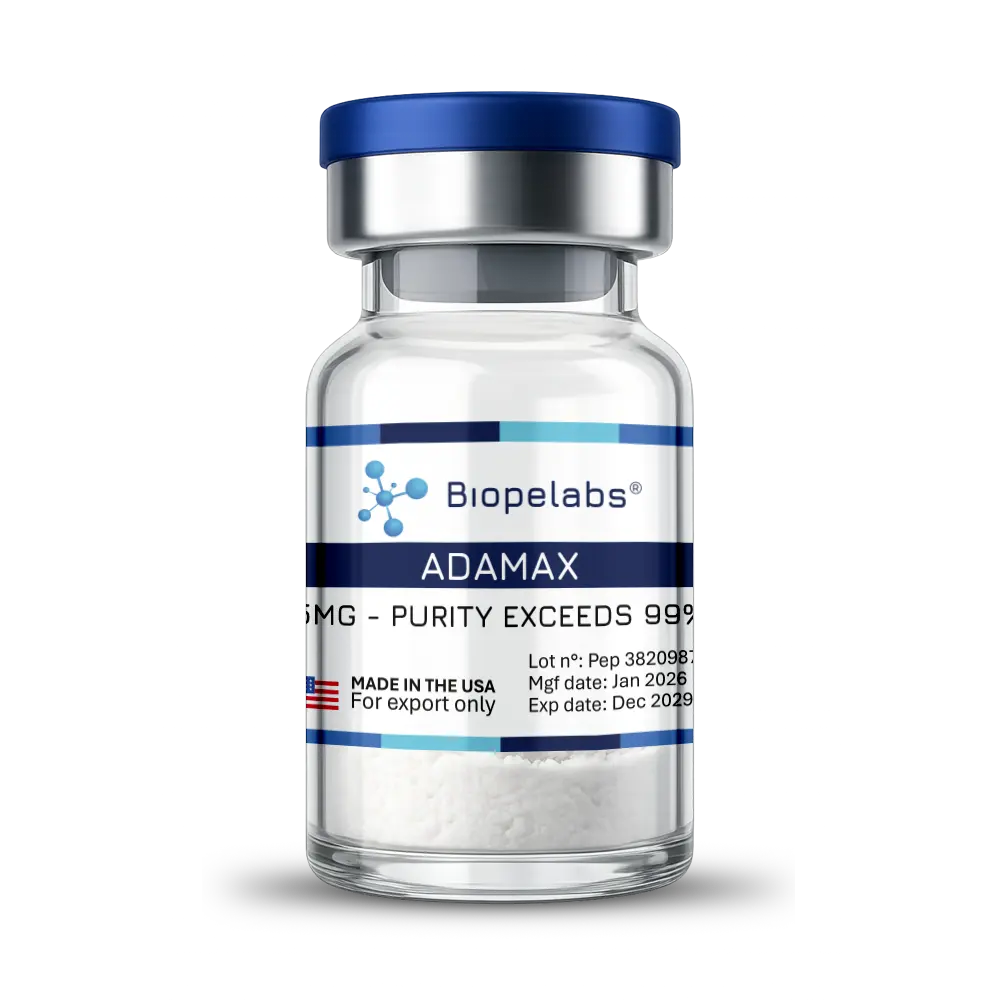
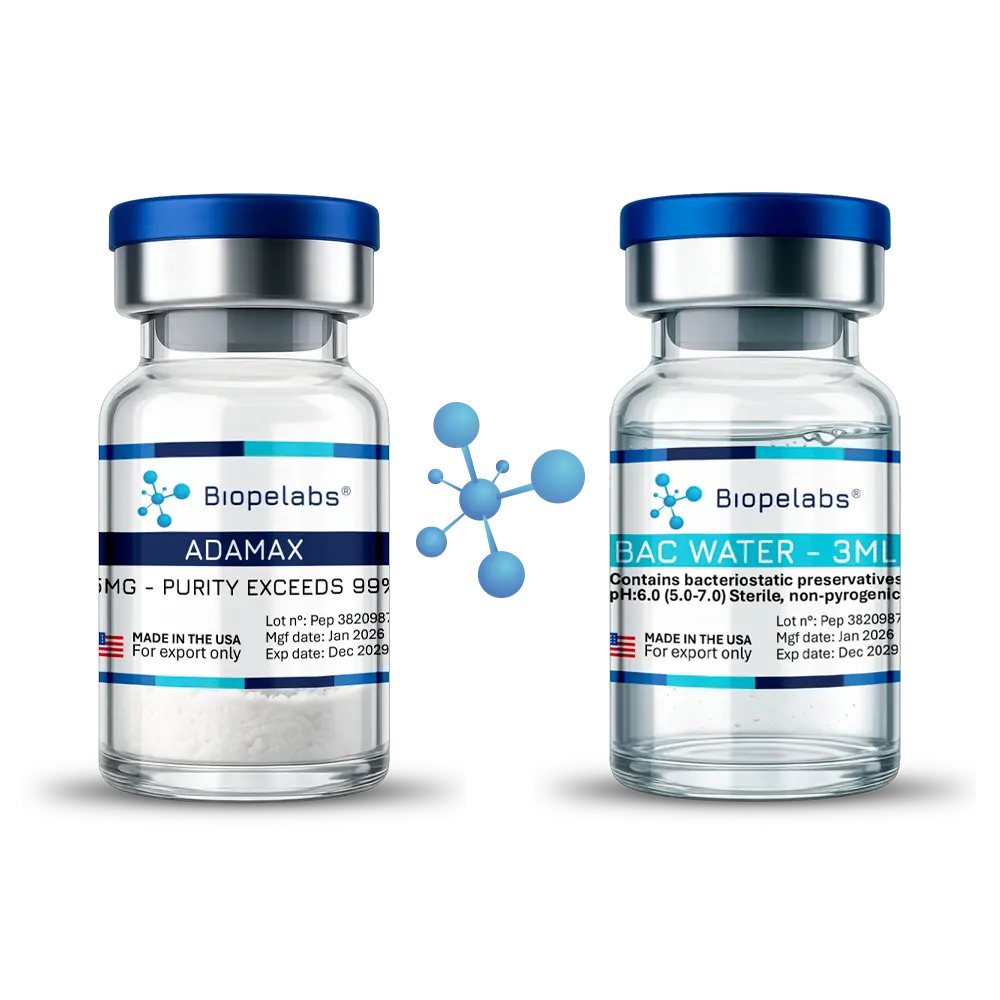
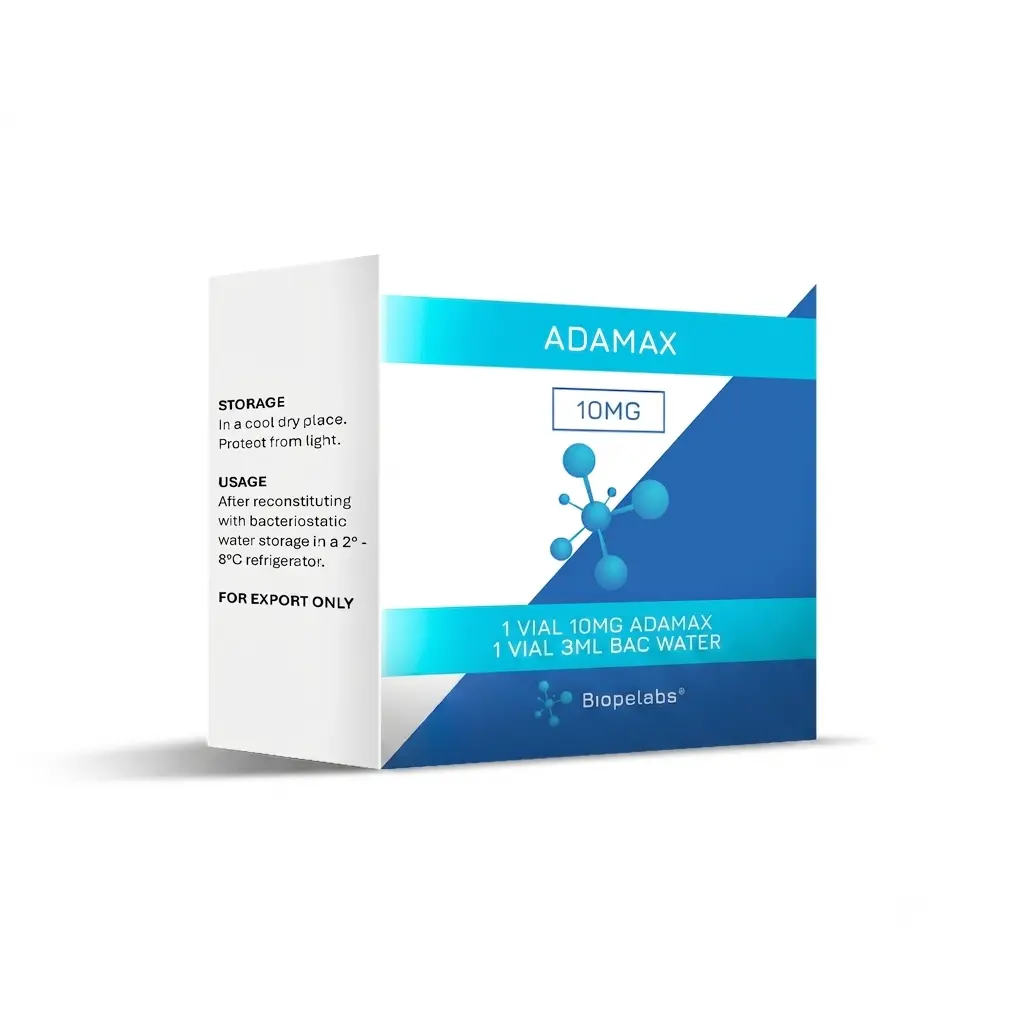


Adamax is described as a linear peptide of approximately nine amino acids, typically reported with an acetylated N‑terminus, a modification that enhances stability and resistance to enzymatic degradation.
Its often‑cited sequence is Ac‑Met‑Glu‑His‑Phe‑Pro‑Gly‑Pro‑Ala‑Gly‑OH, indicating structural derivation from the ACTH‑related/Semax family of peptides. In research‑supplier technical data, Adamax is classified as an experimental neuropeptide that may influence neuronal signaling pathways, including upregulation of neurotrophic factors such as BDNF and modulation of receptors linked to synaptic plasticity.
Some structural variants of Adamax have also been designed to interact with microtubule‑associated proteins, potentially contributing to neuroprotection and maintenance of neuronal function in experimental models.
Importantly, Adamax is explicitly labeled in multiple commercial and technical databases as a substance intended exclusively for research use, without regulatory approval for clinical or human administration.
Important Information
| Property | Value |
| Molecular formula | C₄₄H₆₁O₁₃N₁₁S₁ |
| Molecular weight | 984.1 Da (based on sequence Ac‑MEHFPGPAG) |
| Synonyms | Adamantane Semax, Semax analog peptide, ACTH/melanocortin‑derived neuropeptide (functional classification) |
Main structure of the peptide Adamax
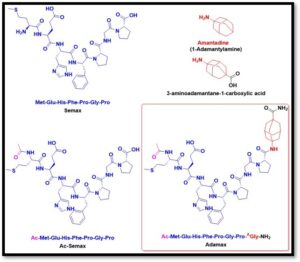
Source: Científico
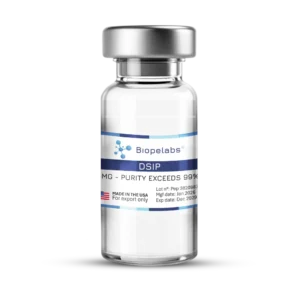
Lyophilized Peptides
Peptides undergo a lyophilization process, a technique that contributes to greater stability and extended shelf life, while preserving purity and molecular structure during storage. It is important to note that no fillers are used during this procedure.
Intended Use
Biopelabs states: this material is provided exclusively as a chemical input for research purposes. Its use is restricted to in vitro assays and experimental activities in laboratory environments. The information presented is strictly for informational and educational purposes. Handling must be carried out only by properly qualified professionals. This product is not classified as a medication, food, or cosmetic, and must not be used, marketed, or described as such.
Adamax (Ac‑Met‑Glu‑His‑Phe‑Pro‑Gly‑Pro‑Ala‑Gly‑NH₂) is an experimental synthetic nonapeptide, an optimized analog of Semax (Met‑Glu‑His‑Phe‑Pro‑Gly‑Pro), derived from the ACTH 4‑10 fragment. It features N‑terminal acetylation and C‑terminal amidation to enhance proteolytic stability and blood–brain barrier (BBB) penetration, plus a C‑terminal adamantane group that amplifies neurotrophic effects compared with Semax. Its molecular formula is C₄₄H₆₁N₁₁O₁₃S (molecular weight ~1,040 Da). Adamax is developed for preclinical research on synaptic plasticity, BDNF‑dependent cognition, and neuroprotection; lyophilized formulations typically exceed 98% purity.
Adamax enters the central nervous system (CNS) via the oligopeptide transporter PEPT2 and activates TrkB/BDNF signaling pathways in the hippocampus, increasing BDNF gene expression (up to ~2‑fold in rodent models). This promotes neurogenesis, dendritogenesis, and synaptic long‑term potentiation (LTP), supporting learning and memory. The peptide also modulates serotonin and dopamine systems (increased 5‑HT, reduced COMT activity), inhibits acetylcholinesterase, and regulates caspase‑3 to exert anti‑apoptotic, neuroprotective effects. No specific receptor antagonists for Adamax itself are reported, but TrkB‑pathway blockers such as ANA‑12 can abolish its effects, and studies indicate that Adamax is more potent than Semax in sensitizing hippocampal TrkB signaling.
Adamax improves physical endurance and post‑exercise recovery in fatigue‑model rodents, mainly by optimizing mitochondrial function and reducing lactate and ROS accumulation, with concomitant increases in muscle ATP and glycogen content. In metabolic‑inflammation contexts, it enhances hippocampal insulin sensitivity via BDNF‑PI3K/Akt signaling and mitigates neuroinflammation associated with high‑calorie diets, correlated with decreased TNF‑α and increased neuronal GLUT4 expression. Preliminary studies further suggest that Adamax may modulate gluconeogenesis and lipolysis indirectly through hypothalamic–pituitary–adrenal (HPA)‑axis‑linked pathways, although these connections remain exploratory.
Data on Adamax in oncology are limited. As an ACTH‑derived peptide analog, it may influence glial proliferation via melanocortin receptors (MC1R/MC3R) in glioma‑like systems, but current work focuses on chemoprotective neuroprotection (for example, preserving BDNF‑dependent neuronal integrity against cisplatin‑induced neurotoxicity in models of brain cancer). In hippocampal‑derived tumor cells, Adamax can reduce migration by downregulating MMP‑9 and upregulating E‑cadherin, suggesting senomorphic rather than primary senolytic or antitumor activity. There is no robust evidence yet for direct antitumor or senolysis effects, and the main experimental interest lies in cognitive radioprotection for oncology patients.
Adamax shows enhanced proteolytic stability, with an estimated plasma half‑life exceeding that of Semax (roughly 2–4 hours in rodents), attributable to the adamantane moiety. It is commonly administered intranasally (with approximate CNS bioavailability of 30–50% and brain‑targeted peak levels at 15–30 minutes) or subcutaneously, with renal and hepatic clearance and low acute toxicity (reported LD₅₀ >100 mg/kg in animal models). The adamantane group improves BBB penetration and promotes preferential accumulation in the hippocampus and cortex. Experimental dosing in rodents ranges from about 100–500 μg/day in 10–14‑day cycles, without significant accumulation, and lyophilized preparations require saline reconstitution prior to use.
Adamax emerges in nootropic research as an optimized Semax‑derived peptide with enhanced TrkB/BDNF activation, positioning it as a candidate for neurorecovery and cognitive‑performance studies. However, human phase‑I/II trials are still lacking, and long‑term safety, optimal dosing regimens, and off‑target CNS effects remain to be properly characterized. Standardization of the adamantane linkage and careful CNS‑specific profiling are key challenges in advancing this compound toward translational applications.

Only logged in customers who have purchased this product may leave a review.
| Weight | 40 g |
|---|---|
| Dimensions | 7 × 3,6 × 8 cm |

Reviews
There are no reviews yet.