
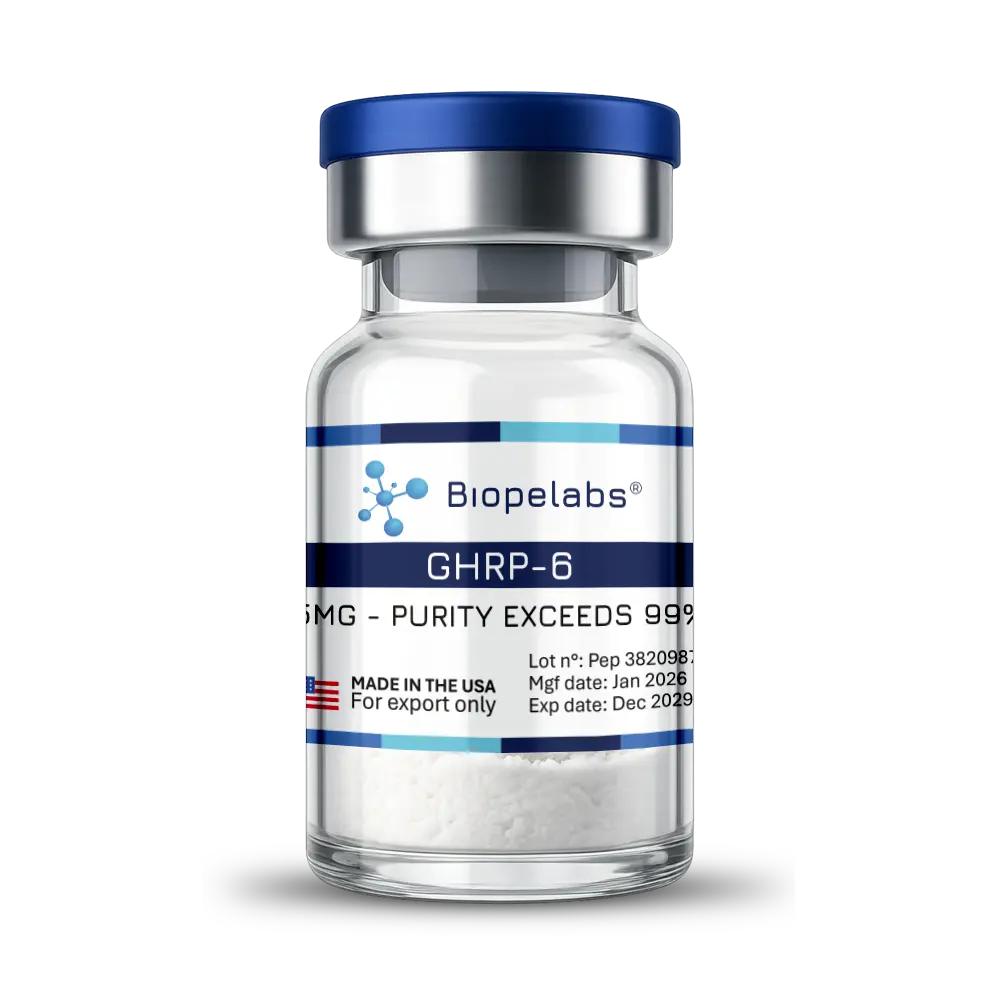
GHRP-6 is a synthetic peptide composed of six amino acids, developed as one of the first representatives of the GH secretagogue class not derived from GHRH. Its biological activity occurs through activation of the GHS-R1a receptor, expressed in the hypothalamus and anterior pituitary.
Binding to the GHS-R1a receptor triggers intracellular signaling cascades associated with increased cytosolic calcium in somatotroph cells, promoting pulsatile growth hormone release. This mechanism is independent of the classical GHRH receptor-mediated pathway, allowing complementary action on GH secretion.
GHRP-6 exhibits a short half-life, with rapid degradation by plasma peptidases, resulting in transient pharmacodynamic effects. Beyond GH secretion stimulation, its affinity for the ghrelin receptor is associated with activation of hypothalamic pathways related to appetite control, a distinctive characteristic within the GHRP class.
The peptide does not act as exogenous GH and depends on the functional integrity of the hypothalamus-pituitary axis to exert its biological effects.
Important Information
| Properties | Value |
| Molecular Formula | C₄₆H₅₆N₁₀O₆ |
| Molecular Weight | ≈ 873.0 g/mol |
| Synonyms | GHRP-6, Growth Hormone Releasing Peptide-6, His-D-Trp-Ala-Trp-D-Phe-Lys-NH₂, Hexapeptide GHS, GHS-6 |
Main Structure of the GHRP-6 Peptide
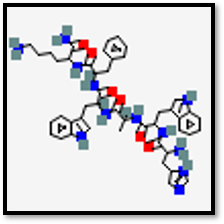
Source: PubChem
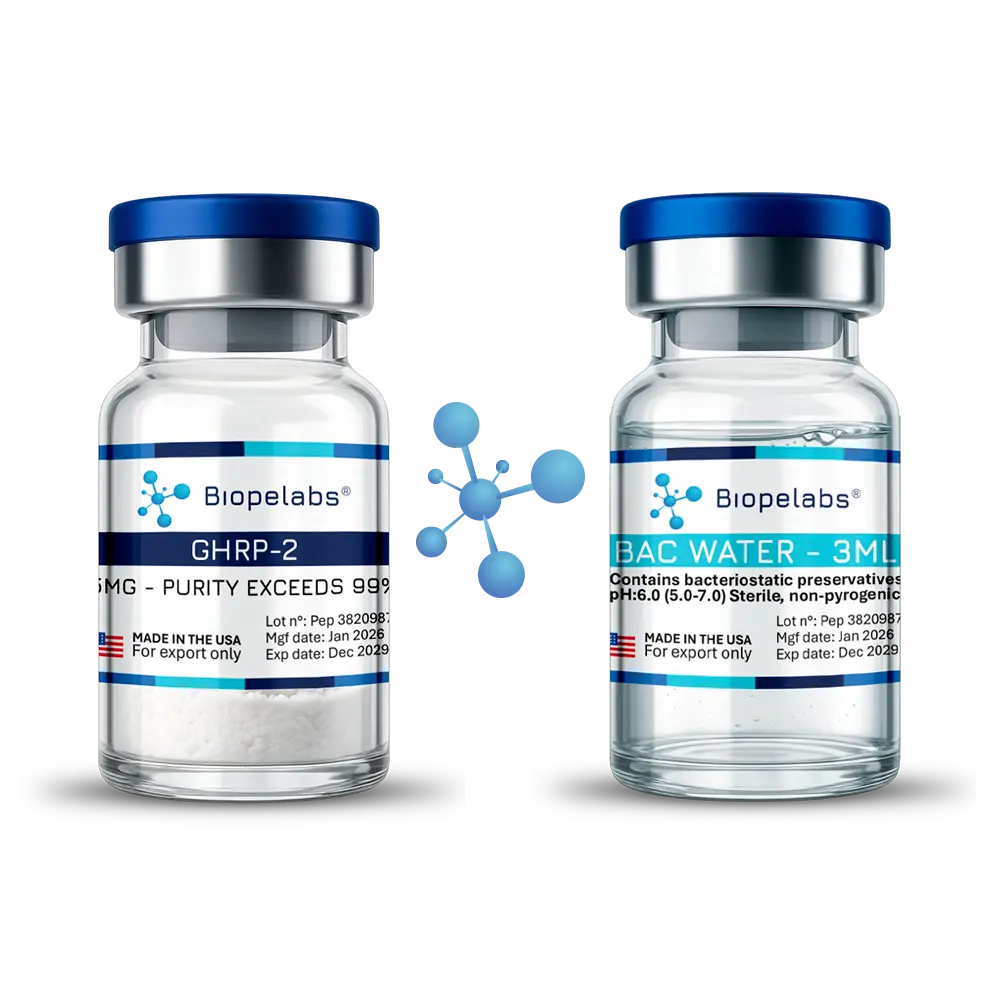
Comparative Summary – GHRP-2 vs. GHRP-6 (Synthesized Version)
GHRP-2 and GHRP-6 are hexapeptide growth hormone secretagogues that act as agonists of the ghrelin receptor (GHS-R1a), stimulating endogenous pulsatile GH release through pathways independent of the GHRH receptor. Both exhibit short half-lives and depend on the functional integrity of the hypothalamus-pituitary axis.
The main differences lie in their functional profiles: GHRP-2 shows greater selectivity for GH secretion stimulation, while GHRP-6 demonstrates stronger activation of hypothalamic orexigenic pathways associated with appetite control, stemming from subtle differences in their peptide structures.
Lyophilized Peptides
The peptides undergo a lyophilization process, a technique that enhances stability and shelf life while preserving purity and molecular structure during storage. Notably, no fillers are used in this procedure.
Intended Use
Biopelabs warns: this material is provided exclusively as a chemical reagent for research purposes. Its use is restricted to in vitro assays and experimental activities in a laboratory setting. The information provided is strictly informational and educational. Handling must be performed only by qualified professionals. The product is not classified as a medicine, food, or cosmetic and must not be used, marketed, or described as such.
Scientific Research on GHRP-6 (Growth Hormone Releasing Peptide-6)
GHRP-6 (Growth Hormone Releasing Peptide-6) is a synthetic hexapeptide developed in the 1980s as a growth hormone secretagogue. Its sequence is:
His-D-Trp-Ala-Trp-D-Phe-Lys-NH₂
It was one of the first peptides identified capable of stimulating GH secretion independently of the classical GHRH pathway. Subsequently, it was demonstrated that its action occurs via activation of the ghrelin receptor (GHS-R1a).
GHRP-6 acts as an agonist of the GHS-R1a receptor, a G protein-coupled receptor (GPCR).
Molecular cascade:
Additional effects:
It exhibits no primary inhibitory action; its effect is predominantly agonist.
Experimental GHRP-6 administration results in:
GH/IGF-1 axis
Lipid metabolism
Carbohydrate metabolism
Appetite and food intake
GHRP-6 exhibits more pronounced orexigenic effects than GHRP-2, possibly due to central activation of ghrelin-associated pathways (NPY/AgRP).
Investigation in Oncological Models
GH/IGF-1 axis activation may:
However, there is no consolidated evidence of GHRP-6 use as an oncological therapeutic agent. Its oncological interest relates primarily to implications of chronic somatotrophic axis activation.
Experimental models suggest persistent IGF-1 increases may influence tumor microenvironment, but data are indirect.
Response may undergo desensitization with continuous administration.
GHRP-6 is a synthetic hexapeptide GH secretagogue acting via GHS-R1a receptor activation, sharing central mechanism with GHRP-2. However, it exhibits lower secretagogue potency and greater orexigenic effect.
In research, it remains relevant as a tool for somatotrophic axis study, neuroendocrine regulation, and energy metabolism. Chronic GH/IGF-1 axis activation requires careful evaluation due to potential systemic proliferative implications.
Bowers, C. Y., Momany, F. A., Reynolds, G. A., & Hong, A. (1984). On the in vitro and in vivo activity of a new synthetic hexapeptide that acts on the pituitary to specifically release growth hormone. Endocrinology, 114(5), 1537–1545. https://doi.org/10.1210/endo-114-5-1537
Smith, R. G., Cheng, K., Schoen, W. R., et al. (1993). A nonpeptidyl growth hormone secretagogue. Science, 260(5111), 1640–1643. https://doi.org/10.1126/science.8503003
Kojima, M., Hosoda, H., Date, Y., et al. (1999). Ghrelin is a growth-hormone-releasing acylated peptide from stomach. Nature, 402(6762), 656–660. https://doi.org/10.1038/45230
Arvat, E., Di Vito, L., Broglio, F., et al. (1997). Preliminary evidence that GHRP-6 stimulates GH secretion through a mechanism independent of GHRH. Journal of Endocrinological Investigation, 20(8), 514–518. https://doi.org/10.1007/BF03347991
Scientific Reviewer
Content reviewed by Dr. Ky H. Le, MD. Dr. Ky H. Le is a family physician in Aiea, Hawaii. He received his medical degree from St. George's University School of Medicine and has been practicing for over 20 years. He has expertise in treating obesity, diabetes, hypertension, and high blood pressure, among other conditions—see all areas of specialization. Dr. Ky H. Le accepts Medicare, Aetna, Humana, Blue Cross, United Healthcare.
Ref.: https://health.usnews.com/doctors/ky-le-371599#expertise
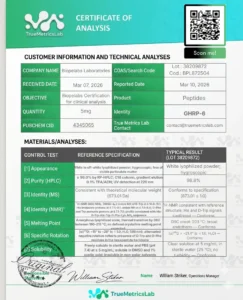
Only logged in customers who have purchased this product may leave a review.
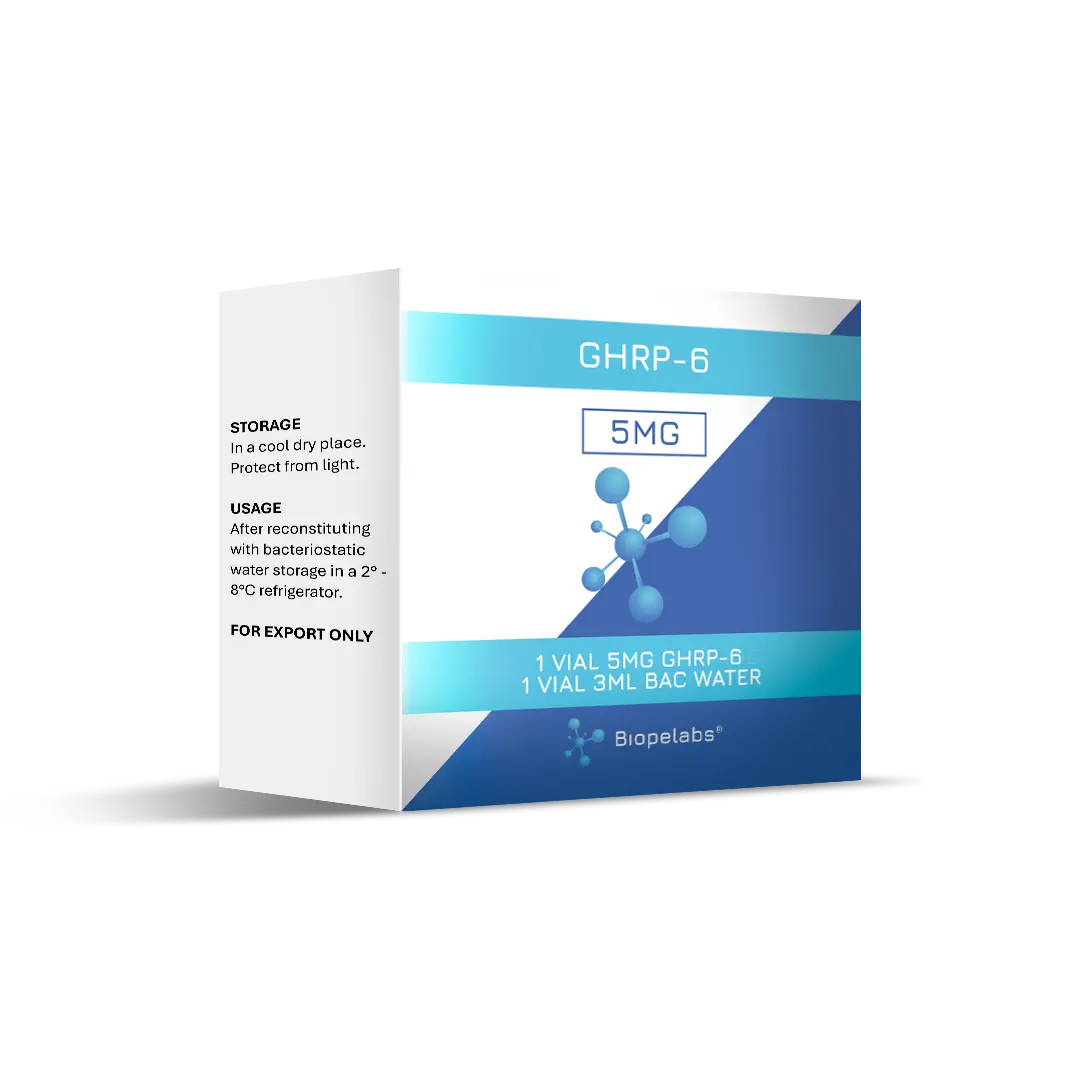
| Weight | 40 g |
|---|---|
| Dimensions | 7 × 3,6 × 8 cm |



Reviews
There are no reviews yet.