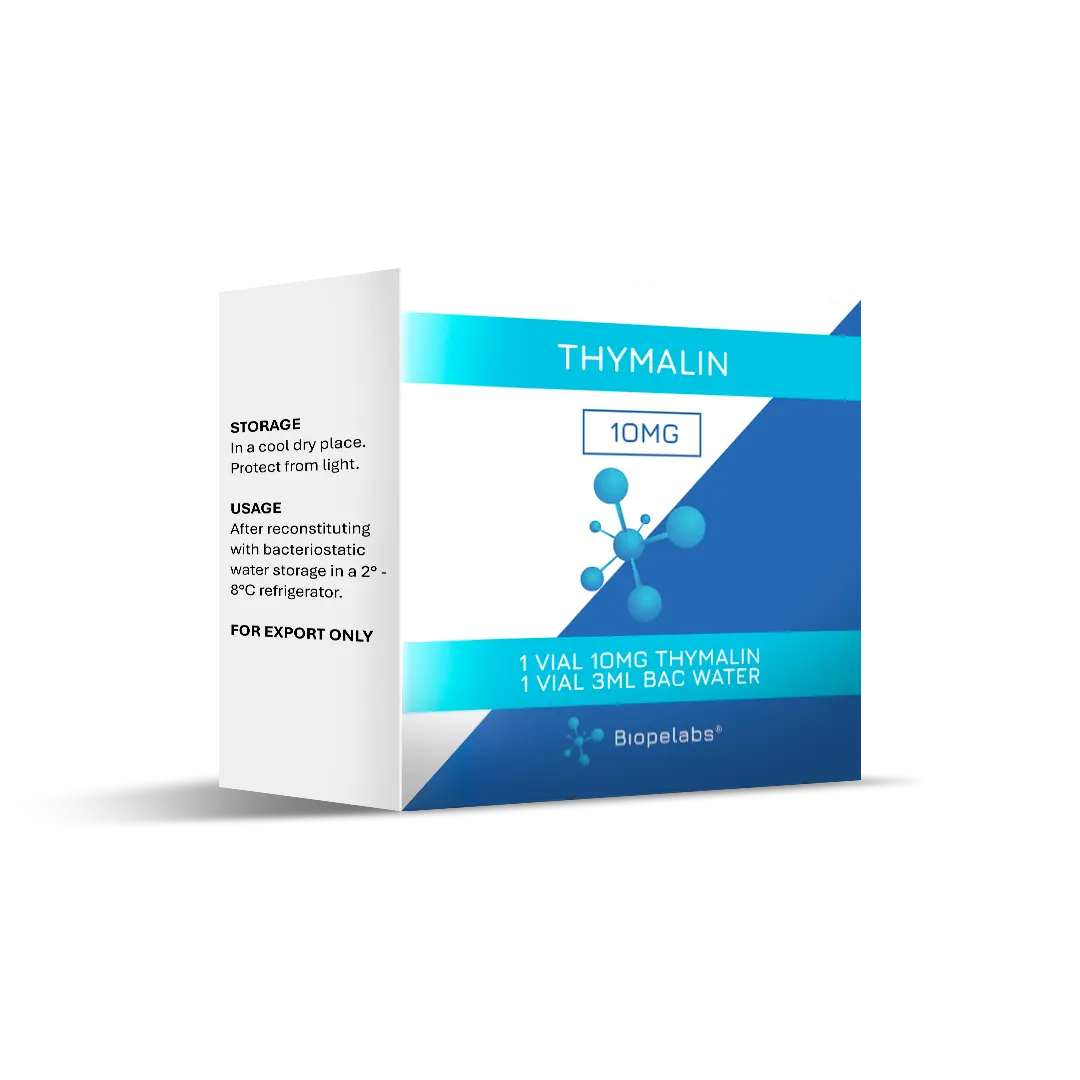
Isolated from thymic tissue of young animals, Thymalin acts as an immunocorrector via interaction with cell surface receptors, activation of gene transcription pathways, and regulation of apoptosis in lymphocytes. Studies demonstrate its efficacy in immunodeficiencies, viral/bacterial infections, and oncological support, with prolonged bioavailability (detection for weeks post-administration) due to the stability of the heterogeneous mixture. In clinical trials, it promotes maturation of hematopoietic precursors and thymic restoration, outperforming individual peptides in biological activity.
Important Information
| Properties | Value |
| Molecular Formula | C₃₃H₅₄N₁₂O₁₅ |
| Molecular Weight | 1,000–10,000 Da (average for the thymic mixture); individual components ~858.9 Da |
| Synonyms | Thymulin (synthetic nonapeptide equivalent: Pyr-Ala-Lys-Ser-Gln-Gly-Gly-Ser-Asn); Serum Thymic Factor; Facteur Thymique Sérique; Thymic factor; Nonatimuli |
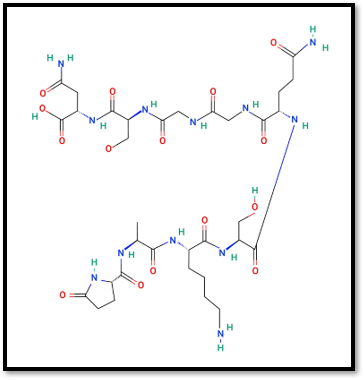
Source: Científico
Lyophilized Peptides
The peptides undergo a lyophilization process, a technique that enhances stability and shelf life while preserving purity and molecular structure throughout storage. It is important to note that no fillers are used during this procedure.
Intended Use
Biopelabs states: this material is provided exclusively as a chemical input for research purposes. Its use is restricted to in vitro assays and experimental activities in laboratory settings. The information presented is strictly for informational and educational purposes. Handling must be carried out only by properly qualified professionals. This product is not classified as a drug, food, or cosmetic and must not be used, marketed, or described as such.
Thymalin, a naturally occurring polypeptide complex considered the precursor and foundation of modern Russian peptide bioregulation.
Thymalin is not an isolated peptide but a purified complex of polypeptide fractions extracted from the thymus of calves (Bovidae). Unlike its short-chain synthetic analogs (such as Crystagen), Thymalin contains a broader range of thymic factors that act synergistically. Developed at the Leningrad Military Medical Academy, it has been used for decades in clinical research for the treatment of immunodeficiency states and in the investigation of biological longevity extension.
The mechanism of action of Thymalin is multifocal, acting primarily on the T-lymphocyte lineage:
Thymalin exerts metabolic influences that transcend the immune system:
Thymalin is widely studied as a supportive immunomodulatory agent in oncology:
The most relevant specific action is the Restoration of T-Dependent Immune Competence. Unlike generic immunostimulants, Thymalin acts specifically to correct the CD4+/CD8+ ratio (T-helper/T-suppressor). This action is crucial for patients with early thymic involution or immunosenescence, restoring the body's ability to respond robustly to new antigens.
A fundamental relationship in the literature is the Thymus-Pineal Axis. Thymalin is often studied in conjunction with Epithalamin (pineal extract). Long-term research in animal models has demonstrated that the combination of these two complexes can extend maximum lifespan by up to 30-40%, acting to synchronize the immune and endocrine systems.
Thymalin remains the cornerstone of Russian bioregulatory therapy. Although the development of synthetic tripeptides (such as Crystagen) has facilitated oral administration, the complete Thymalin complex is still considered superior in severe immunodeficiency scenarios due to its complete, natural polypeptide composition.
Certificate of Analysis (Including Product Images)
Only logged in customers who have purchased this product may leave a review.
| Weight | 40 g |
|---|---|
| Dimensions | 7 × 3,6 × 8 cm |



Reviews
There are no reviews yet.