
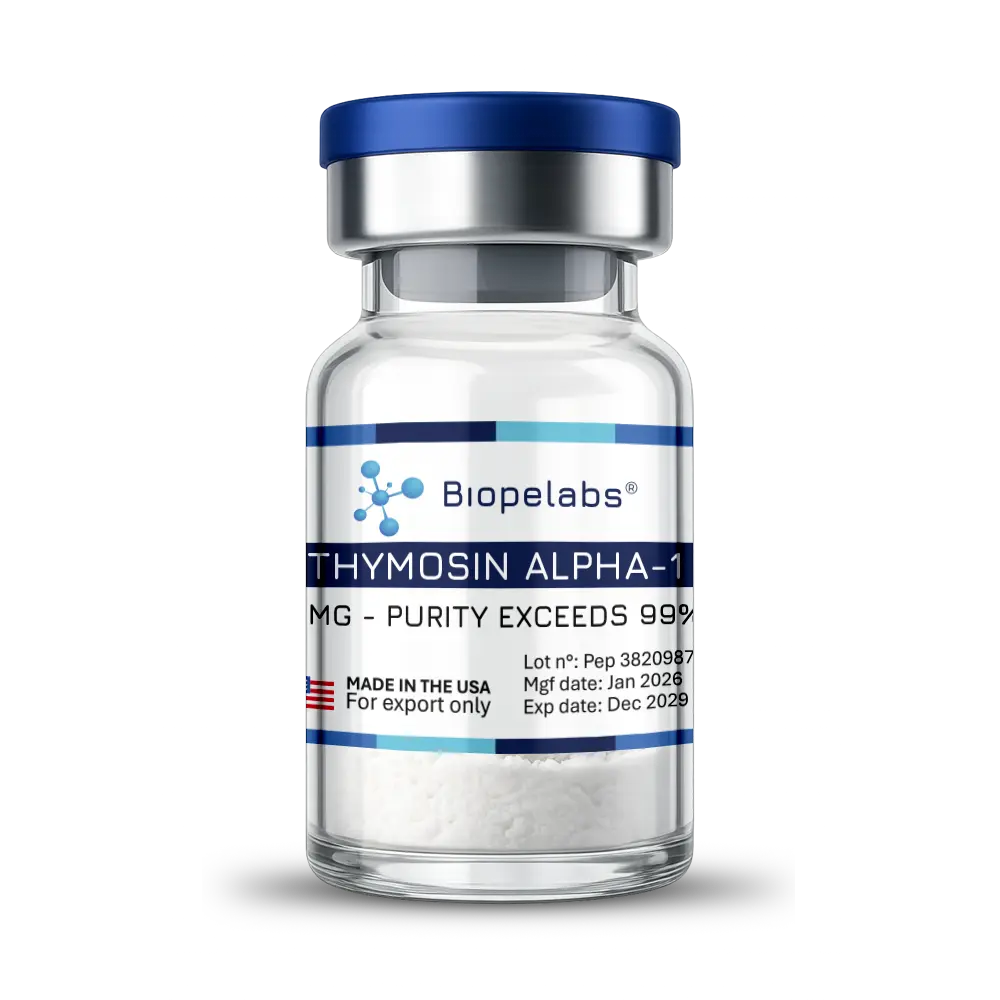
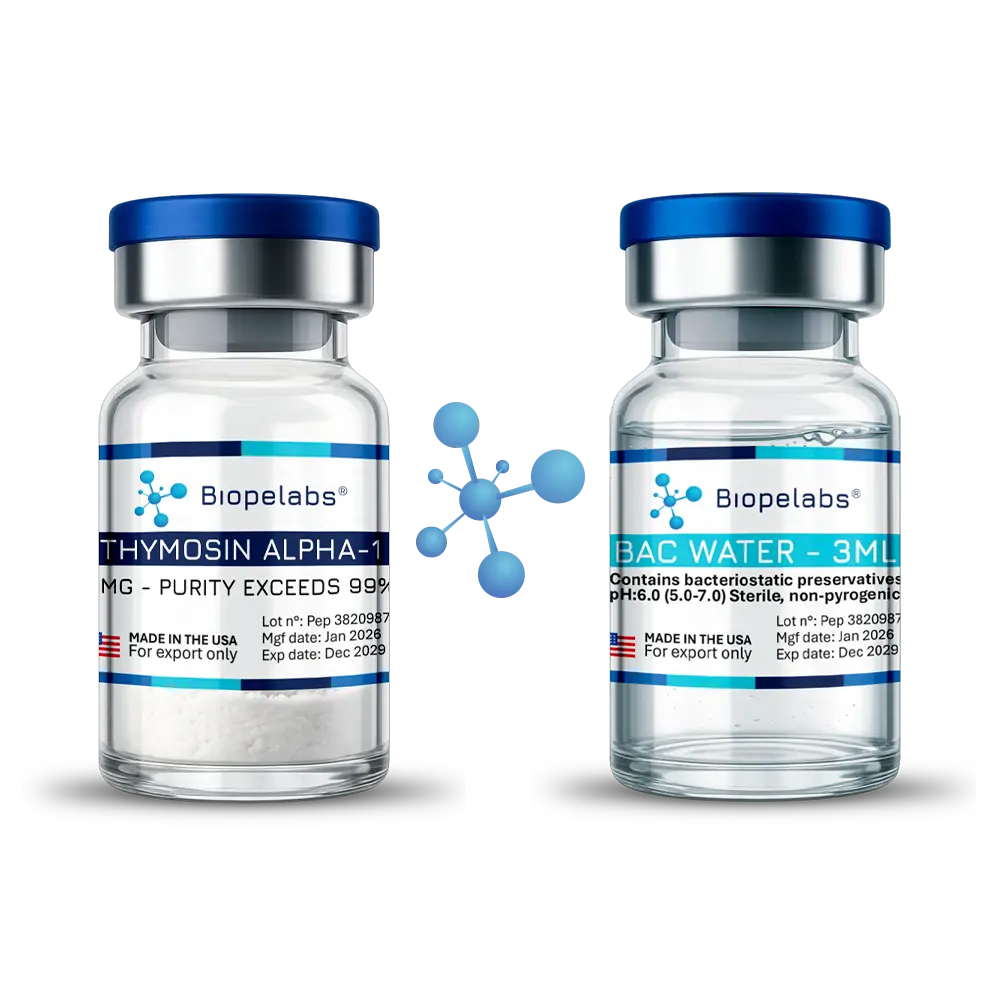
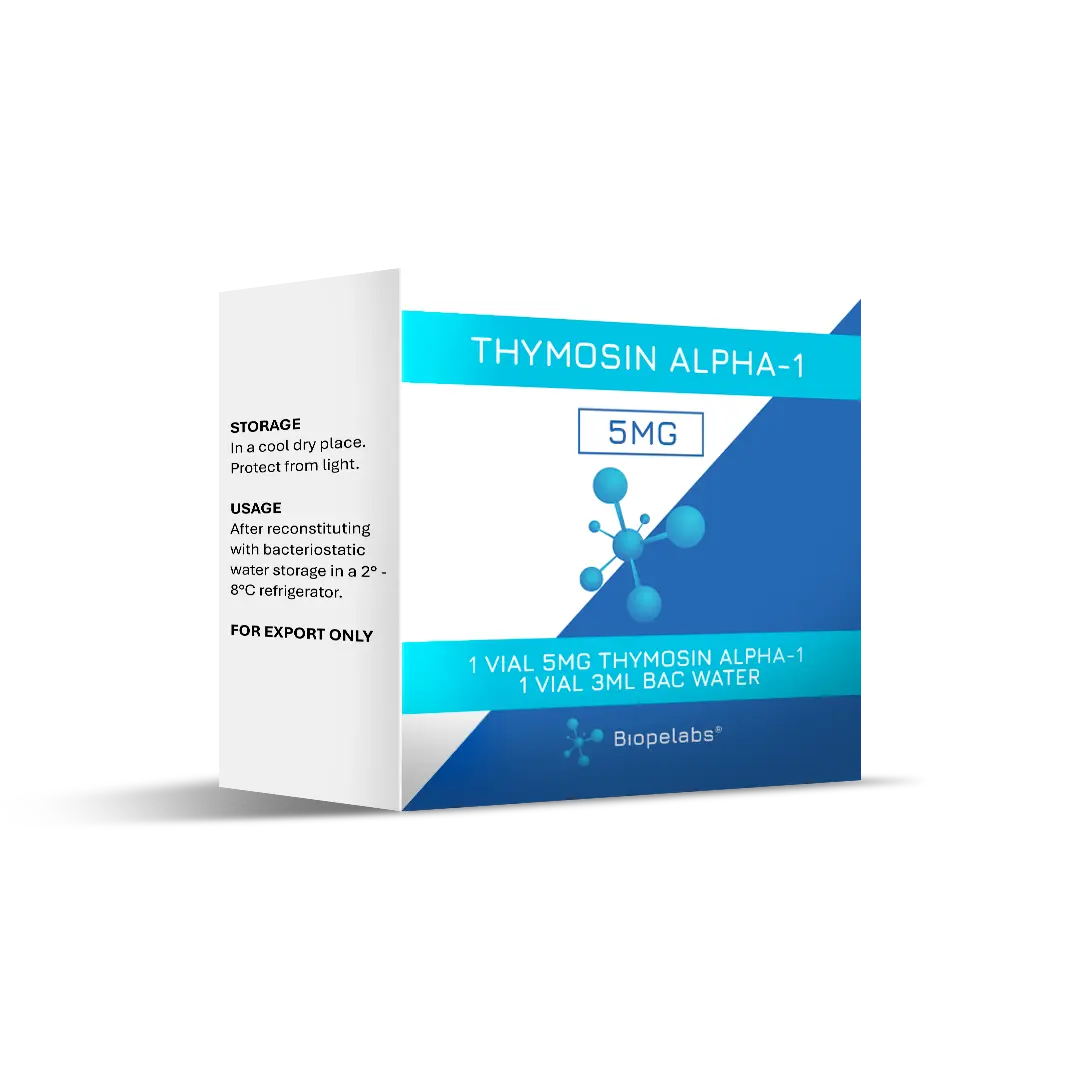


Thymosin Alpha-1 (Tα1) is a synthetic 28-amino acid polypeptide that mimics a naturally occurring substance isolated from the thymus gland in mammals. The biologically active peptide is known for its immunomodulatory properties, especially for its ability to enhance immune function through multiple mechanisms.
Tα1 acts primarily by modulating T-cell activity, facilitating T-cell differentiation and proliferation, with special emphasis on CD4+ T cells. It also enhances dendritic cell and natural killer cell function while selectively regulating inflammatory cytokine production.
Due to these immunoregulatory effects, Tα1 has been extensively studied for its potential in in vitro research applications. Its ability to balance immune responses makes it a promising candidate for cellular research on immune system modulation.
Important Information
| Properties | Value |
| Molecular Formula | C₁₂₉H₂₁₅N₃₃O₅₅ |
| Molecular Weight | 3108.3 g/mol |
| Synonyms | Timilalfasin, 62304-98-7, Zadaxin, Tα1 |
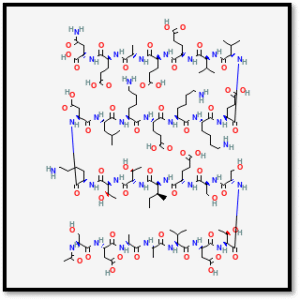
Source: PubChem
Lyophilized Peptides
The peptides undergo a lyophilization process, a technique that enhances stability and shelf life while preserving purity and molecular structure throughout storage. It is important to note that no fillers are used during this procedure.
Intended Use
Biopelabs states: this material is provided exclusively as a chemical input for research purposes. Its use is restricted to in vitro assays and experimental activities in laboratory settings. The information presented is strictly for informational and educational purposes. Handling must be carried out only by properly qualified professionals. This product is not classified as a drug, food, or cosmetic and must not be used, marketed, or described as such.
Thymosin Alpha-1 (Tα1) is a synthetic 28-amino acid peptide originally isolated from thymosin fraction 5, derived from the thymus. Unlike short cytomedic peptides, it is a well-characterized biologically active peptide with extensive investigation in clinical and translational immunology.
Tα1 has been studied in multiple contexts, including immunodeficiency, chronic viral infections, sepsis, immunomodulation in oncology, and as a vaccine adjuvant. In several countries, pharmaceutical formulations have been developed for clinical use, particularly in viral hepatitis.
Its structure and sequence are fully characterized, and the peptide can be produced by solid-phase chemical synthesis with a high degree of purity.
Thymosin Alpha-1 acts primarily as a pleiotropic immunomodulator, influencing both innate and adaptive immunity.
Tα1 does not act as a classical enzyme inhibitor but rather as a modulator of immune signaling pathways.
Direct systemic metabolic impacts are limited, but there are relevant effects on immune cell metabolism:
In patients with chronic viral hepatitis, indirect modulation of hepatic biochemical parameters associated with the antiviral response has been observed.
Thymosin Alpha-1 has been extensively investigated in oncological models.
Clinical trials have evaluated its use in lung cancer, hepatocellular carcinoma, and melanoma, primarily as an adjuvant immunomodulatory agent.
Systemic Immunomodulation with Th1 Predominance
The primary specific action of Tα1 consists of:
In contexts of chronic viral infection (such as hepatitis B and C), it has demonstrated an increased rate of virologic response in some clinical protocols.
Studies indicate good clinical tolerability, with a safety profile considered favorable in several trials.
Thymosin Alpha-1 is an extensively investigated immunomodulatory peptide, with relatively well-characterized mechanisms of action involving modulation of innate and adaptive immune pathways. Unlike organ-specific cytomedic peptides, it has significant clinical literature, including controlled clinical trials in viral infections and investigation in oncology.
Its pharmacodynamic profile is consistent with a modulator of cellular immune response, with potential application as an adjuvant agent in various conditions characterized by immune dysfunction.
Garaci, E. (2007). Thymosin alpha-1: a historical overview. Annals of the New York Academy of Sciences, 1112, 14–20. https://doi.org/10.1196/annals.1415.002
Romani, L., Bistoni, F., Perruccio, K., Montagnoli, C., Gaziano, R., Bozza, S., Bonifazi, P., Bistoni, G., & Rasi, G. (2004). Thymosin alpha1 activates dendritic cells for antifungal Th1 resistance through Toll-like receptor signaling. Blood, 103(11), 4232–4239. https://doi.org/10.1182/blood-2003-10-3536
King, R., Tuthill, C., & Rios, A. (2019). Thymosin alpha 1: review of clinical applications. Expert Opinion on Biological Therapy, 19(3), 231–241. https://doi.org/10.1080/14712598.2019.1572013
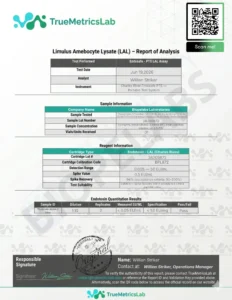
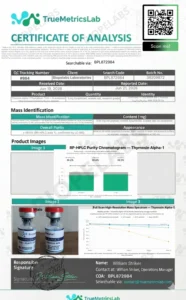
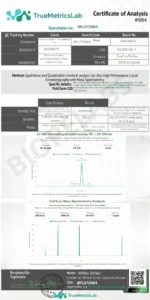
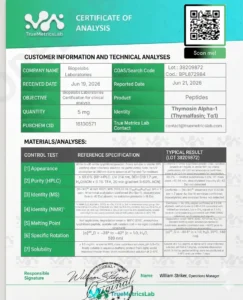
Only logged in customers who have purchased this product may leave a review.
| Weight | 40 g |
|---|---|
| Dimensions | 7 × 3,6 × 8 cm |

Reviews
There are no reviews yet.