
Tesamorelin is a synthetic peptide analog of GHRH, with a trans‑3‑hexenoic acid group attached to the N‑terminus of its 44‑amino‑acid sequence, conferring greater stability compared with endogenous GHRH. The compound stimulates pituitary secretion of growth hormone and, consequently, increases levels of insulin‑like growth factor‑1 (IGF‑1) and insulin‑like growth factor–binding protein 3 (IGFBP‑3) in laboratory models.
Important Information
| Property | Value |
| Molecular formula | C₂₂₃H₃₇₀N₇₂O₆₉S |
| Molecular weight | 5196 g/mol |
| Synonyms | Tesamorelin acetate, 901758‑09‑6, TH9507, UNII‑LGW5H38VE3, Tesamorelin acetate [USAN] |
Main structure of the peptide Tesamorelin
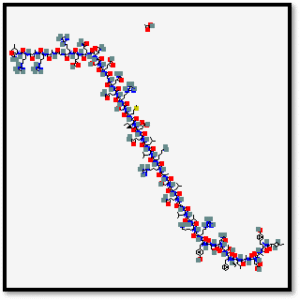
Source: PubChem
Lyophilized Peptides
Peptides undergo a lyophilization process, a technique that contributes to greater stability and extended shelf life, while preserving purity and molecular structure during storage. It is important to note that no fillers are used during this procedure.
Intended Use
Biopelabs states: this material is provided exclusively as a chemical input for research purposes. Its use is restricted to in vitro assays and experimental activities in laboratory environments. The information presented is strictly for informational and educational purposes. Handling must be carried out only by properly qualified professionals. This product is not classified as a medication, food, or cosmetic, and must not be used, marketed, or described as such.
Tesamorelin is a stabilized GHRH analog with significant influence on metabolism via the growth hormone/IGF‑1 axis. In research models, this compound demonstrates the ability to affect visceral adipose tissue metabolism, triglyceride levels, and lipid profiles, combining anabolic and lipolytic mechanisms without substantially impacting glycemic homeostasis under controlled conditions.
Tesamorelin has shown efficacy in reducing visceral adipose tissue (VAT) in individuals with HIV‑associated lipodystrophy. In two well‑designed, randomized, placebo‑controlled trials, a significant reduction in VAT was observed, whereas subcutaneous adipose tissue remained clinically unchanged. This VAT reduction was maintained over a prolonged period in patients who continued therapy, although VAT tended to accumulate again after discontinuation.
In addition, tesamorelin improved body‑composition measures, including reductions in trunk fat and waist circumference, as well as improvements in body‑image perception.
Promising results have been observed with tesamorelin in reducing hepatic fat and limiting fibrosis progression in patients with HIV‑related NAFLD. In a placebo‑controlled trial, tesamorelin decreased hepatic fat fraction and improved gene‑expression scores associated with fibrosis, indicating a potential therapeutic role in NAFLD management in this population.
The peptide influences hepatic genetic pathways by increasing oxidative phosphorylation and reducing expression of inflammatory genes.
Beyond reducing total fat mass, tesamorelin has been shown to improve adipose tissue quality. Trials assessing fat density reported increases in the density of both subcutaneous adipose tissue and VAT, suggesting an improvement in fat quality independent of changes in absolute fat amount.
The effect of tesamorelin on cardiovascular disease (CVD) risk has also been investigated, with data indicating a modest reduction in atherosclerotic risk factors over a 10‑year period. This reduction was primarily attributed to lower total‑cholesterol levels, even among participants who were already on lipid‑lowering therapy.
Tesamorelin was well tolerated, with no significant differences in glycemic parameters between treatment and placebo groups.
Although tesamorelin reduced waist circumference, its effects on neurocognitive impairment in obese individuals with HIV did not differ significantly from standard care, suggesting limited cognitive benefit. However, the peptide’s ability to increase IGF‑1 levels may open avenues for additional experimental applications that warrant further investigation.
The content was reviewed by Dr. Ky H. Le, MD. Dr. Ky H. Le is a family physician in Aiea, Hawaii. He received his medical degree from St. George’s University School of Medicine and has practiced for over 20 years. He has expertise in the treatment of obesity, diabetes, hypertension, and high blood pressure, among other conditions. Dr. Ky H. Le accepts Medicare, Aetna, Humana, Blue Cross, and United Healthcare.
Ref.: https://health.usnews.com/doctors/ky-le-371599#expertise
Only logged in customers who have purchased this product may leave a review.
| Weight | 40 g |
|---|---|
| Dimensions | 7 × 3,6 × 8 cm |



Reviews
There are no reviews yet.