
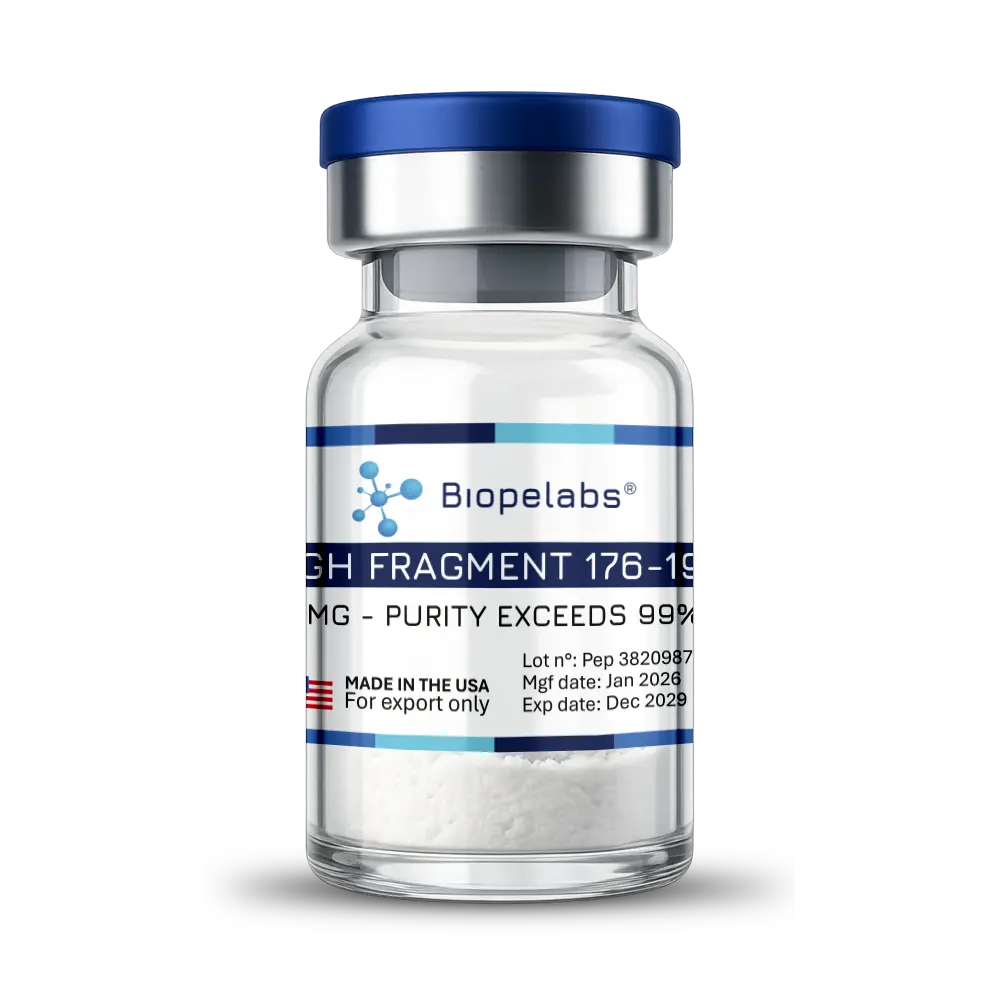
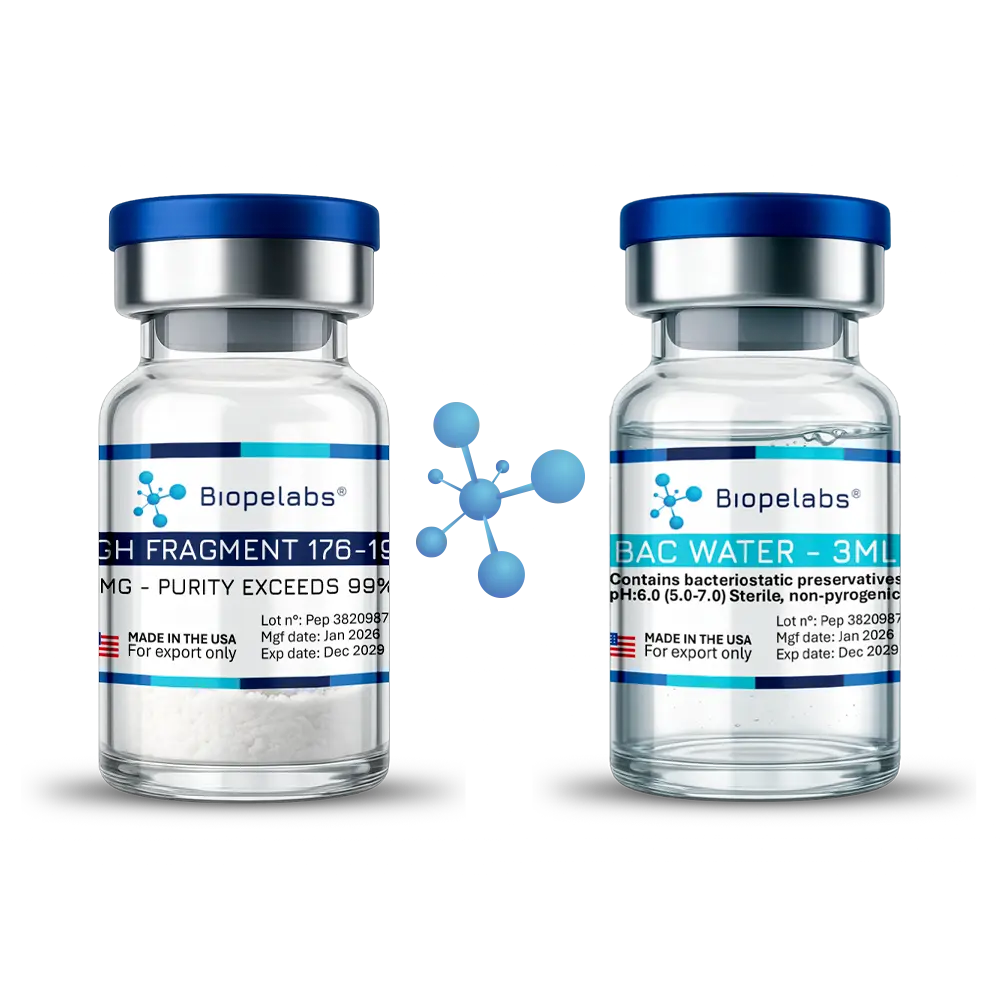
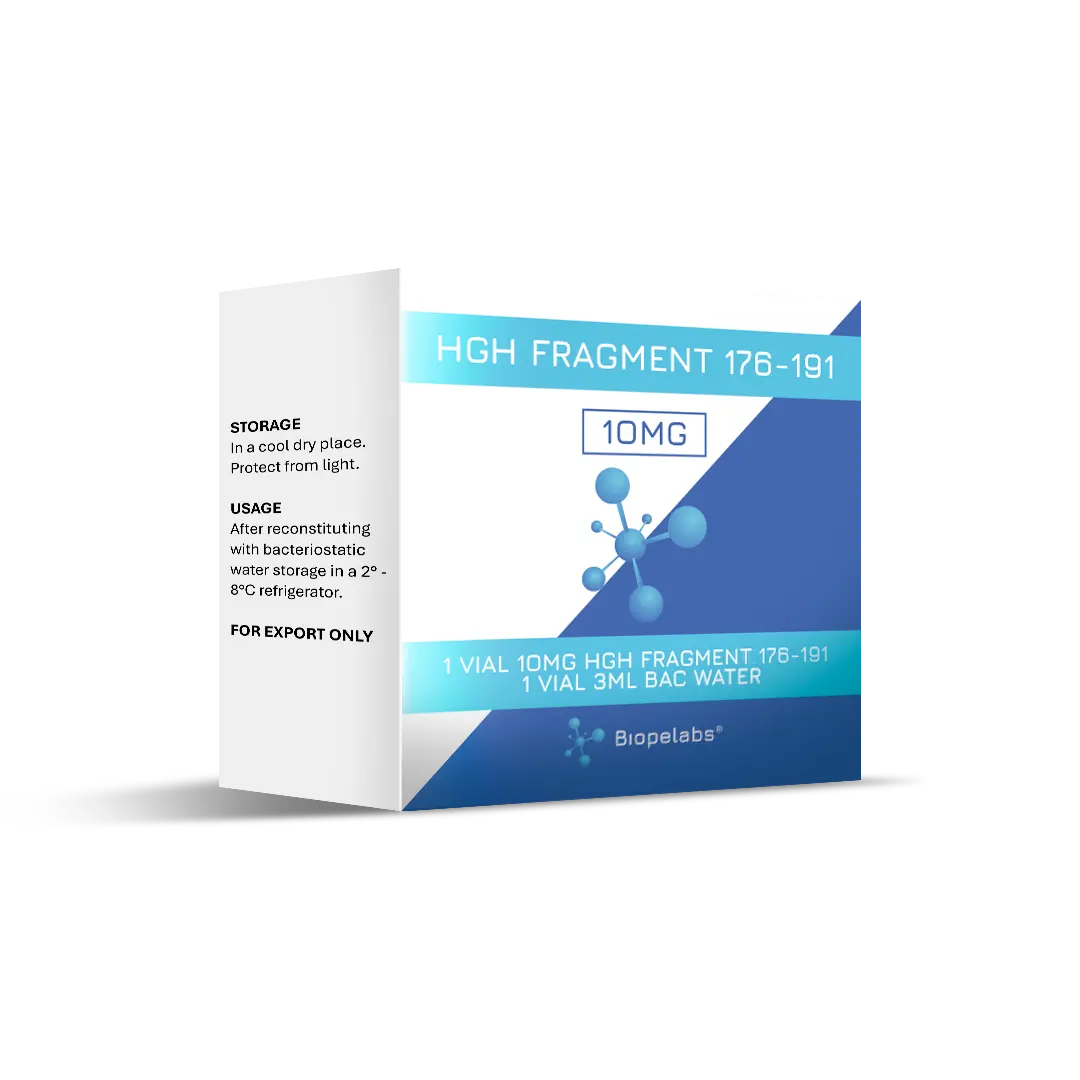


HGH Fragment 176–191 is a linear peptide composed of 16 amino acids, derived from the C-terminal portion of human growth hormone. This fragment was identified as a functionally active region of GH capable of interacting with specific metabolic pathways independently of classical GH receptor activation.
Unlike intact GH, the 176–191 fragment does not bind to the GH receptor (GHR) and does not directly trigger JAK2/STAT5-mediated signaling. Its biological activity occurs through distinct mechanisms attributed to modulation of peripheral metabolic processes, without direct induction of IGF-1 secretion.
Structurally, it is a low molecular weight peptide resulting in rapid plasma clearance and short half-life. Its action depends on systemic metabolic integrity but does not involve replacement or complete mimicry of native growth hormone’s endocrine functions.
Important Information
| Properties | Value |
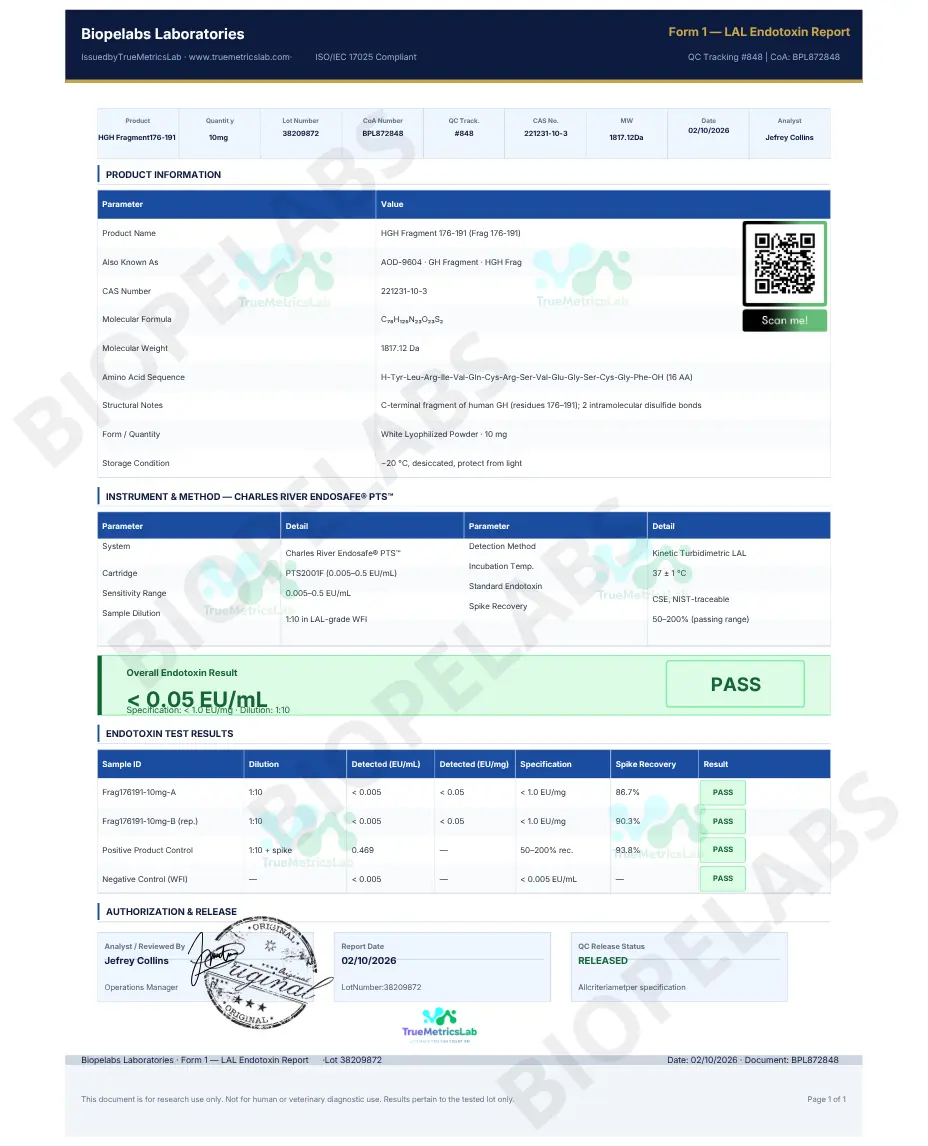
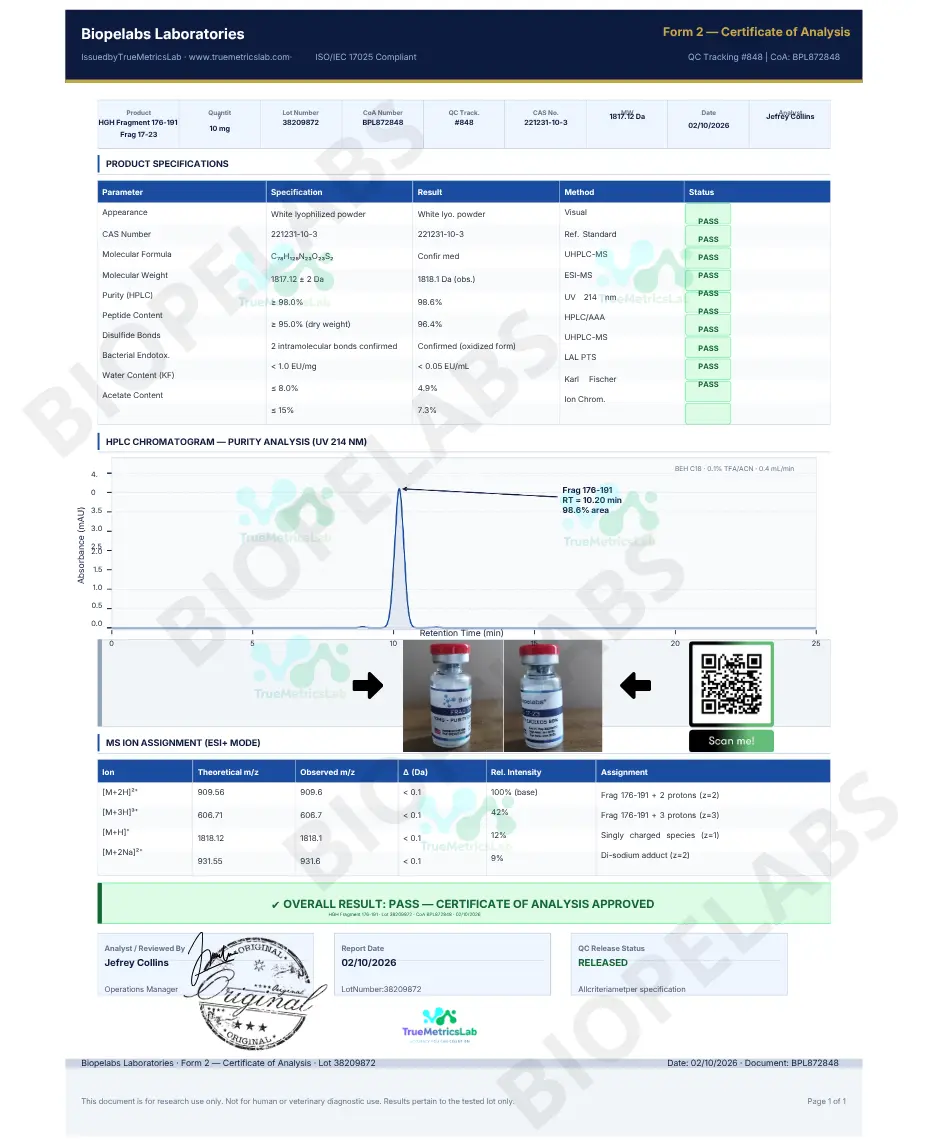
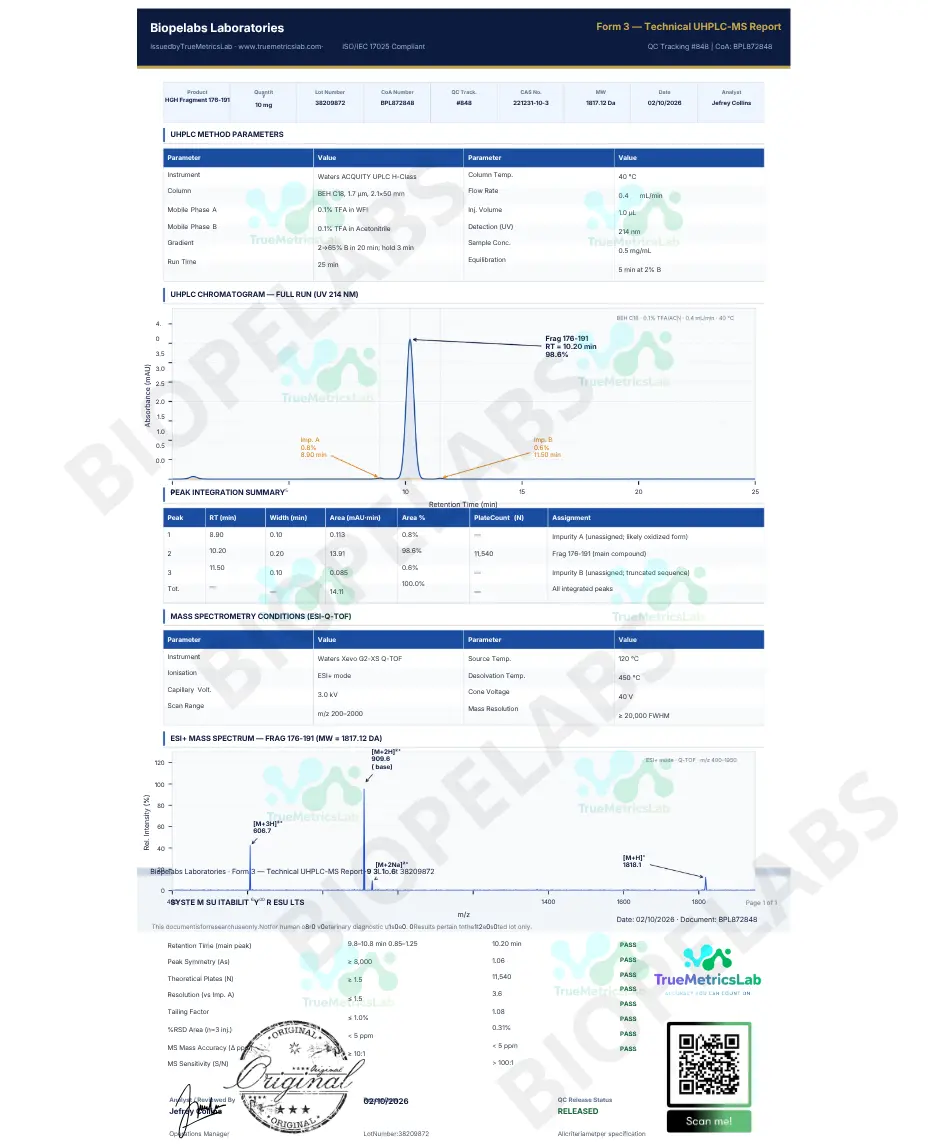
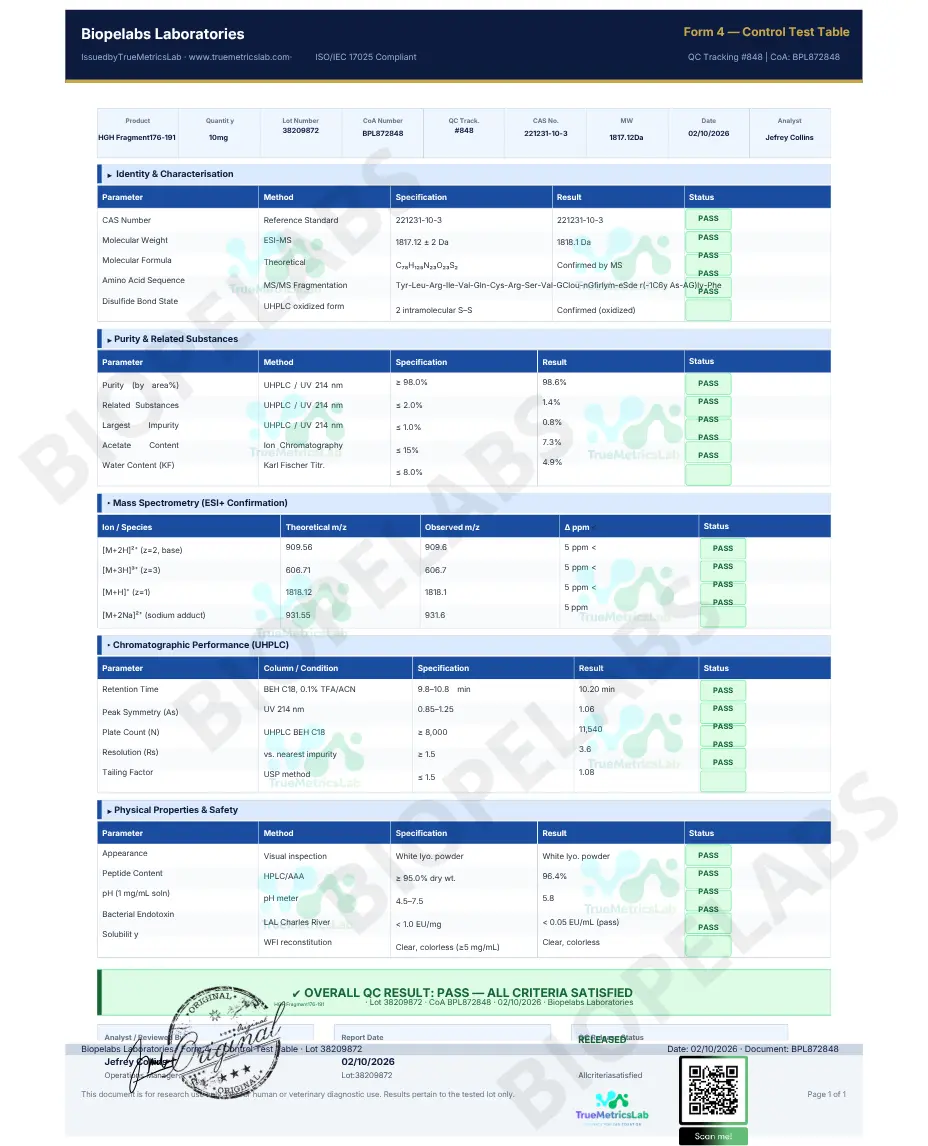
| Molecular Formula | C₇₈H₁₂₃N₂₃O₂₃ |
| Molecular Weight | ≈ 1,815 g/mol |
| Synonyms | HGH Fragment 176–191, hGH (176–191), AOD-9604, GH C-terminal fragment, Human Growth Hormone Fragment 176–191 |
Main Structure of the HGH Fragment 176-191 Peptide
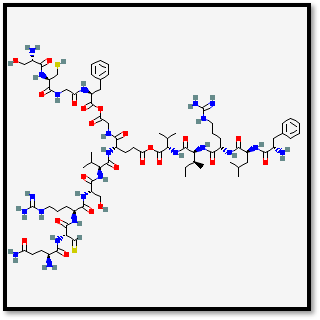
Source: científico
Lyophilized Peptides
The peptides undergo a lyophilization process, a technique that enhances stability and shelf life while preserving purity and molecular structure during storage. Notably, no fillers are used in this procedure.
Intended Use
Biopelabs warns: this material is provided exclusively as a chemical reagent for research purposes. Its use is restricted to in vitro assays and experimental activities in a laboratory setting. The information provided is strictly informational and educational. Handling must be performed only by qualified professionals. The product is not classified as a medicine, food, or cosmetic and must not be used, marketed, or described as such.
Scientific Research on HGH Fragment 176-191 (Somatropin Fragment 176-191)
HGH Fragment 176-191 is a synthetic peptide corresponding to amino acids 176 to 191 of the complete somatropin molecule (hGH 191AA). This segment is located in the C-terminal region of human growth hormone.
Structural studies conducted in the 1980s–1990s suggested that hGH's lipolytic activity might be associated with specific molecular regions distinct from those responsible for its classical anabolic and somatotrophic effects mediated by the GH receptor (GHR). The 176-191 fragment was then synthesized to investigate this hypothesis in experimental models.
It is a 16-amino-acid peptide developed exclusively for research purposes.
Unlike complete somatropin (191 aa), HGH Fragment 176-191:
Proposed mechanism (under investigation):
Experimental models suggest the fragment:
Some hypotheses point to possible involvement with:
However, the specific molecular receptor for this fragment has not been fully characterized.
No description of relevant direct inhibitory activity exists.
Importantly, observed effects are less broad than those induced by complete GH.
To date, no robust evidence exists of formal investigation of HGH Fragment 176-191 in oncological models as a therapeutic agent.
Theoretical considerations include:
However, controlled in-depth studies in this area are lacking.
Pharmacokinetic data are limited and predominantly preclinical.
General characteristics:
Stability depends on laboratory storage and reconstitution conditions.
HGH Fragment 176-191 is a synthetic peptide derived from the C-terminal region of human somatropin, developed to investigate the hypothesis of dissociation between lipolytic effects and growth hormone somatotrophic effects.
Available data suggest it may modulate lipid metabolism-related pathways without significantly activating the classical GH receptor or stimulating IGF-1. However, the literature is predominantly preclinical, and definitive molecular mechanisms remain incompletely elucidated.
Its use remains restricted to experimental research contexts.
Ng, F. M., Bornstein, J., Pullan, P., & Lazarus, L. (2000). The lipolytic effects of human growth hormone are located within the 177–191 region of the molecule: studies of a synthetic fragment. Endocrinology, 141(1), 152–158. https://doi.org/10.1210/endo.141.1.7243
Heffernan, M. A., Thorburn, A. W., Fam, B., et al. (2001). GH fragment (176-191) increases fat metabolism and reduces adiposity in rodents. American Journal of Physiology-Endocrinology and Metabolism, 281(4), E786–E792. https://doi.org/10.1152/ajpendo.2001.281.4.E786
Møller, N., & Jørgensen, J. O. L. (2009). Effects of growth hormone on glucose, lipid, and protein metabolism in human subjects. Endocrine Reviews, 30(2), 152–177. https://doi.org/10.1210/er.2008-0027
Isgaard, J., Nilsson, A., Vikman, K., & Isaksson, O. G. P. (1989). Growth hormone regulates the level of insulin-like growth factor-I mRNA in rat liver. Endocrinology, 124(1), 36–41. https://doi.org/10.1210/endo-124-1-36
Important
This material is intended exclusively for scientific and laboratory research use.
It is not intended for human, clinical, or therapeutic use.
Acquisition and handling must follow applicable technical, regulatory, and institutional standards.
Scientific Reviewer
Content reviewed by Dr. Ky H. Le, MD. Dr. Ky H. Le is a family physician in Aiea, Hawaii. He received his medical degree from St. George's University School of Medicine and has been practicing for over 20 years. He has expertise in treating obesity, diabetes, hypertension, and high blood pressure, among other conditions—see all areas of specialization. Dr. Ky H. Le accepts Medicare, Aetna, Humana, Blue Cross, United Healthcare.
Ref.: https://health.usnews.com/doctors/ky-le-371599#expertise
Only logged in customers who have purchased this product may leave a review.
| Weight | 40 g |
|---|---|
| Dimensions | 7 × 3,6 × 8 cm |

Reviews
There are no reviews yet.