
Bronchogen is a DNA-stabilizing tetrapeptide composed of four amino acids (Ala-Glu-Asp-Leu) that acts as a bioregulator specifically targeted to lung tissue. The peptide’s main effects include reducing inflammation in lung tissue, improving epithelial cell function, and increasing surfactant production.
Important Information
| Property | Value |
| Molecular Formula | |
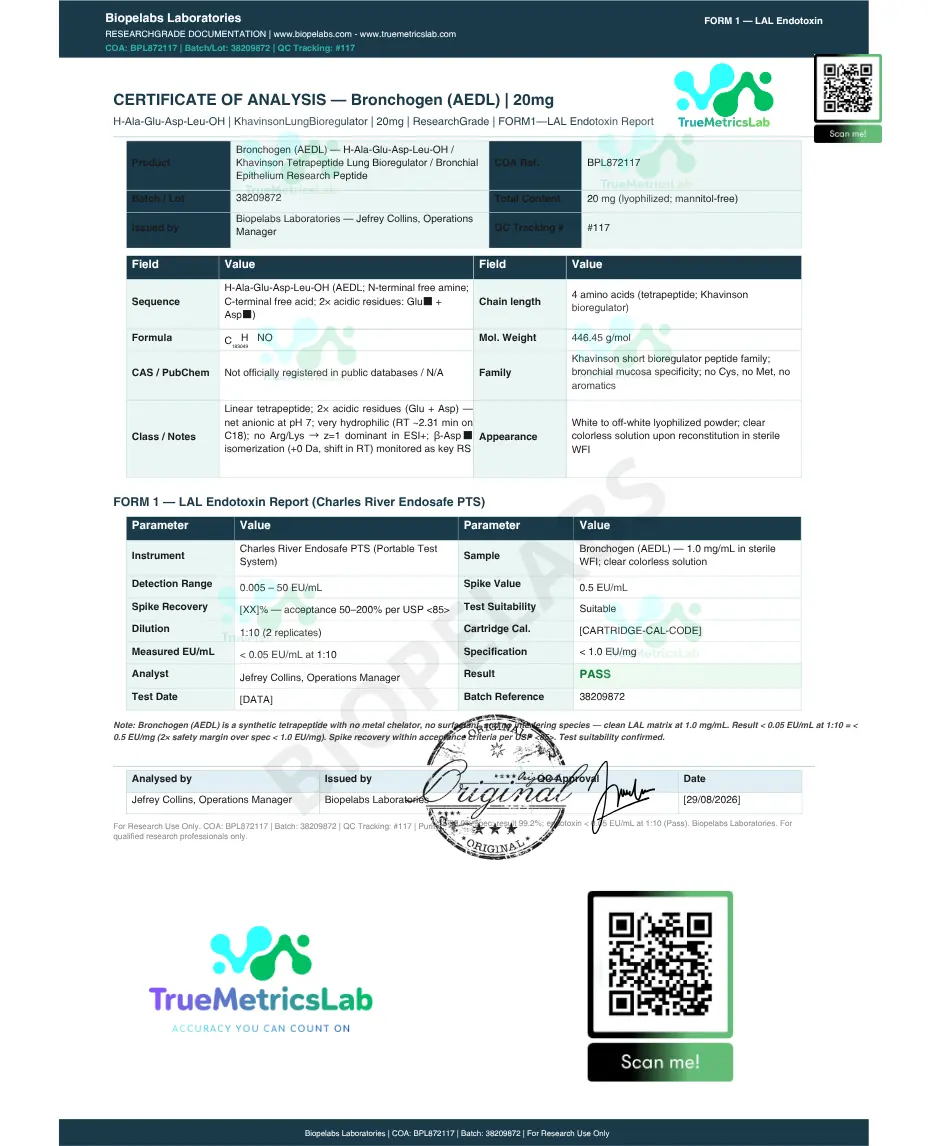
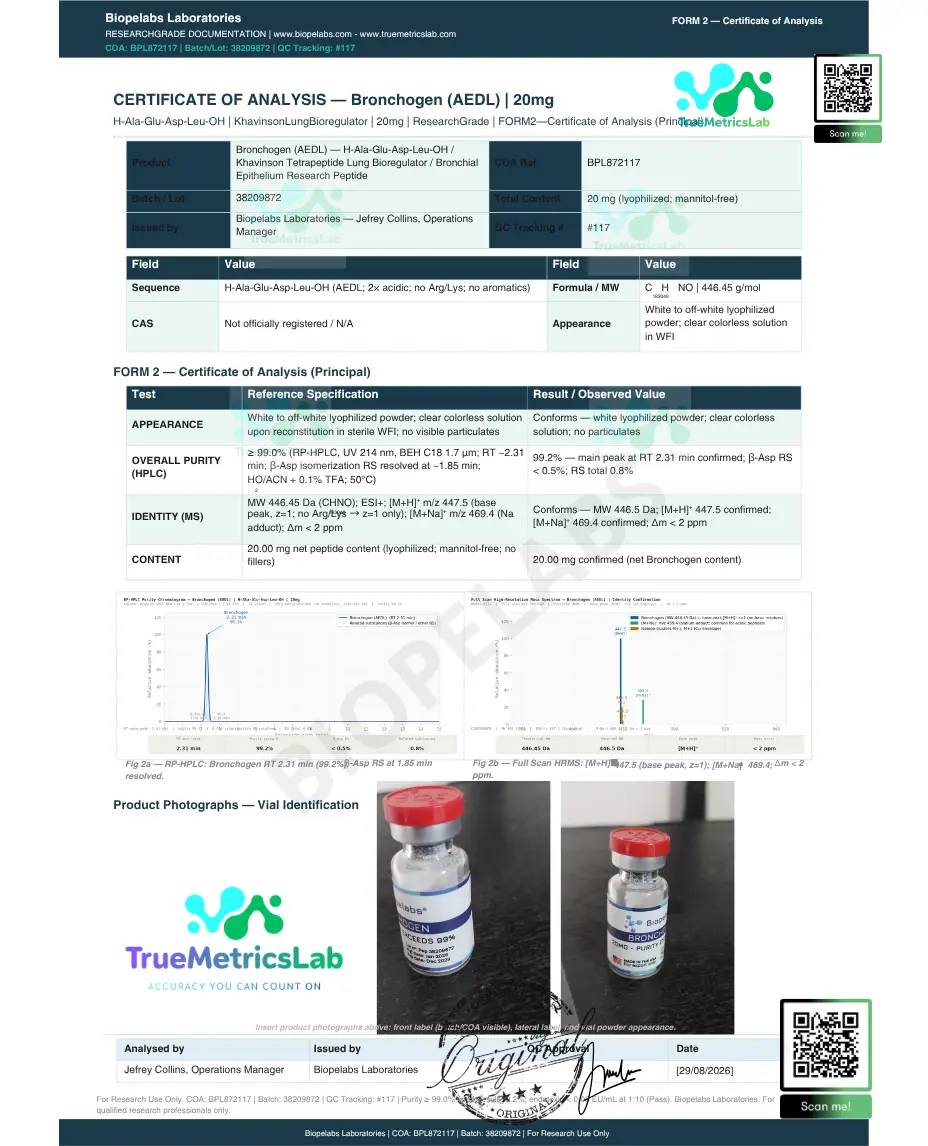
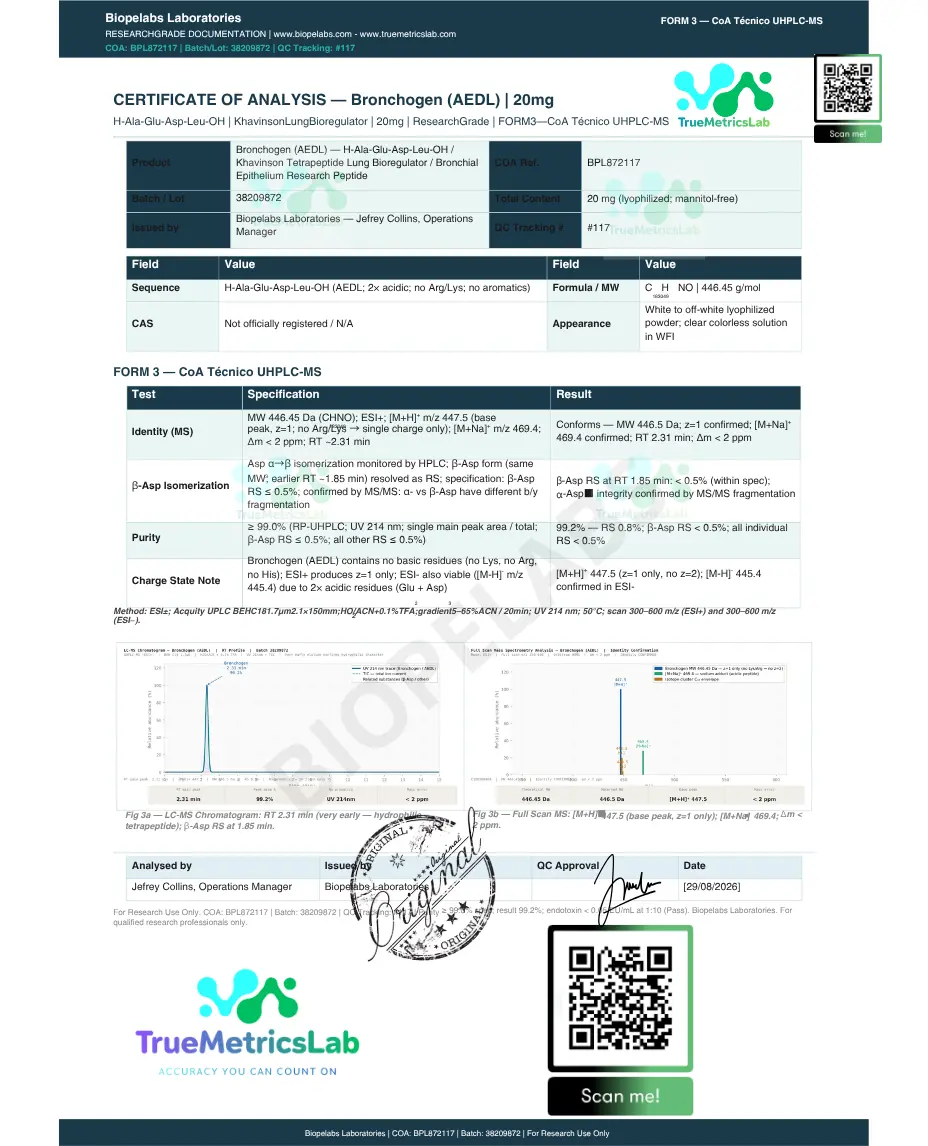
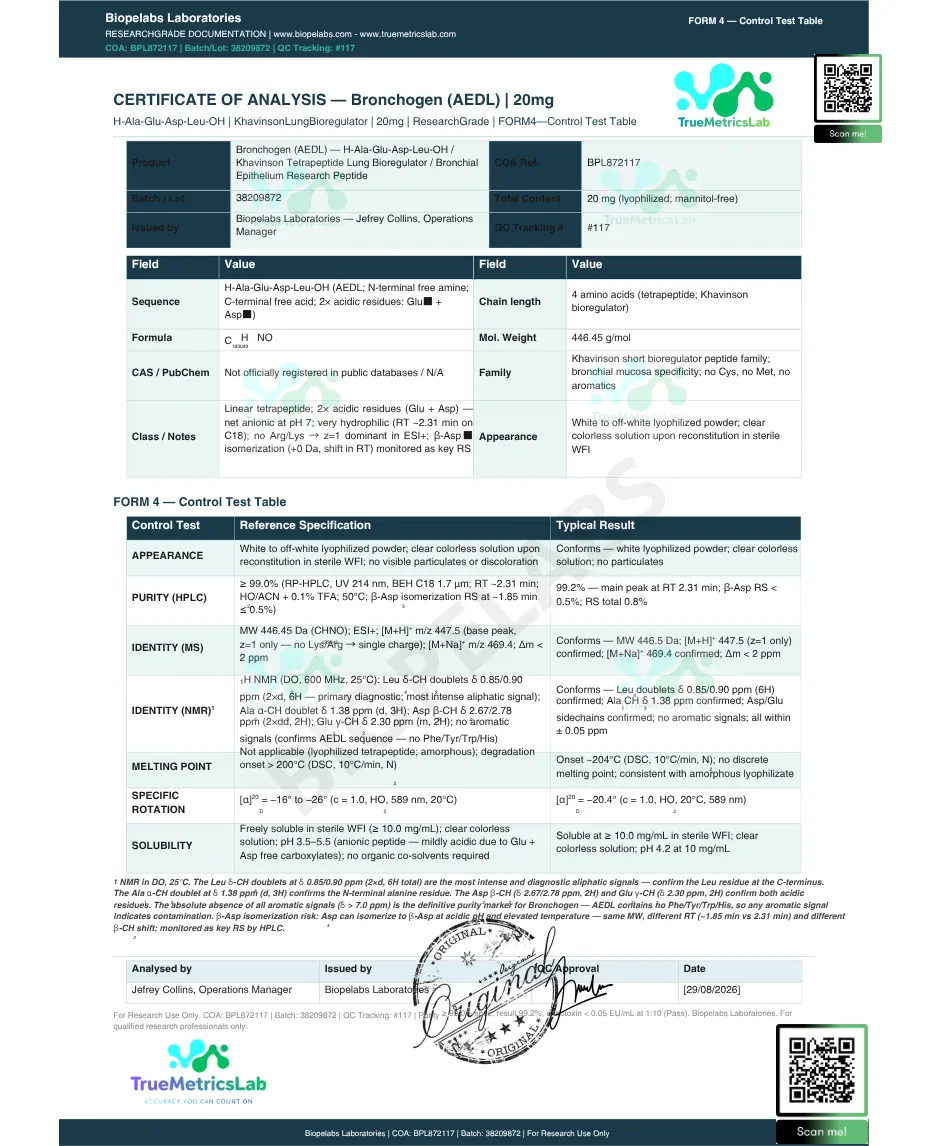
| Molecular Weight | 446.45 g/mol |
| Synonyms | AEDL peptide |

Source: Científico
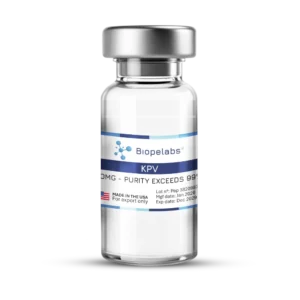
Peptides undergo a lyophilization process, a technique that contributes to greater stability and durability while preserving purity and molecular structure throughout storage. It is worth noting that no fillers are used during this procedure.
Biopelabs advises: this material is made available exclusively as a chemical raw material for research purposes. Its use is restricted to in vitro assays and experimental activities in a laboratory setting. The information provided is strictly informational and educational in nature. Handling must be carried out only by duly qualified professionals. This product does not qualify as a drug, food, or cosmetic, and must not be used, commercialized, or described as such.
Bronchogen is classified as a cytomedic-origin bioregulatory peptide, belonging to the class of so-called short regulatory peptides, developed from peptide fractions isolated from lung tissue. Its experimental purpose is associated with the modulation of cellular activity in the bronchial epithelium and pulmonary tissue, focusing on functional regulation and the maintenance of respiratory homeostasis.
In the available technical literature—predominantly of Russian and Eastern European origin—Bronchogen is described as a synthetic dipeptide analogous to natural fragments of regulatory pulmonary proteins. Its application has been investigated in experimental contexts involving chronic inflammatory processes of the airways, degenerative alterations of the respiratory epithelium, and tissue remodeling processes.
It is important to emphasize that the available data are mostly preclinical or derived from observational studies, with limited randomized clinical trials published in widely indexed international databases.
The proposed mechanism of Bronchogen involves:
There is no robust evidence that Bronchogen acts as a classical enzymatic inhibitor; its activity appears to be primarily related to epigenetic regulation and transcriptional modulation.
The reported metabolic impacts are mainly focused on pulmonary cellular metabolism:
In animal models with chronic airway inflammation, favorable changes were observed in biochemical markers associated with lipid peroxidation and endogenous antioxidant activity.
To date, there is no consolidated evidence of significant systemic effects on glucose metabolism, lipid metabolism, or the endocrine axis.
The available literature does not present consistent evidence of direct investigation of Bronchogen in pulmonary or systemic oncological models.
Some exploratory studies on cytomedic peptides suggest a potential regulatory role in cellular differentiation; however, there are no robust data demonstrating specific antitumor, cytotoxic, or antiproliferative activity of Bronchogen in experimental cancer models.
Thus, its application remains restricted to functional regulation and tissue repair in non-oncological models.
Functional Regulation of the Bronchial Epithelium
The main specific action attributed to Bronchogen, according to experimental technical literature, is:
In experimental models of chronic bronchitis and chemical injury to the airways, morphofunctional improvement of the respiratory epithelium has been observed.
Formal pharmacokinetic data are limited. However, considering the profile of short peptides:
Most available studies do not provide detailed data on bioavailability, volume of distribution, or quantitative pharmacokinetic parameters.
Bronchogen is described in the technical literature as a pulmonary bioregulatory peptide with potential modulatory effects on bronchial epithelial function and local inflammatory response. Its proposed mechanism involves transcriptional regulation and possible cellular epigenetic modulation.
The available evidence is predominantly preclinical or derived from observational studies with methodological limitations. To date, there is no broad validation through international randomized clinical trials supporting its use in evidence-based therapeutic protocols.
Therefore, its application remains restricted to the field of scientific investigation and experimental research.
Only logged in customers who have purchased this product may leave a review.
| Weight | 40 g |
|---|---|
| Dimensions | 7 × 3,6 × 8 cm |









Reviews
There are no reviews yet.