
In recent years, there has been a significant increase in the promotion of peptides through social media, digital forums, and fitness influencers. This exposure often associates these molecules exclusively with aesthetic purposes, such as muscle hypertrophy and weight loss, incorrectly equating them with anabolic steroids.
Such simplification ignores the biochemical complexity of peptides, their broad medical applications, and the risks associated with improper use. This article provides a technical-scientific analysis of the biological foundations of peptides, their real clinical applications, and the public health impact of misinformation.
It is also important to emphasize that peptides are not medications. A peptide is a biomolecule formed by the linkage of two or more amino acids through specific chemical bonds known as peptide bonds.
Unlike synthetic drugs that often “force” a chemical reaction in the body, peptides function as biological messengers. They possess specific “keys” that bind to receptors on our cells, sending instructions to:
In summary: A peptide is a “biological instruction” in molecular form. It is not the medication itself, but the code that instructs the body on how to restore homeostasis (a healthy balance).
Peptides are short chains of amino acids linked by peptide bonds. They differ from proteins mainly in size and three-dimensional structure. Biologically, they perform essential functions such as:
Therefore, peptides do not represent a single pharmacological class, but rather a structural category of molecules with highly diverse functions.
One of the most widespread misconceptions is equating peptides with anabolic steroids. This comparison is scientifically incorrect for several reasons:
🔬 Structural Difference
🔬 Mechanistic Difference
🔬 Physiological Profile Difference
This simplistic association is largely the result of imprecise communication and sensationalist marketing.
Popular narratives frequently reduce peptides to two purposes:
This view ignores that many peptide molecules are fundamental in fields such as:
🧠 Neurology
Neuroactive peptides are studied in neurodegenerative diseases and cognitive disorders.
🫀 Cardiology
Natriuretic peptides act as biomarkers and physiological modulators of cardiovascular function.
🧬 Oncology
Peptides are used as therapeutic targets, drug delivery vectors, and tumor markers.
🦠 Immunology
Cytokines and peptide-based immunomodulators are essential in inflammatory control.
Reducing peptides to aesthetic tools disregards decades of biomedical research.
The digital environment contributes to scientific distortion through:
Many compounds discussed online are in preclinical stages or restricted to research, with no approval for routine human use.
Use without medical supervision or outside clinical protocols may lead to:
Additionally, many peptides sold online do not undergo pharmaceutical-grade quality control, further increasing the risks associated with improper use.
For a peptide to be approved as a medication, it must undergo:
Most peptides popularized on social media have not completed this process.
Peptides represent one of the most promising areas in modern pharmacology due to:
However, this scientific promise does not justify indiscriminate aesthetic or recreational use, especially without medical supervision. Biopelabs emphasizes that all peptides marketed on its platform are intended exclusively for technical, scientific, and/or academic purposes.
The spread of inaccurate information:
Proper scientific education is essential to correct these distortions.
The popularization of peptides on social media has created a simplified and often misleading narrative, associating them almost exclusively with aesthetic goals. This perspective ignores the biochemical complexity of these molecules and their broad, sophisticated medical applications.
Moreover, misinformation and indiscriminate use negatively impact the scientific environment itself. The incorrect association between peptides and purely aesthetic purposes contributes to increased regulatory stigma and widespread commercial restrictions, making it more difficult to access peptides for legitimate research purposes.
This scenario may limit researchers’ access to compounds used exclusively in in vitro studies, including well-studied peptides, combined formulations (blends), and other experimental associations.
When misinformation drives regulatory or market decisions, an unintended consequence emerges: the restriction of scientific inputs with legitimate technical applications, ultimately hindering the advancement of biomedical knowledge.
Peptides are not synonymous with steroids, nor are they limited to hypertrophy or weight loss. They are fundamental components of human physiology and valuable tools in biomedical research.
A proper understanding requires scientific grounding, critical analysis, and responsible communication.
Biopelabs.com
Nota: Para enriquecer visualmente nosso conteúdo, informamos que algumas das imagens utilizadas em nossos artigos são criadas por meio de inteligência artificial. Elas servem a propósitos puramente ilustrativos e não devem ser interpretadas como representações de eventos ou pessoas reais.
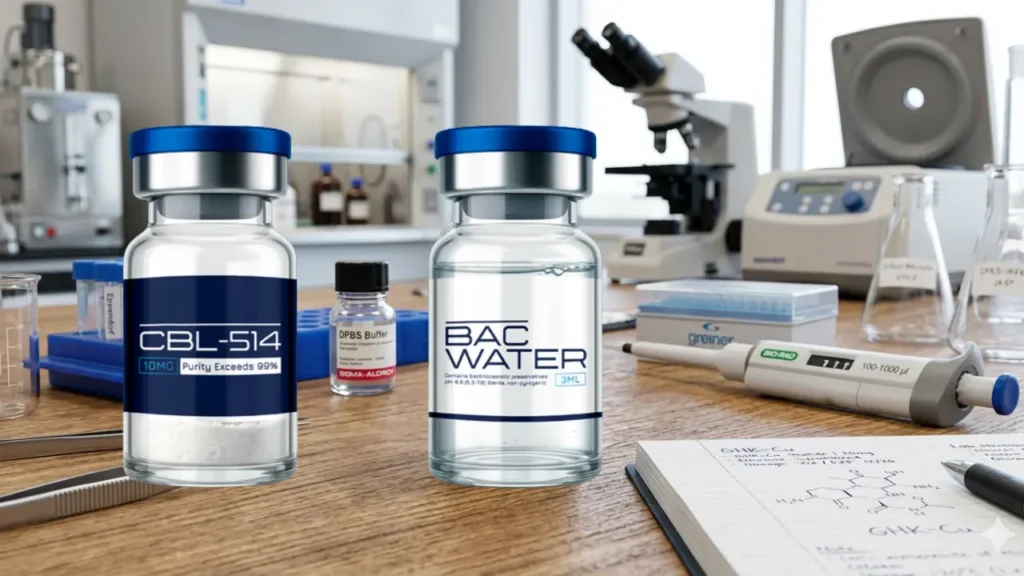
TECHNICAL AND SCIENTIFIC GUIDE CBL-514: Pharmacology, Clinical Evidence and Therapeutic Outlook Updated 29 July 2026 Intended audience: researchers,...
Read more...
1. Abstract Lyophilization, or freeze-drying, is the most effective method for stabilizing both synthetic and natural peptides. By...
Read more...
1. Abstract Ovágeno is a synthetic tripeptide (L-glutamic acid, L-aspartic acid, and L-proline) developed to act as a...
Read more...
1. Nature and Molecular Architecture AOD9604 is a synthetic peptide analog that mimics the C-terminal region of human...
Read more...
BIOPELABS delivers research-focused peptides with a clean, modern experience—clear product options, responsive support, and secure shopping. Explore our peptide catalog and find the right format for your needs today.
Disclaimer: The products offered by BiopeLabs are intended for research and laboratory use only. They are not approved for human consumption, therapeutic, diagnostic, or veterinary use. By purchasing from our website, you acknowledge that you are a qualified researcher or purchasing on behalf of a legitimate research institution and agree to use these products in accordance with all applicable laws and regulations.

1: 5-Amino-1MQ 10mg
2: 5-Amino-1MQ 50mg
3: ACE-031 1mg
4: ACTH 1-39 5mg
5: Adamax 5mg
6: Adamax 10mg
7: AHK-Cu 50mg
8: AICAR 50mg
9: AICAR 100mg
10: AOD-9604 5mg
11: AOD-9604 10mg
12: Alprostadil 20mcg
13: Amylin 5mg
14: Angiotensin (1–7) 5mg
15: ARA-290 10mg
16: Bimagrumab 5mg
17: Botulinum Toxin 100IU
18: BPC-157 10mg
19: BPC-157 20mg
20: BPC-157 5mg + TB-500 5mg
21: BPC-157 10mg + TB-500 10mg
22: Bronchogen 20mg
23: Cagrilintide 10mg
24: Cagrilintide 20mg
25: Cardiogen 20mg
26: Cartalax 20mg
27: CBL-514 10mg
28: CBL-514 20mg
29: CBL-514 30mg
30: Cerebrolysin 60mg
31: Cerlankin 2mg
32: CGRP (Calcitonin Gene-Related Peptide) 1mg
33: CJC-1295 with DAC 5mg
34: CJC-1295 with DAC 10mg
35: CJC-1295 with DAC 5mg + Ipamorelin 5mg
36: CJC-1295 without DAC 5mg
37: CJC-1295 without DAC 10mg
38: CJC-1295 without DAC 5mg + Ipamorelin 5mg
39: Chonluten 20mg
40: Cortagen 20mg
41: Crystagen 20mg
42: CT-1 Cardiotrophin-1 5mg
43: Dermorphin 5mg
44: Dihexa 5mg
45: DSIP 5mg
46: Dulaglutide 5mg
47: Elabela Apelin 5mg
48: Enfuvirtide 90mg
49: Epithalon 5mg
50: Epithalon 40mg
51: Epithalon 50mg
52: EPO 3000IU
53: FGF21 10mg
54: Follistatin-344 1mg
55: FOXO4 10mg
56: GHK-Cu 50mg
57: GHK-Cu 100mg
58: Ghrelin 10mg
59: GHRP-2 5mg
60: GHRP-6 5mg
61: Glucagon 1mg
62: Glutathione 1500mg
63: Gonadorelin Acetate 5mg
64: Goserelin 10mg
65: GLOW BPC-157 10mg + GHK-Cu 50mg + TB-500 10mg
66: HGH 191AA 15IU
67: HGH 191AA 36IU
68: HGH Fragment 176-191 10mg
69: HGH Fragment 176-191 15mg
70: HMG (Human Menopausal Gonadotropin) 75IU
71: Humanin 10mg
72: Hyaluronic Acid 5mg
73: Hexarelin Acetate 2mg
74: Hexarelin Acetate 5mg
75: IGF-1 LR3 1mg
76: Ipamorelin 5mg
77: Ipamorelin 10mg
78: Kisspeptin-10 5mg
79: Kisspeptin-10 10mg
80: KLOW BPC-157 10mg + GHK-Cu 50mg + TB-500 10mg + KPV 10mg
81: KPV 10mg
82: Leuprolide Acetate 10mg
83: Liraglutide 5mg
84: Livagen 20mg
85: LL-37 5mg
86: Lysyl Oxidase 30mg
87: Matrixyl 10mg
88: Mazdutide 10mg
89: Melanotan I 10mg
90: Melanotan II 10mg
91: Melatonin 10mg
92: MGF 2mg
93: MOTS-c 10mg
94: MOTS-c 40mg
95: NAD+ 100mg
96: NAD+ 500mg
97: NAD+ 1000mg
98: Nesiritide 5mg
99: Neuropeptide Y (NPY) 10mg
100: Ovagen 20mg
101: Oxytocin Acetate 5mg
102: Oxytocin Acetate 10mg
103: P21 5mg
104: P21 10mg
105: PACAP 5mg
106: Pancragen 20mg
107: PE 22-28 10mg
108: PEG-MGF 2mg
109: Pinealon 5mg
110: Pinealon 10mg
111: Pinealon 20mg
112: PNC-27 5mg
113: PNC-27 10mg
114: Prostamax 20mg
115: PT-141 10mg
116: PTH Fragments 10mg
117: Relamorelin 5mg
118: Retatrutide 10mg
119: Retatrutide 20mg
120: Retatrutide 30mg
121: Retatrutide 40mg
122: Retatrutide 60mg
123: Retatrutide 5mg + Cagrilintide 5mg
124: Selank 5mg
125: Selank 10mg
126: Semaglutide 5mg + Cagrilintide 5mg
127: Semax 5mg
128: Semax 10mg
129: Sermorelin 5mg
130: Sermorelin 10mg
131: SLU-PP-332 10mg
132: SNAP-8 10mg
133: SS-31 10mg
134: SS-31 50mg
135: Survodutide 10mg
136: TB-500 5mg
137: TB-500 10mg
138: TB-500 (FRAG) 10mg
139: Teduglutide 5mg
140: Teriparatide 10mg
141: Tesamorelin 5mg
142: Tesamorelin 10mg
143: Tesamorelin 20mg
144: Tesamorelin 5mg
145: Tesofensine 1mg
146: Testagen 20mg
147: Thymalin 10mg
148: Thymosin Alpha-1 5mg
149: Thymosin Alpha-1 10mg
150: Treprostinil 5mg
151: Vesugen 20mg
152: VIP 5mg
153: VIP 10mg
154: Vilon 20mg