
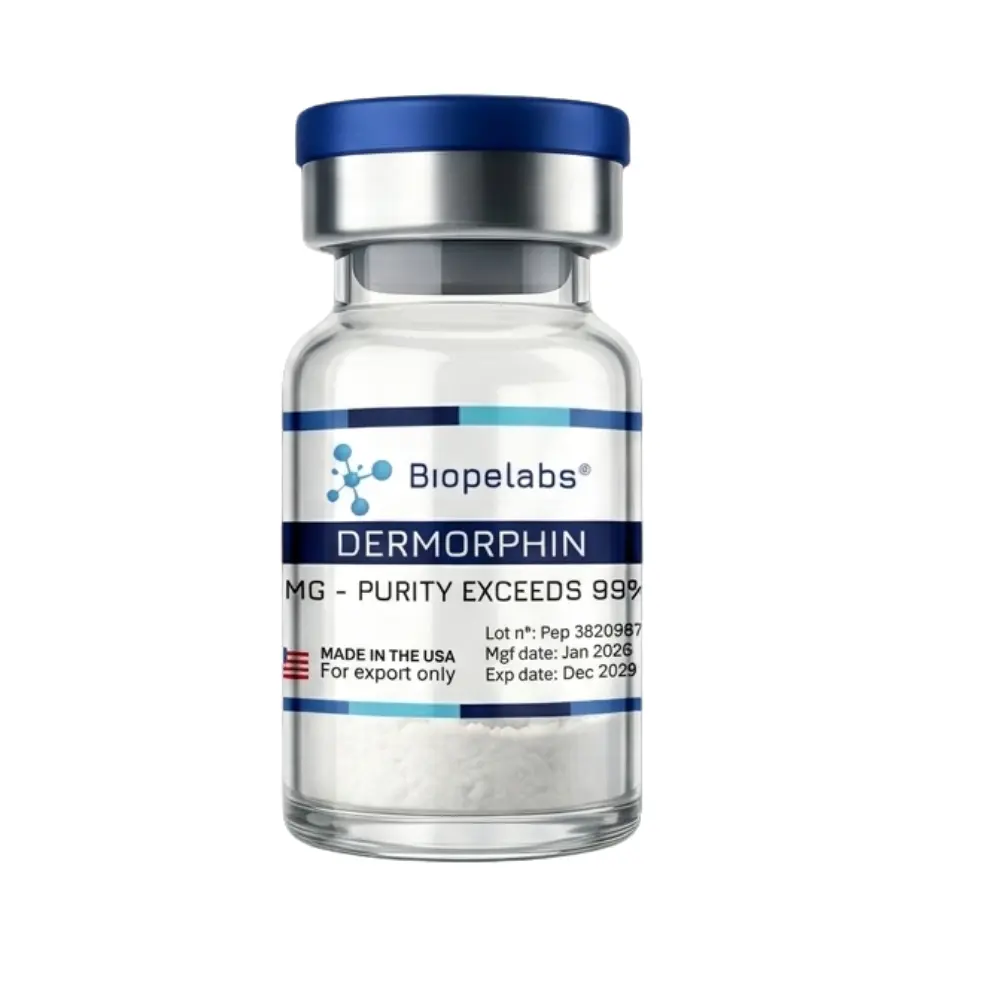
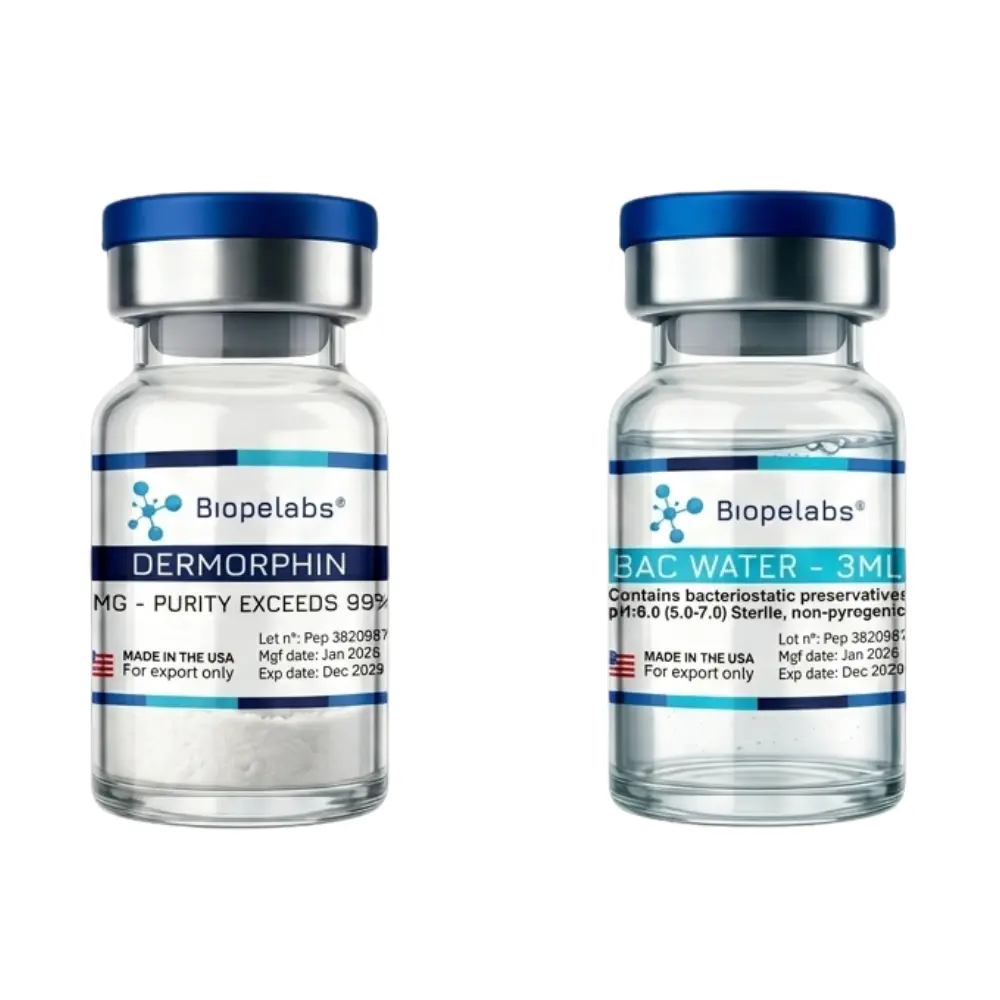
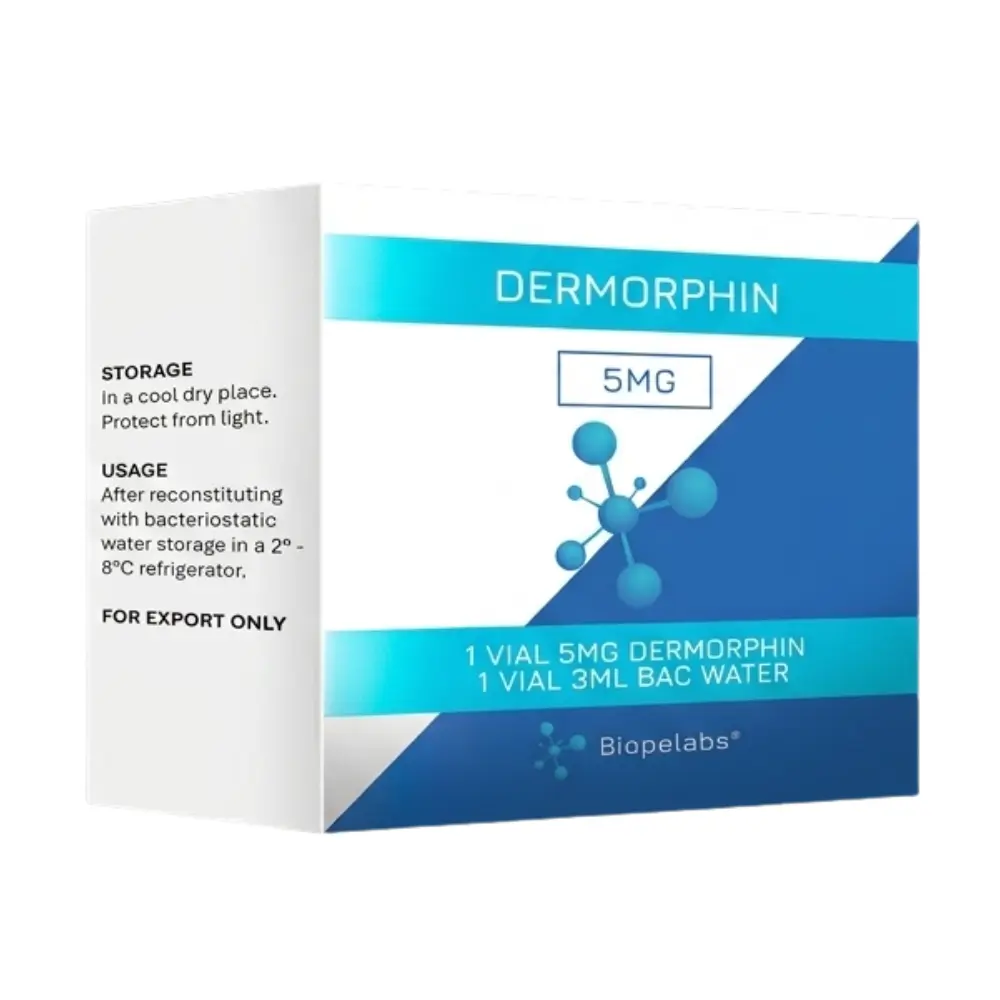


Dermorphin is a heptapeptide with the structural sequence Tyr-D-Ala-Phe-Gly-Tyr-Pro-Ser-NH₂, containing an unusual D-alanine residue at the second position, which confers greater resistance to enzymatic degradation by peptidases and significantly contributes to its high pharmacological potency. The presence of the D-configuration amino acid is decisive for its high affinity for the μ-opioid receptor (MOR), surpassing the affinity of most endogenous opioid peptides.
The mechanism of action involves activation of G protein-coupled μ receptors (Gi/Go), promoting inhibition of adenylate cyclase, reduction of intracellular cyclic AMP levels, opening of potassium channels, and closing of voltage-dependent calcium channels. These effects result in decreased release of excitatory neurotransmitters and consequent potent analgesic effect.
Due to its high potency and central activity, dermorphin is predominantly studied in experimental and pharmacological contexts and is not widely used clinically. Its biological activity depends on the structural integrity of the peptide sequence and the presence of the C-terminal amidated modification.
Important Information
| Properties | Value |
| Molecular Formula | C₄₀H₅₀N₈O₁₀ |
| Molecular Weight | 802.90 g/mol |
| Synonyms | [Tyr-D-Ala-Phe-Gly-Tyr-Pro-Ser]-NH₂, Dermorphine, Dermorphin Heptapeptide Opioid, μ-agonist Heptapeptide derived from Phyllomedusa |
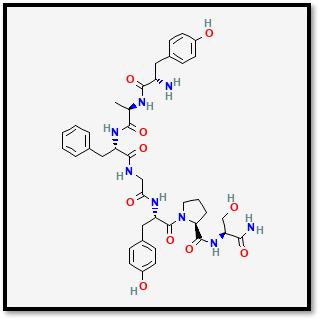
Source: PubChem
Lyophilized Peptides
The peptides undergo a lyophilization process, a technique that enhances stability and shelf life while preserving purity and molecular structure throughout storage. It is important to note that no fillers are used during this procedure.
Intended Use
Biopelabs states: this material is provided exclusively as a chemical input for research purposes. Its use is restricted to in vitro assays and experimental activities in laboratory settings. The information presented is strictly for informational and educational purposes. Handling must be carried out only by properly qualified professionals. This product is not classified as a drug, food, or cosmetic and must not be used, marketed, or described as such.
Dermorphin is a natural opioid peptide originally isolated from the skin secretion of amphibians of the genus Phyllomedusa, especially the species Phyllomedusa sauvagei.
It is a heptapeptide with the sequence:
Tyr–D-Ala–Phe–Gly–Tyr–Pro–Ser–NH₂
An unusual structural aspect is the presence of D-alanine (D-Ala) at the second position — something rare in natural vertebrate peptides — which significantly contributes to its high affinity for opioid receptors.
Dermorphin exhibits analgesic potency far superior to that of morphine in experimental models, due to its high selectivity and affinity for the μ-opioid receptor.
Dermorphin acts as a:
Highly selective μ-opioid receptor (MOR) agonist
Upon binding to the μ-opioid receptor (MOR), which is a G protein-coupled receptor (Gi/o), it triggers:
The result is suppression of nociceptive transmission in the central nervous system.
In animal models:
Prolonged activation of the μ-opioid receptor can induce:
These effects are similar to those observed with classical opioids.
Dermorphin has been studied primarily in:
It is not widely used clinically as an approved medication in most countries.
As a potent μ-opioid agonist, potential risks include:
These risks are theoretical or observed in experimental models, given its pharmacodynamic similarity to potent opioids.
The most notable detail of dermorphin is:
Presence of D-Ala (D-alanine)
→ Increases resistance to enzymatic degradation
→ Increases affinity for the μ receptor
→ Prolongs action compared to endogenous enkephalins
This characteristic has made dermorphin an important molecule in rational opioid design research.
Dermorphin is a natural opioid peptide of high potency and selectivity for the μ-opioid receptor. Its primary value lies in pharmacological research and the development of novel opioid analogs with greater selectivity and a potentially differentiated therapeutic profile.
Despite its potency, its clinical use is limited, and its pharmacological profile demands extreme caution due to the inherent risk of intense μ-opioid receptor activation.
Montecucco, C., & De Bernard, M. (1992). Dermorphin and related peptides. Pharmacology & Therapeutics, 55(3), 309–334.
Erspamer, V., Melchiorri, P., Falconieri-Erspamer, G., Negri, L., Corsi, R., Severini, C., Barra, D., Simmaco, M., & Kreil, G. (1989). Deltorphins: a family of naturally occurring peptides with high affinity and selectivity for δ opioid binding sites. Proceedings of the National Academy of Sciences, 86(13), 5188–5192.
Only logged in customers who have purchased this product may leave a review.
| Weight | 40 g |
|---|---|
| Dimensions | 7 × 3,6 × 8 cm |

Reviews
There are no reviews yet.