
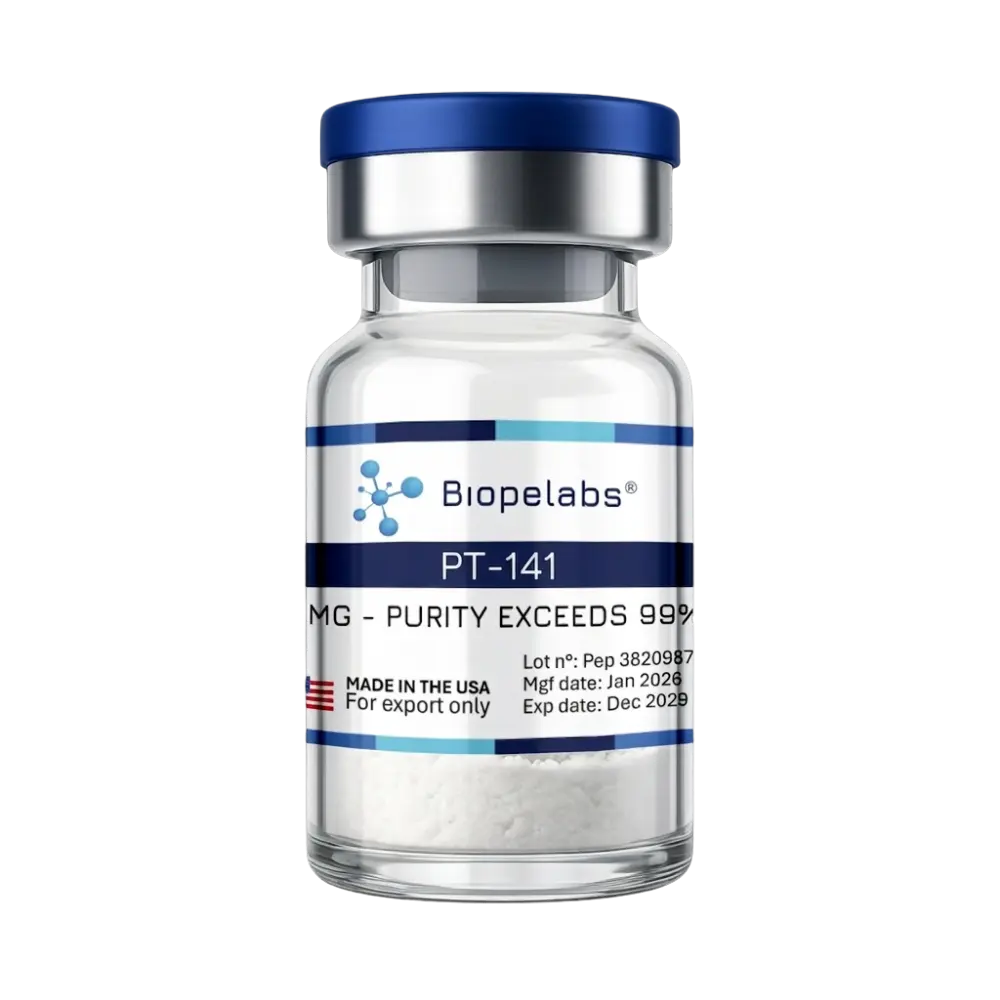
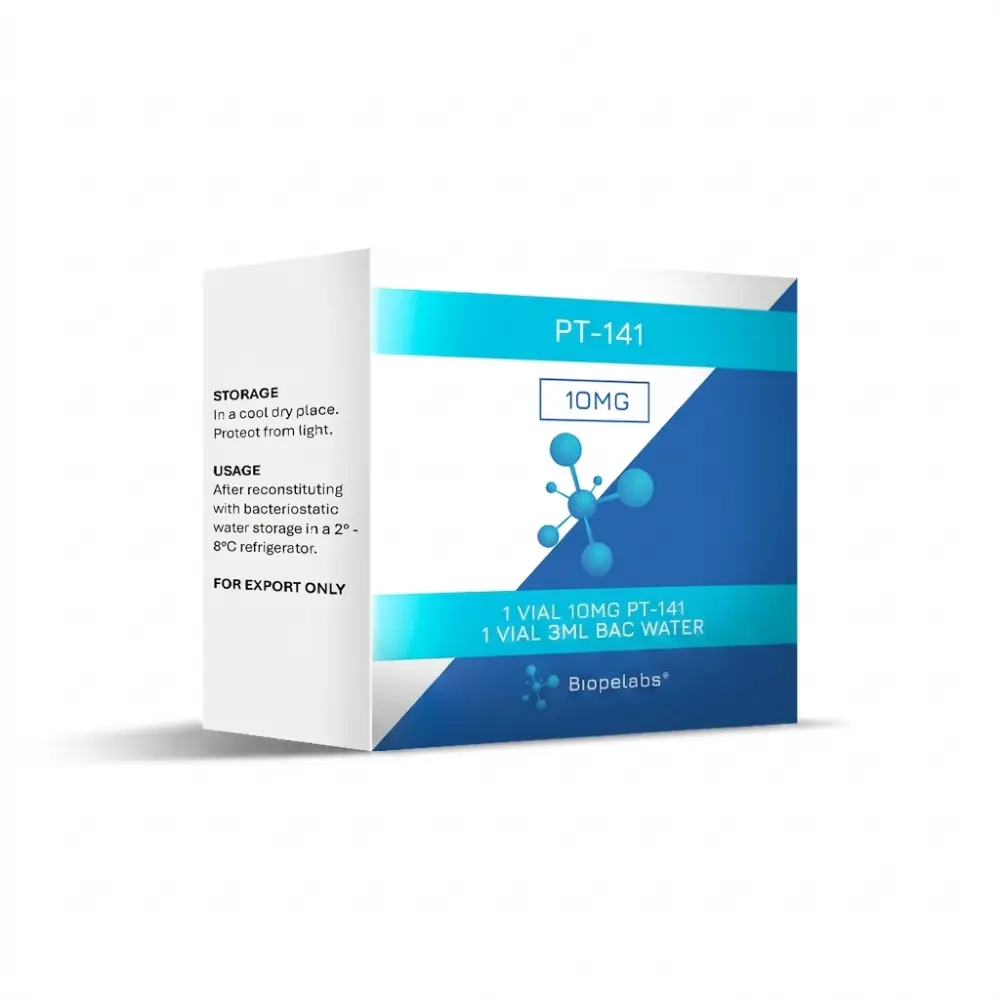


PT-141 (bremelanotide) is a synthetic peptide analog of alpha-melanocyte-stimulating hormone (α-MSH) that acts on melanocortin receptors, particularly MC3R and MC4R, in the central nervous system. PT-141 operates through a unique mechanism, distinct from peripheral agents such as phosphodiesterase type 5 (PDE5) inhibitors. This action is believed to stimulate sexual arousal and desire by activating neurons in the hypothalamus, a key area involved in sexual function.
Important Information
| Properties | Value |
| Molecular Formula | C₅₀H₆₈N₁₄O₁₀ |
| Molecular Weight | 1025.2 g/mol |
| Synonyms | Bremelanotide, 189691-06-3, PT-141, UNII-6Y24O4F92S, Bremelanotide |
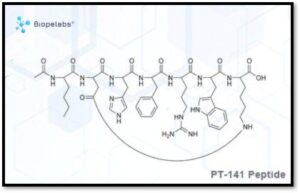
Source: Científico
Lyophilized Peptides
The peptides undergo a lyophilization process, a technique that enhances stability and shelf life while preserving purity and molecular structure throughout storage. It is important to note that no fillers are used during this procedure.
Intended Use
Biopelabs states: this material is provided exclusively as a chemical input for research purposes. Its use is restricted to in vitro assays and experimental activities in laboratory settings. The information presented is strictly for informational and educational purposes. Handling must be carried out only by properly qualified professionals. This product is not classified as a drug, food, or cosmetic and must not be used, marketed, or described as such.
PT-141 (Bremelanotide) is a synthetic peptide derived from melanocortin, widely investigated in scientific research due to its effects on the central nervous system, especially related to sexual arousal and desire. Its primary action occurs through the activation of melanocortin receptors MC3R and MC4R, which play a central role in modulating sexual behavior.
Clinical studies have demonstrated that PT-141 is capable of inducing significant erectile responses in both healthy men and individuals with mild to moderate erectile dysfunction. These effects are dose-dependent and present a relatively rapid onset, with responses observed approximately 30 minutes after administration.¹
Additional research indicates that PT-141 may be effective in individuals who do not respond adequately to phosphodiesterase type 5 (PDE5) inhibitors, such as sildenafil. This profile suggests its potential as an alternative or experimental complement in studies on refractory erectile dysfunction.²
Female sexual dysfunction (FSD) is a multifactorial condition, with an estimated prevalence of approximately 30% of women in North America and Europe, involving physiological, psychological, and interpersonal components.
Experimental models have demonstrated that PT-141 selectively stimulates behaviors related to sexual motivation in females, considered analogous to sexual arousal in humans, without interfering with other behavioral patterns. These findings suggest a specific effect on appetitive sexual behavior, supporting its potential in research aimed at hypoactive sexual desire disorder (HSDD).³
Preliminary clinical data also indicate that PT-141 may promote increased sexual desire and libido in women, further reinforcing its scientific interest in this field.⁴
Unlike PDE5 inhibitors, which act predominantly by increasing genital blood flow through nitric oxide signaling, the effects of PT-141 are essentially neurogenic.
The peptide acts by modulating central neural circuits, increasing dopaminergic tone in limbic areas associated with sexual desire and reducing inhibitory signals mediated by serotonergic pathways. This mechanism highlights PT-141 as a relevant tool for neuroendocrine and behavioral studies related to sexuality.⁵
Scientific research on PT-141 has expanded the understanding of the central mechanisms involved in sexual arousal and desire. Its use remains restricted to experimental and research contexts, and adherence to appropriate scientific, regulatory, and ethical protocols is essential.
The content was reviewed by Ky H. Le, MD. Dr. Ky H. Le is a family medicine physician in Aiea, Hawaii. He received his medical degree from St. George's University School of Medicine and has been practicing for more than 20 years. He has expertise in treating obesity, diabetes, hypertension, and high blood pressure, among other conditions – see all areas of expertise. Dr. Ky H. Le accepts Medicare, Aetna, Humana, Blue Cross, United Healthcare.
Ref.: https://health.usnews.com/doctors/ky-le-371599#expertise
Only logged in customers who have purchased this product may leave a review.
| Weight | 40 g |
|---|---|
| Dimensions | 7 × 3,6 × 8 cm |

Reviews
There are no reviews yet.