
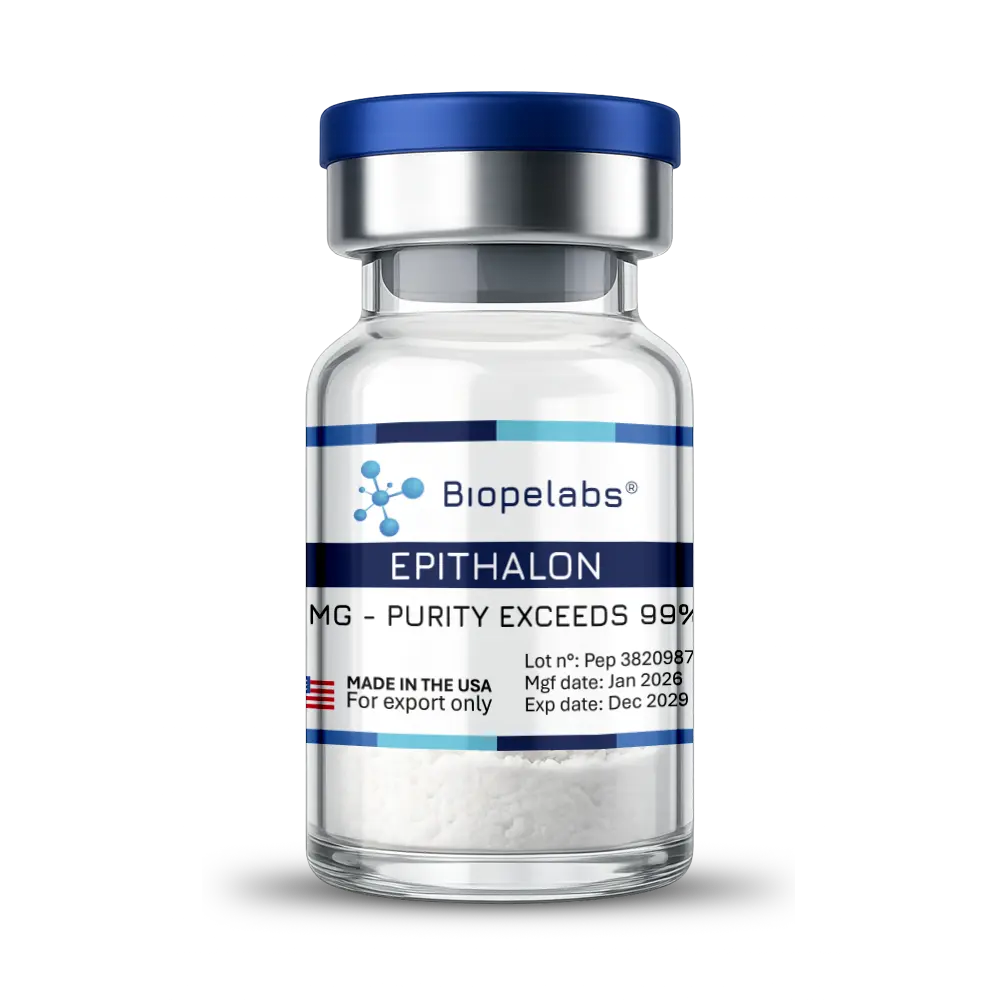
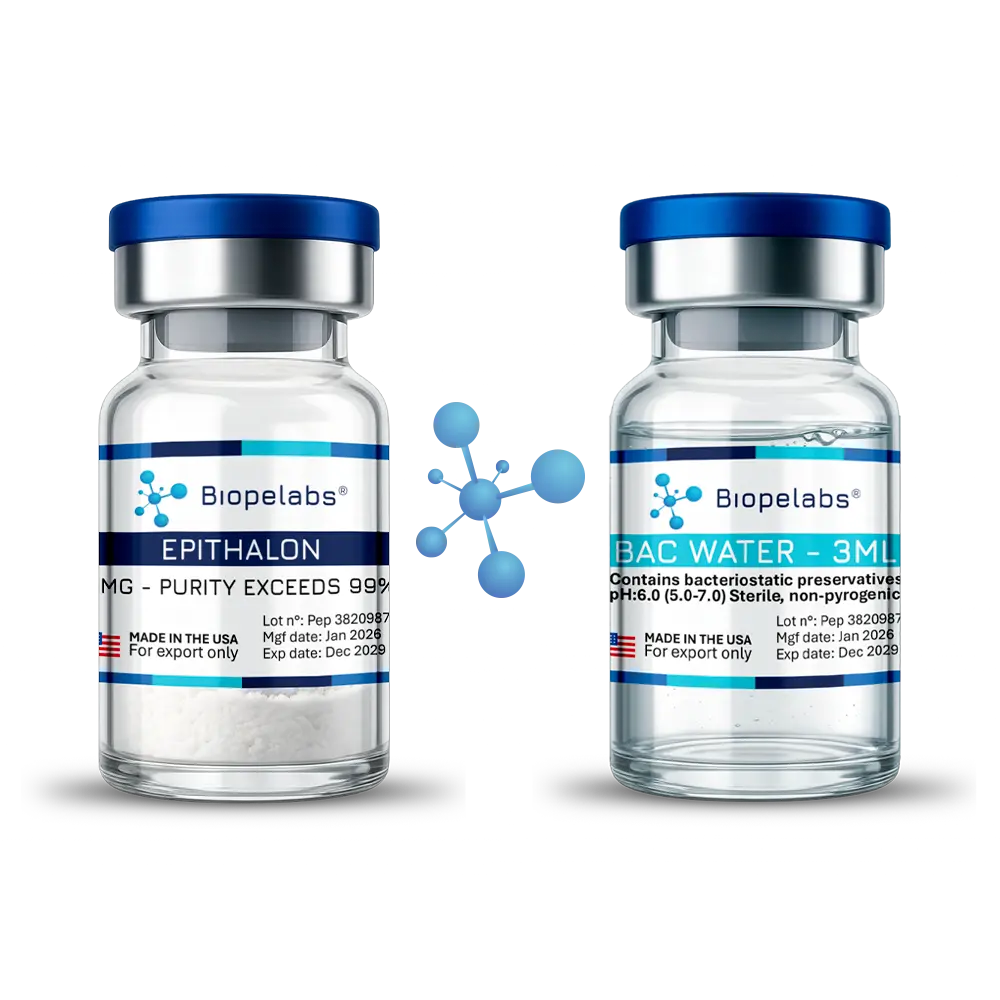
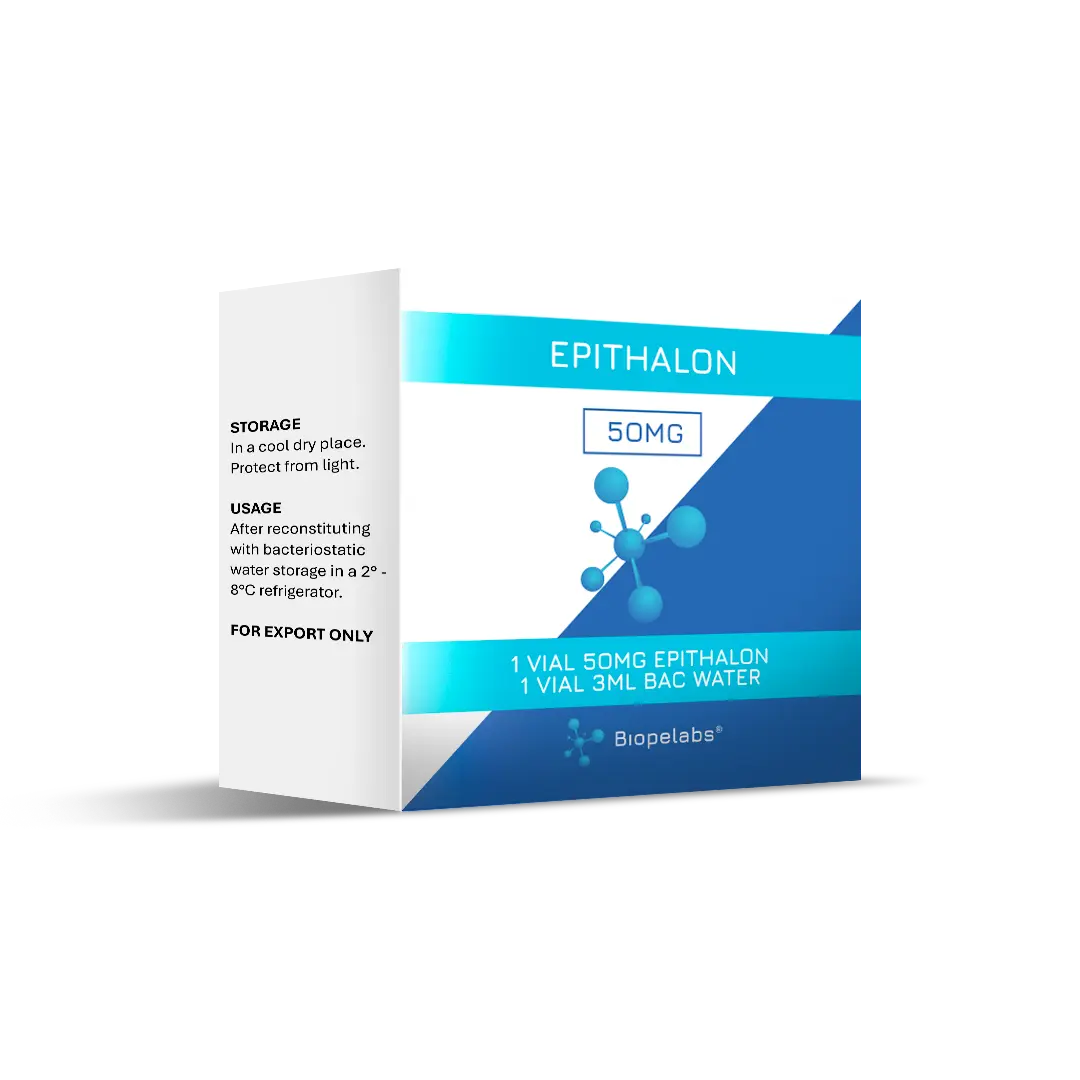


Epitalon, also referred to as Epithalon, is a synthetic peptide composed of four amino acids: alanine, glutamic acid, aspartic acid, and glycine. It is derived from a natural peptide called epitalamine, extracted from the pineal gland.
Epitalon has attracted interest in longevity‑related research as a potential bioregulator that may modulate cellular aging processes. Most notably, Epithalon has been investigated as a modulator of telomerase, an enzyme that helps maintain telomere length, thereby supporting chromosomal stability and cellular replicative capacity.
Important Information
| Property | Value |
| Molecular formula | C₁₄H₂₂N₄O₉ |
| Molecular weight | 390.35 g/mol |
| Synonyms | 307297‑39‑8, Glycine, L‑alanyl‑L‑α‑glutamyl‑L‑α‑aspartyl‑, Ala‑Glu‑Asp‑Gly |
Main structure of the peptide Epithalon
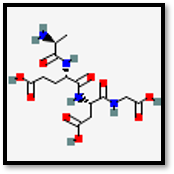
Source: PubChem
Lyophilized Peptides
Peptides undergo a lyophilization process, a technique that contributes to greater stability and extended shelf life, while preserving purity and molecular structure during storage. It is important to note that no fillers are used during this procedure.
Intended Use
Biopelabs states: this material is provided exclusively as a chemical input for research purposes. Its use is restricted to in vitro assays and experimental activities in laboratory environments. The information presented is strictly for informational and educational purposes. Handling must be carried out only by properly qualified professionals. This product is not classified as a medication, food, or cosmetic, and must not be used, marketed, or described as such.
Epitalon (also known as Epithalon) is a synthetic tetrapeptide composed of the amino acid sequence Alanine–Glutamic Acid–Aspartic Acid–Glycine (Ala‑Glu‑Asp‑Gly). The compound was developed and extensively studied by researchers at the St. Petersburg Institute of Bioregulation and Gerontology, Russia, within the context of aging and cellular longevity research.
Epitalon was designed to mimic epitalamine, a natural extract derived from the pineal gland, and has been investigated mainly for its potential geroprotective, circadian‑regulatory, and longevity‑modulating properties. Among the key features studied are:
Most available evidence comes from experimental studies conducted in Russia, involving cell‑culture models, animal experiments, and long‑term physiological observations.
Research indicates that Epitalon can activate telomerase in various cell types. Studies have shown increased expression of the catalytic subunit of telomerase, leading to elevated enzymatic activity and telomere elongation in human somatic cells.
This effect on telomeres suggests a potential mechanism by which Epitalon may delay cellular senescence. In experimental models, cells treated with the peptide showed maintained or increased telomere length and extended proliferative capacity, surpassing the Hayflick limit—the maximum number of divisions of somatic cells.
Several experimental studies have associated Epitalon with extended lifespan in different organisms. In mice, treatment resulted in approximately 13.3% higher life expectancy in the last surviving individuals and a 12.3% increase in maximum longevity. In Drosophila melanogaster, lifespan extension ranging from 11% to 16% was observed, even at extremely low concentrations.
Epitalon has also demonstrated:
These factors contribute to the understanding of Epitalon as a potential geroprotective agent. In oocytes, Epitalon reduced production of reactive oxygen species (ROS) and improved mitochondrial function, mechanisms linked to delayed cellular aging. In aged primates, studies reported partial restoration of age‑related hormonal imbalances, including elevated melatonin levels and improved glucose metabolism.
Moreover, there is evidence that Epitalon influences the expression of genes related to aging, stress response, and cellular homeostasis, possibly via direct or indirect interactions with DNA.
Epitalon has been shown to significantly reduce intracellular levels of reactive oxygen species (ROS), metabolic by‑products associated with oxidative stress and molecular damage. This reduction is linked to improved mitochondrial function and decreased apoptosis in aged cells.
Compared with melatonin in some settings, Epitalon appears to exhibit comparable or even superior antioxidant activity. In addition to direct free‑radical scavenging, the peptide seems to stimulate expression of endogenous antioxidant enzymes, thereby broadening its protective effect.
Epitalon has demonstrated relevant inhibitory effects in experimental cancer models. In HER‑2/neu transgenic mice, treatment with Epitalon significantly reduced:
In rat models, Epitalon inhibited 1,2‑dimethylhydrazine (DMH)‑induced colorectal carcinogenesis, reducing both the number and size of tumors, particularly when administered during early stages of carcinogenesis.
These antitumor effects appear partly linked to reduced expression of oncogenes such as HER‑2/neu and to modulation of cellular pathways involved in proliferation and genomic stability.
Scientific research positions Epitalon as a peptide of high interest in the study of cellular aging, longevity, genomic stability, and circadian regulation. Its ability to modulate telomeres, reduce oxidative stress, and influence gene expression supports its value as an experimental tool in biogerontology and molecular biology.
Despite promising results in experimental models, Epitalon remains a research‑only compound. Additional rigorous, well‑controlled studies are needed to fully clarify its mechanisms, safety profile, and potential future applications, always within appropriate scientific and regulatory frameworks.
The content was reviewed by Dr. Ky H. Le, MD. Dr. Ky H. Le is a family physician in Aiea, Hawaii. He received his medical degree from St. George’s University School of Medicine and has practiced for over 20 years. He has expertise in the treatment of obesity, diabetes, hypertension, and high blood pressure, among other conditions. Dr. Ky H. Le accepts Medicare, Aetna, Humana, Blue Cross, and United Healthcare.
Ref.: https://health.usnews.com/doctors/ky-le-371599#expertise



Only logged in customers who have purchased this product may leave a review.
| Weight | 40 g |
|---|---|
| Dimensions | 7 × 3,6 × 8 cm |

Reviews
There are no reviews yet.