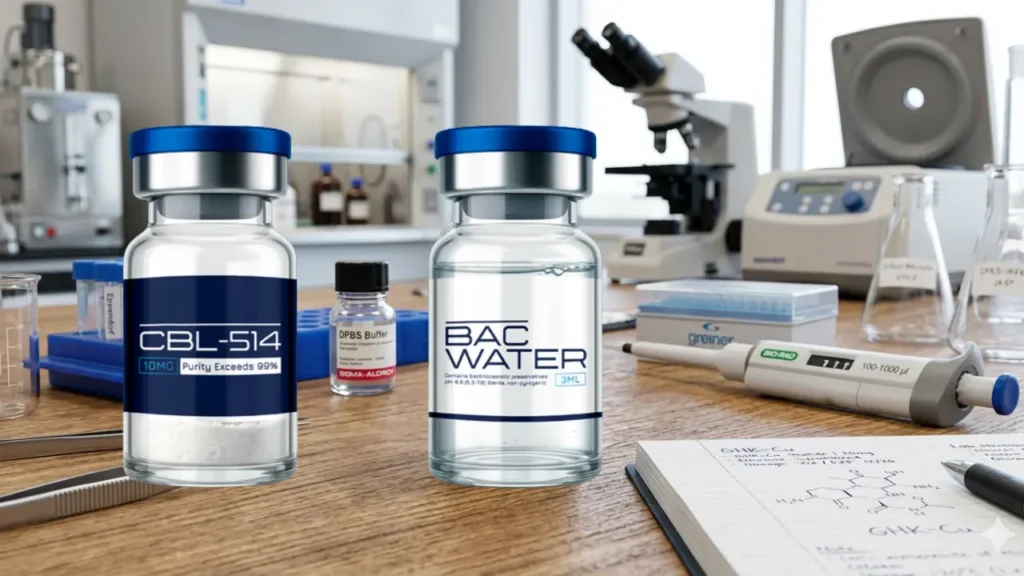
This guide has been reformulated to transform basic instructions into a biotechnological reconstitution protocol. The objective is to ensure that the peptide’s molecular structure does not undergo degradation due to mechanical stress or contamination during the transition from solid to liquid state.
The quality of the final result depends on the sterility of the environment and materials. Therefore, before starting, properly organize your workspace.
Required Materials:
I. Septum Disinfection
Remove the protective plastic caps. Use 70% alcohol to sterilize the rubber stoppers (septa) of both vials (diluent and peptide). Allow the alcohol to fully dry to prevent it from entering the vial during puncture.
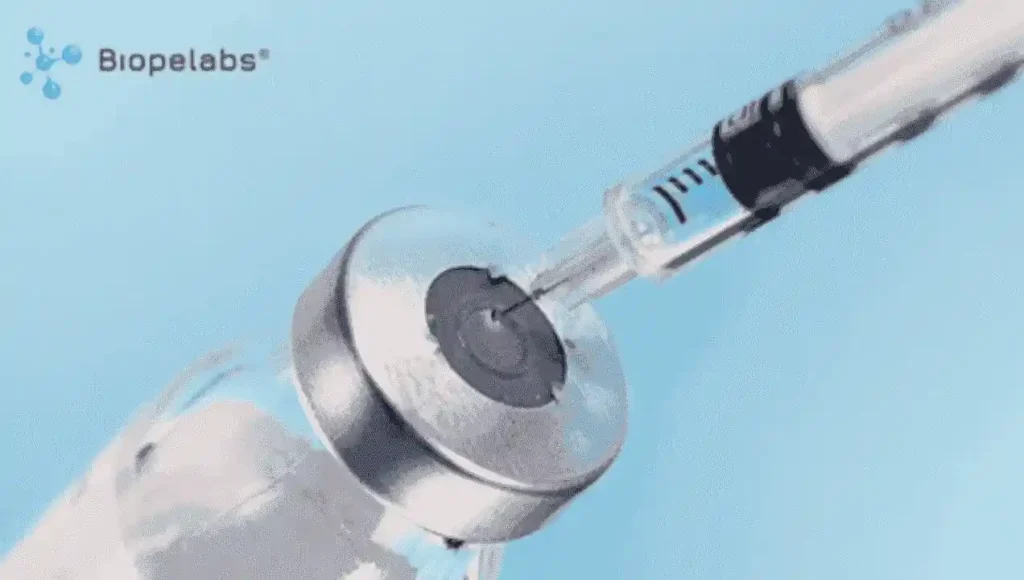
II. Diluent Withdrawal
Use the syringe to withdraw the exact volume of diluent recommended by the manufacturer (commonly between 1 mL and 3 mL).
Technical Tip: Draw in a volume of air equal to the liquid volume before inserting the needle into the diluent vial to equalize internal pressure.
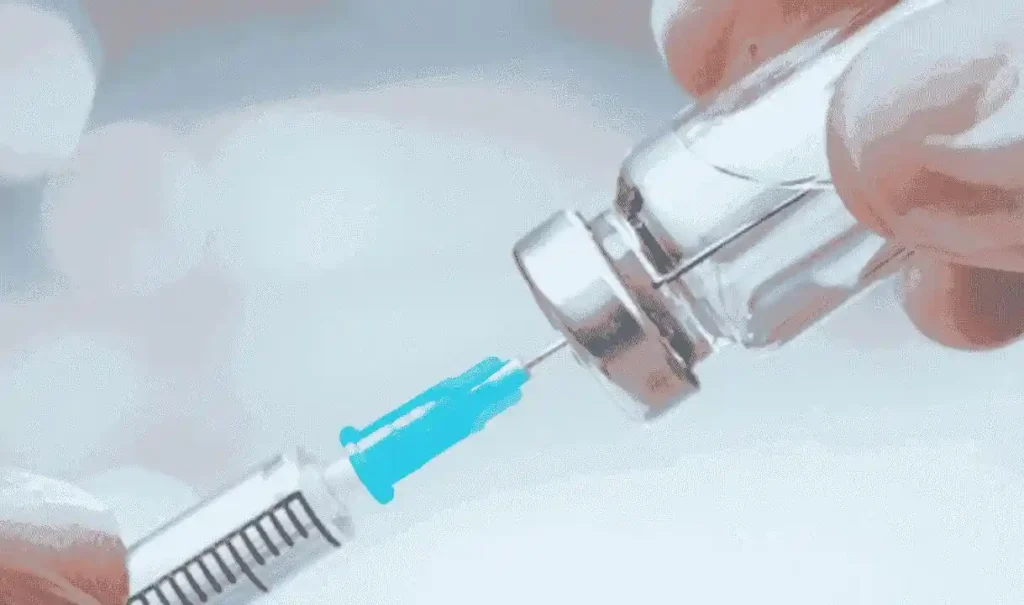
III. Strategic Transfer
When inserting the needle into the peptide vial, do not inject the liquid directly onto the lyophilized powder.
The goal is to avoid direct impact, which may disrupt sensitive amino acid chains.
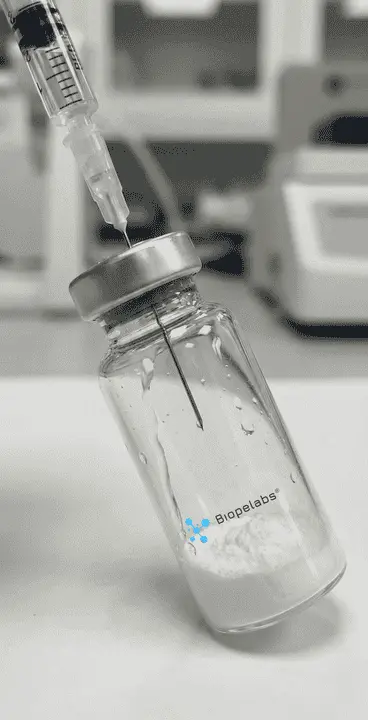
IV. Rotational Homogenization (Swirling)
This is the critical step. Never shake the vial vertically.
Some peptides require more time to fully hydrate.
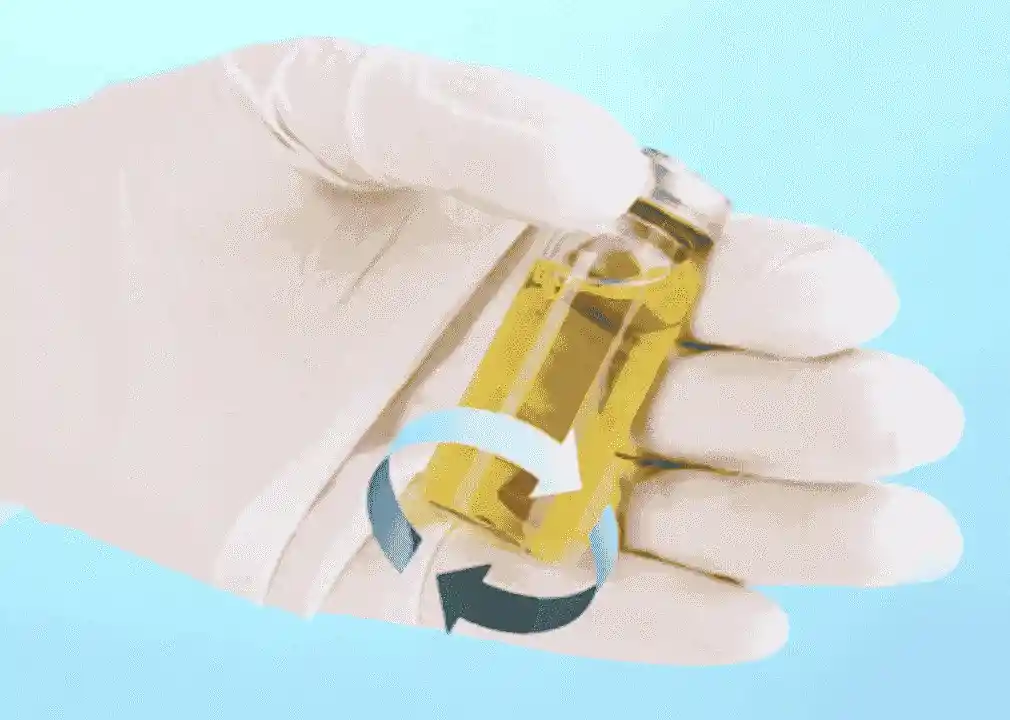
After resting, inspect the solution under a light source:
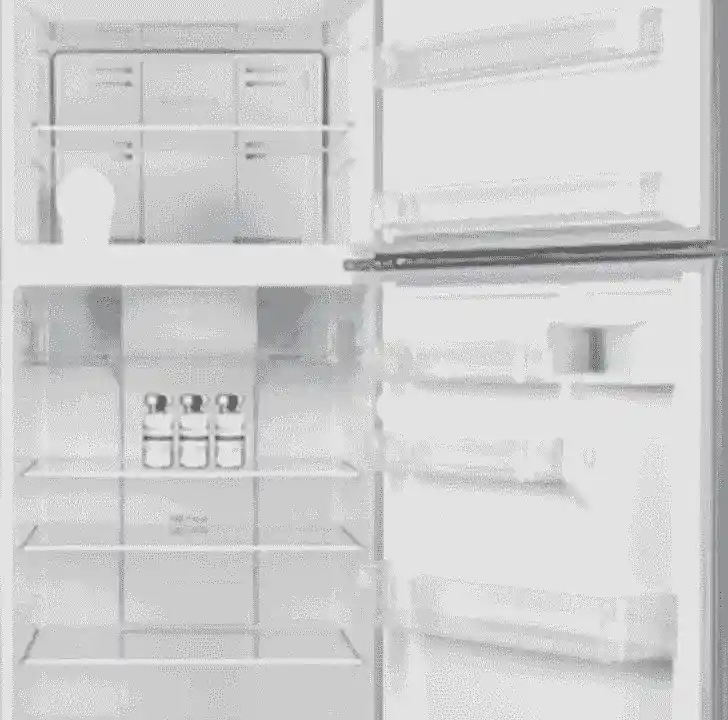
Once reconstituted, the peptide begins its natural degradation process. To slow this:
Unlike conventional drugs, peptides are stabilized by delicate hydrogen bonds and disulfide bridges.
| Step | Correct Action | What to Avoid |
| Water Addition | Let it run down the glass wall | Inject directly onto the powder |
| Mixing | Gentle circular rotation | Vertical shaking |
| Solvent | Bacteriostatic Water / Saline | Mineral or regular distilled water |
| Post-Mixing | Immediate refrigeration | Keeping at room temperature |