
Peptide Reconstitution Calculator

Calculate dilution and reconstitution with clarity, adjusting mass, volume, and concentration in seconds; discover how to use it on this page.
Adjust your syringe to:
0
Units (UI)
Equivalent to:
0
Milliliters (mL)
⚠️ Attention: The calculated volume exceeds the capacity of the selected syringe. Consider using a larger syringe or dividing the dose.
🔴 Syringe in Units (UI)
0102030405060708090100
🔵 Syringe in Milliliters (mL)
00.10.20.30.40.50.60.70.80.91.0

Guide to Diluting and Reconstituting Peptides

Peptide reconstitution is a critical step in research and laboratory settings, where lyophilized peptides (powder obtained by freezing and dehydration) are dissolved in an appropriate diluent to form a usable solution for experimental protocols. When done correctly, this step helps maintain consistent concentration, stability, and reproducibility in assays.

Lyophilized peptides are supplied in powder form to increase stability during transport and storage. Before use, it is necessary to determine the diluent and the volume to be added to the vial to achieve the desired concentration. The Peptide Dilution Calculator automates these calculations and unit conversions, reducing common errors and speeding up solution preparation.
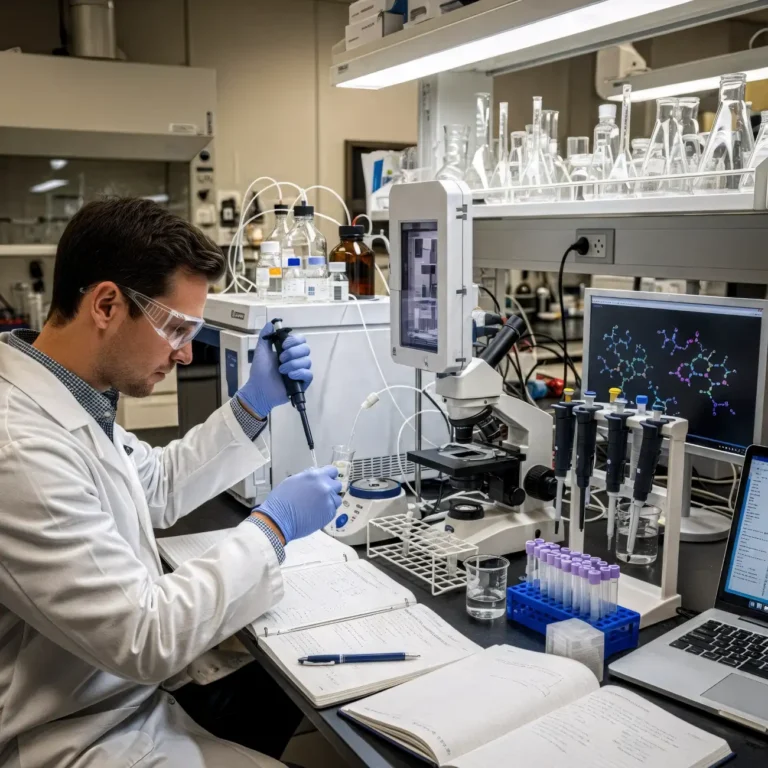
How to use the peptide calculator

Use the calculator to quickly arrive at the final concentration and volume per aliquot, with less risk of unit error.
1. Report the mass of the peptide (mg) indicated on the vial.
2. Enter the volume of diluent (mL) to be added to the vial.
3. Enter the target concentration as indicated on the vial (mcg/mg, when applicable).
4. Select the aliquot volume (mL) (e.g., 0.3 mL, 0.5 mL, or 1 mL).
5. Check the result: the calculator performs the necessary conversions and returns the calculated value for the preparation and standardization of the reconstitution.
Tip: Always review mg × mcg and total mL × mL per aliquot before applying to the protocol.

How to choose the right thinner

The diluent directly influences solubility, stability, and compatibility with your protocol. Whenever possible, use the product’s COA/documentation and the type of application (assay, cell culture, etc.) as a guide.

Bacteriostatic water

Water with preservative (usually 0.9% benzyl alcohol), useful when the bottle will be accessed frequently. May not be the best choice for peptides sensitive to this preservative.

0.9% saline solution (NaCl)

Isotonic medium, often chosen for preparations that require greater physiological compatibility, including in the context of biological systems and cell culture (as required by the protocol).

Buffer solutions (e.g., PBS, HEPES)

They maintain a controlled pH. Buffer selection should consider the characteristics of the peptide (e.g., behavior at different pHs) and the needs of the assay.

Acetic acid in water (0.1% to 10%)

A common alternative for peptides with low solubility in water or at neutral pH, aiding in initial dissolution before adjusting the preparation for final use.
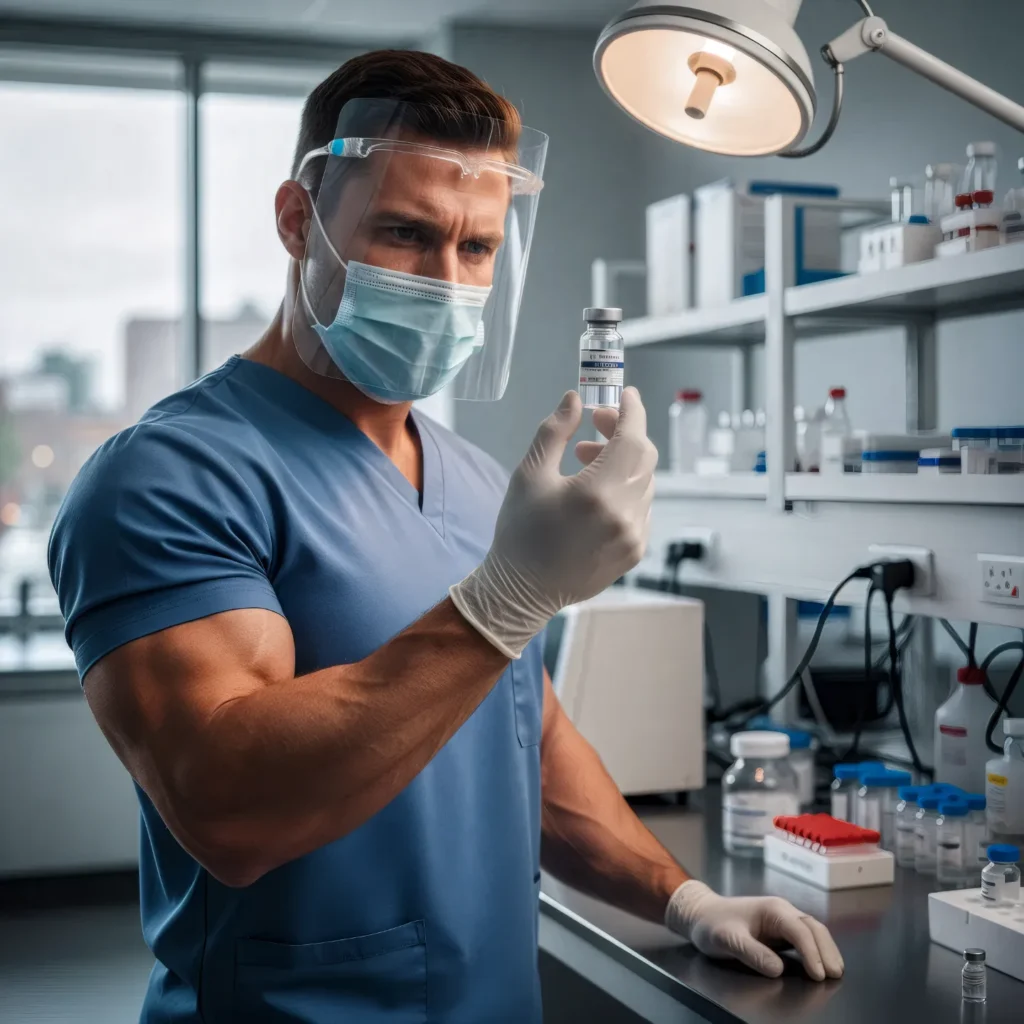
Best practices for peptide reconstitution

1. Use gloves and handle materials cleanly to reduce the risk of contamination and loss of material integrity.
2. Allow the bottle to reach room temperature before opening, minimizing condensation and variations that can affect stability.
3. Add the thinner slowly along the inside wall of the bottle, avoiding pouring it directly onto the powder — this helps prevent foaming and improves dissolution.
4. Mix gently (swirl/invert slowly). Avoid vigorous shaking, which can create foam and increase the risk of degradation.
5. If dissolution is difficult, consider gentle heating (30–40 °C) or short sonication. Avoid prolonged sonication.
6. When the protocol requires sterile conditions, use 0.22 μm filtration (when compatible with the compound and application).
7. Prepare aliquots in single-use volumes to avoid repeated freeze/thaw cycles, which can degrade the peptide.

Storage of reconstituted peptides

Stability time varies depending on the compound and diluent, but these ranges are a practical reference for laboratory organization:

Recommended labeling

When storing, label each vial/aliquot with:

ATTENTION

7 Most Common Mistakes
in Peptide Reconstitution

Frequently Asked Questions

How do I determine the ideal diluent for my peptide?
Start with the product's documentation/COA. In general, more hydrophilic peptides tend to dissolve well in water or saline solution, while more hydrophobic peptides may require pre-dissolution in a small amount of solvent (e.g., DMSO or acetic acid) and only then be diluted in an aqueous buffer. Always consider the final application before choosing the diluent.
My peptide doesn't dissolve completely. What can I try?
Give it more time and use gentle heating (30–40 °C). If it's still incomplete, a brief sonication (5–10 min) can help. In more hydrophobic cases, it usually works to do the initial dissolution in low volume of DMSO or acetic acid (e.g., 10%) and then adjust to the final solution/buffer.
How do I ensure the sterility of the reconstituted solution?
Work with aseptic technique and, when the protocol requires it, use sterile 0.22 μm filtration. For solutions that will be accessed multiple times, some scenarios use bacteriostatic water (or sterile preservative, such as benzyl alcohol), always evaluating compatibility with the peptide and its use.
How long does a reconstituted peptide tend to remain stable?
It depends on the sequence, diluent, concentration, and temperature. As a reference: 1–7 days at 4 °C, 1–4 weeks at -20 °C, and months to years at -80 °C. Some sequences (e.g., with cysteine, methionine, tryptophan or more susceptible motifs) may degrade/oxidize faster and have a shorter shelf life.
Can I reconstitute directly in cell culture medium?
In some cases it might work, but it's not the most recommended: the medium has components that can alter solubility or interact with the peptide. In general, it's better to reconstitute in a simpler solution and dilute in the medium only close to use.
Why does molecular weight matter for calculating molar concentration?
Because it allows you to convert mass ↔ moles. In many applications, the biological response is more related to the number of molecules (molar concentration) than to the mass itself.
What if I don't know the exact mass of my peptide?
Check the Certificate of Analysis (COA) or product documentation (often includes mass/purity). If you don't have it, ask the manufacturer. Without this data, any concentration calculation becomes an estimate and loses precision.

Disclaimer: The products offered by BiopeLabs are intended for research and laboratory use only. They are not approved for human consumption, therapeutic, diagnostic, or veterinary use. By purchasing from our website, you acknowledge that you are a qualified researcher or purchasing on behalf of a legitimate research institution and agree to use these products in accordance with all applicable laws and regulations.

Fill out the form

Peptides Catalog

1: 5-Amino-1MQ 10mg
2: 5-Amino-1MQ 50mg
3: ACE-031 1mg
4: ACTH 1-39 5mg
5: Adamax 5mg
6: Adamax 10mg
7: AHK-Cu 50mg
8: AICAR 50mg
9: AICAR 100mg
10: AOD-9604 5mg
11: AOD-9604 10mg
12: Alprostadil 20mcg
13: Amylin 5mg
14: Angiotensin (1–7) 5mg
15: ARA-290 10mg
16: Bimagrumab 5mg
17: Botulinum Toxin 100IU
18: BPC-157 10mg
19: BPC-157 20mg
20: BPC-157 5mg + TB-500 5mg
21: BPC-157 10mg + TB-500 10mg
22: Bronchogen 20mg
23: Cagrilintide 10mg
24: Cagrilintide 20mg
25: Cardiogen 20mg
26: Cartalax 20mg
27: CBL-514 10mg
28: CBL-514 20mg
29: CBL-514 30mg
30: Cerebrolysin 60mg
31: Cerlankin 2mg
32: CGRP (Calcitonin Gene-Related Peptide) 1mg
33: CJC-1295 with DAC 5mg
34: CJC-1295 with DAC 10mg
35: CJC-1295 with DAC 5mg + Ipamorelin 5mg
36: CJC-1295 without DAC 5mg
37: CJC-1295 without DAC 10mg
38: CJC-1295 without DAC 5mg + Ipamorelin 5mg
39: Chonluten 20mg
40: Cortagen 20mg
41: Crystagen 20mg
42: CT-1 Cardiotrophin-1 5mg
43: Dermorphin 5mg
44: Dihexa 5mg
45: DSIP 5mg
46: Dulaglutide 5mg
47: Elabela Apelin 5mg
48: Enfuvirtide 90mg
49: Epithalon 5mg
50: Epithalon 40mg
51: Epithalon 50mg
52: EPO 3000IU
53: FGF21 10mg
54: Follistatin-344 1mg
55: FOXO4 10mg
56: GHK-Cu 50mg
57: GHK-Cu 100mg
58: Ghrelin 10mg
59: GHRP-2 5mg
60: GHRP-6 5mg
61: Glucagon 1mg
62: Glutathione 1500mg
63: Gonadorelin Acetate 2mg
64: Goserelin 10mg
65: GLOW BPC-157 10mg + GHK-Cu 50mg + TB-500 10mg
66: HGH 191AA 15IU
67: HGH 191AA 36IU
68: HGH Fragment 176-191 10mg
69: HGH Fragment 176-191 15mg
70: HMG (Human Menopausal Gonadotropin) 75IU
71: Humanin 10mg
72: Hyaluronic Acid 5mg
73: Hexarelin Acetate 2mg
74: Hexarelin Acetate 5mg
75: IGF-1 LR3 1mg
76: Ipamorelin 5mg
77: Ipamorelin 10mg
78: Kisspeptin-10 5mg
79: Kisspeptin-10 10mg
80: KLOW BPC-157 10mg + GHK-Cu 50mg + TB-500 10mg + KPV 10mg
81: KPV 10mg
82: Leuprolide Acetate 10mg
83: Liraglutide 5mg
84: Livagen 20mg
85: LL-37 5mg
86: Lysyl Oxidase 30mg
87: Matrixyl 10mg
88: Mazdutide 10mg
89: Melanotan I 10mg
90: Melanotan II 10mg
91: Melatonin 10mg
92: MGF 2mg
93: MOTS-c 10mg
94: MOTS-c 40mg
95: NAD+ 100mg
96: NAD+ 500mg
97: NAD+ 1000mg
98: Nesiritide 5mg
99: Neuropeptide Y (NPY) 10mg
100: Ovagen 20mg
101: Oxytocin Acetate 5mg
102: Oxytocin Acetate 10mg
103: P21 5mg
104: P21 10mg
105: PACAP 5mg
106: Pancragen 20mg
107: PE 22-28 10mg
108: PEG-MGF 2mg
109: Pinealon 5mg
110: Pinealon 10mg
111: Pinealon 20mg
112: PNC-27 5mg
113: PNC-27 10mg
114: Prostamax 20mg
115: PT-141 10mg
116: PTH Fragments 10mg
117: Relamorelin 5mg
118: Retatrutide 10mg
119: Retatrutide 20mg
120: Retatrutide 30mg
121: Retatrutide 40mg
122: Retatrutide 60mg
123: Retatrutide 5mg + Cagrilintide 5mg
124: Selank 5mg
125: Selank 10mg
126: Semaglutide 5mg + Cagrilintide 5mg
127: Semax 5mg
128: Semax 10mg
129: Sermorelin 5mg
130: Sermorelin 10mg
131: SLU-PP-332 10mg
132: SNAP-8 10mg
133: SS-31 10mg
134: SS-31 50mg
135: Survodutide 10mg
136: TB-500 5mg
137: TB-500 10mg
138: TB-500 (FRAG) 10mg
139: Teduglutide 5mg
140: Teriparatide 10mg
141: Tesamorelin 5mg
142: Tesamorelin 10mg
143: Tesamorelin 20mg
144: Tesamorelin 5mg
145: Tesofensine 1mg
146: Testagen 20mg
147: Thymalin 10mg
148: Thymosin Alpha-1 5mg
149: Thymosin Alpha-1 10mg
150: Treprostinil 5mg
151: Vesugen 20mg
152: VIP 5mg
153: VIP 10mg
154: Vilon 20mg